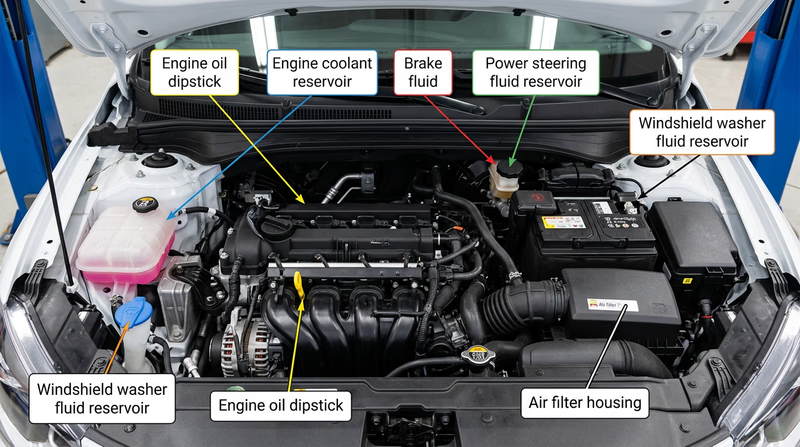
Req 2a — Checking Fluids
Demonstrate how to check the following:
- Brake fluid
- Engine oil
- Coolant
- Power steering fluid
- Windshield washer fluid
- Transmission fluid
- Battery fluid (if possible) and condition of the battery terminals.
A vehicle depends on several different fluids to operate safely and efficiently. Each fluid serves a specific purpose, and checking them regularly is one of the easiest and most important maintenance tasks you can learn. Think of it as a health checkup for your car — catching a low fluid level early can prevent expensive damage.
1. Brake Fluid
What it does: Brake fluid transmits the force from your foot on the brake pedal to the brake pads at each wheel. It operates under high pressure and must not compress — even a little air in the brake lines can make braking less effective.
How to check it:
- Locate the brake fluid reservoir — a small, translucent plastic container on top of the master cylinder, usually near the back of the engine compartment on the driver’s side.
- The fluid level should be between the “MIN” and “MAX” lines marked on the reservoir. You can usually see the level through the translucent plastic without opening the cap.
- The fluid should be clear to light amber. Dark or murky fluid needs to be replaced.
2. Engine Oil
What it does: Engine oil lubricates the moving parts inside the engine, reduces friction, carries away heat, and helps keep the engine clean by suspending tiny particles of dirt and metal.
How to check it:
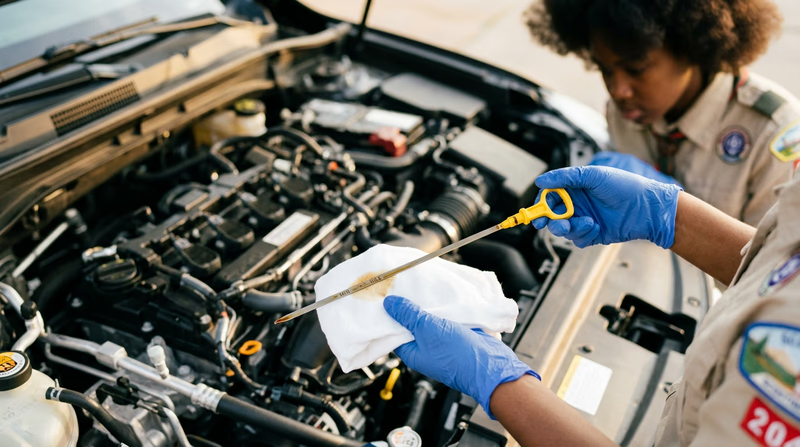
- With the engine off and cooled for at least a few minutes, locate the dipstick — usually a brightly colored (yellow or orange) loop or handle sticking out of the engine.
- Pull the dipstick out, wipe it clean with a rag, reinsert it fully, and pull it out again.
- Check the oil level against the markings on the dipstick (usually two dots or lines indicating “LOW” and “FULL”).
- Check the oil’s color: fresh oil is amber/golden; worn oil turns dark brown or black.
3. Coolant (Antifreeze)
What it does: Coolant circulates through the engine and radiator to carry heat away from the engine. It also prevents the liquid from freezing in winter and raises its boiling point for summer.
How to check it:
- Never open the radiator cap when the engine is hot. The system is pressurized and can spray boiling coolant.
- Instead, check the coolant overflow reservoir (a translucent plastic tank connected to the radiator by a hose). The fluid level should be between the “MIN” and “MAX” lines.
- Coolant comes in different colors (green, orange, pink, blue) depending on the type. Never mix different types unless the owner’s manual says it is safe.
4. Power Steering Fluid
What it does: Power steering fluid provides the hydraulic pressure that makes it easy to turn the steering wheel. Without it, steering would require significant physical effort.
How to check it:
- Locate the power steering fluid reservoir — a small container usually near the front of the engine, often with a cap labeled with a steering wheel icon.
- Some reservoirs are translucent with level markings; others have a dipstick built into the cap.
- Check the level against the “HOT” or “COLD” markings (depending on engine temperature).
5. Windshield Washer Fluid
What it does: Washer fluid cleans your windshield when you activate the wiper spray. It contains mild detergents and often antifreeze compounds to work in cold weather.
How to check it:
- Locate the washer fluid reservoir — usually a large, translucent plastic container with a cap marked with a windshield/wiper icon.
- Check the level visually and top off with premixed washer fluid if low.
- Never substitute plain water in cold climates — it will freeze and crack the reservoir or damage the pump.
6. Transmission Fluid
What it does: Transmission fluid lubricates and cools the gears inside the transmission. In automatic transmissions, it also serves as a hydraulic fluid that enables gear shifts.
How to check it:
- Some vehicles have a transmission dipstick (similar to the oil dipstick but usually located farther back in the engine bay). Some vehicles require checking while the engine is running and warm.
- Many newer vehicles have sealed transmissions with no dipstick — these are designed to be checked only by a technician with a lift.
- If your vehicle has a dipstick, pull it, wipe it, reinsert it, and check the level. Transmission fluid should be pink or red and should not smell burned.
7. Battery Fluid & Terminal Condition
What it does: Inside a traditional lead-acid battery, a mixture of water and sulfuric acid (called electrolyte) creates the chemical reaction that produces electricity. The battery terminals connect the battery to the vehicle’s electrical system.
How to check it:
- Battery fluid: Some batteries are “maintenance-free” (sealed) and cannot be checked. If the battery has removable caps on top, you can open them to check that the electrolyte covers the lead plates inside. If the level is low, add distilled water only — never tap water or acid.
- Terminal condition: Look at the battery posts (the metal nubs on top) and the cable connectors attached to them. Look for:
- White, blue, or green corrosion buildup (a powdery or crusty substance)
- Loose connections (cables should be tight and not wiggle)
- Cracked or damaged cables