Req 2d — Lights & Air Filters
Your vehicle’s lights are essential for safety — they let you see the road and let other drivers see you. A burned-out brake light or headlight can lead to an accident or a traffic citation. Checking your lights is quick and easy, and it is something you should do regularly.
How to Check Exterior Lights
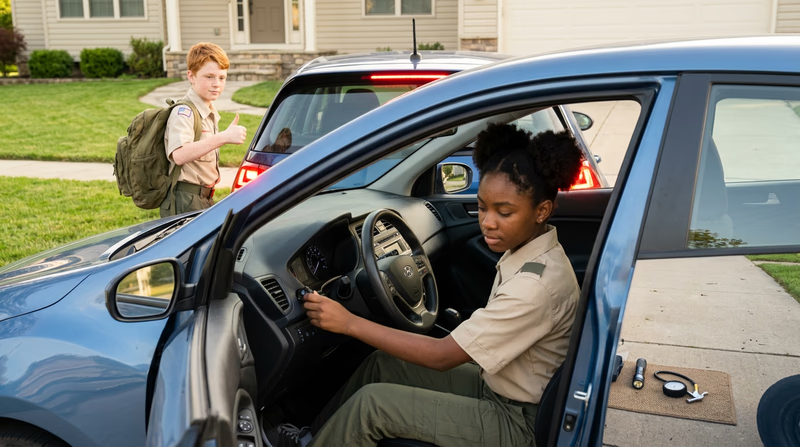
The best way to check exterior lights is with a helper. One person sits in the vehicle and operates the controls while the other walks around outside and confirms each light works.
Exterior Light Check
Test each of these with a helper
- Headlights (low beam): Turn on the headlight switch. Both front headlights should illuminate.
- Headlights (high beam): Activate high beams. Both headlights should get noticeably brighter.
- Parking/running lights: These are dimmer lights in the front and rear that turn on with the first click of the headlight switch.
- Turn signals (front and rear): Activate the left turn signal, then the right. Check that both front and both rear signal lights blink.
- Brake lights: Have your helper press the brake pedal while you check the rear. There should be three: one on each side plus a center high-mount brake light.
- Reverse/backup lights: Shift into reverse (with the parking brake set and your foot on the brake). White lights on the rear should illuminate.
- Hazard lights: Press the hazard button. All four turn signals should blink simultaneously.
- License plate light: Check that the small light above or below the rear license plate is working.
- Fog lights (if equipped): Check front and/or rear fog lights.
Checking Interior Lights
- Overhead (dome) lights: Open a door — the dome light should come on automatically. Also test the manual switch.
- Instrument panel lights: Turn on the headlights and check that the speedometer, tachometer, and other gauges are illuminated. Most vehicles let you adjust the brightness with a dimmer dial or button.
- Warning lights: Turn the key to the “ON” position without starting the engine. All warning lights (check engine, oil pressure, battery, ABS, etc.) should briefly illuminate as a self-test, then turn off. If a light does not come on during this test, the bulb may be burned out — which means it could not warn you of a real problem.
When a Light is Out
If you find a burned-out bulb:
- Check the owner’s manual for the correct replacement bulb number and type.
- Many exterior bulbs can be replaced at home with basic tools — some headlights and taillights are accessible from inside the engine bay or trunk without removing any panels.
- Modern vehicles increasingly use LED lights, which last much longer than traditional incandescent bulbs but may require replacing an entire light assembly if one fails.
Requirement 2e — Air Filters
Engine Air Filter
The engine air filter prevents dirt, dust, leaves, and insects from entering the engine. Clean air is essential for proper combustion — dirty air reduces performance and fuel efficiency and can cause long-term engine damage.
How to check it:
- Locate the air filter housing — a large plastic box in the engine compartment, usually connected to a large hose (the air intake duct) that leads to the engine. It is typically held closed by metal clips or screws.
- Open the housing and remove the filter.
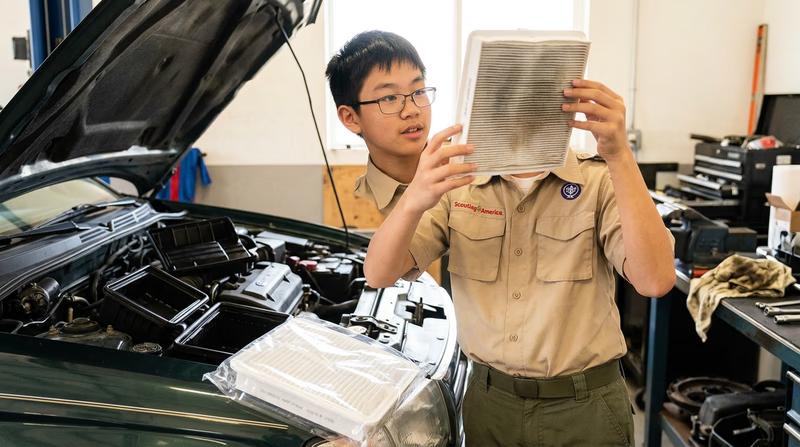
- Hold the filter up to a light source. If you can see light passing through the filter material, it still has life left. If the filter is visibly clogged with dirt, dark gray or black, or you cannot see light through it, it should be replaced.
- Check for tears or holes in the filter material — a damaged filter should be replaced immediately.
Cabin Air Filter
Many vehicles also have a cabin air filter that cleans the air entering the passenger compartment through the heating, ventilation, and air conditioning (HVAC) system. This filter catches pollen, dust, and exhaust fumes to keep the air you breathe inside the car clean.
How to check it:
- The cabin air filter is usually located behind the glove box or under the dashboard. The owner’s manual will show you exactly where.
- Some are easy to access — you simply lower the glove box and slide the filter out. Others may require removing a small panel.
- Inspect it the same way as the engine air filter: hold it to the light and check for discoloration, debris, and odor.