Req 8a — Electrical System Diagrams
Diagram and explain the parts of one of the following electrical systems:
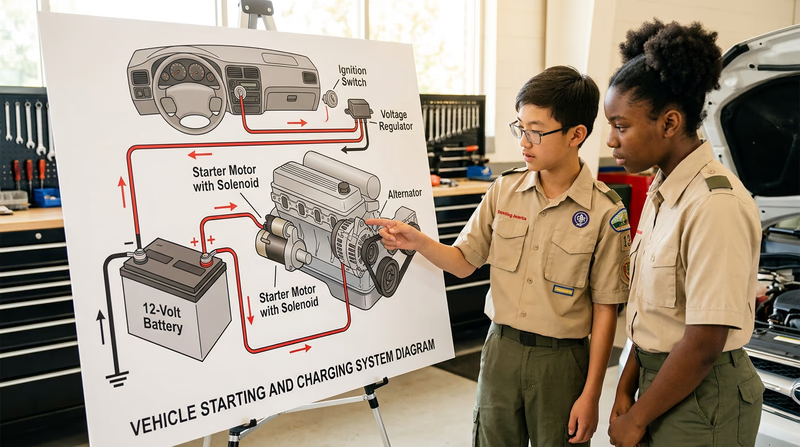
- Starting/charging system
- Hybrid or electric vehicle inverter
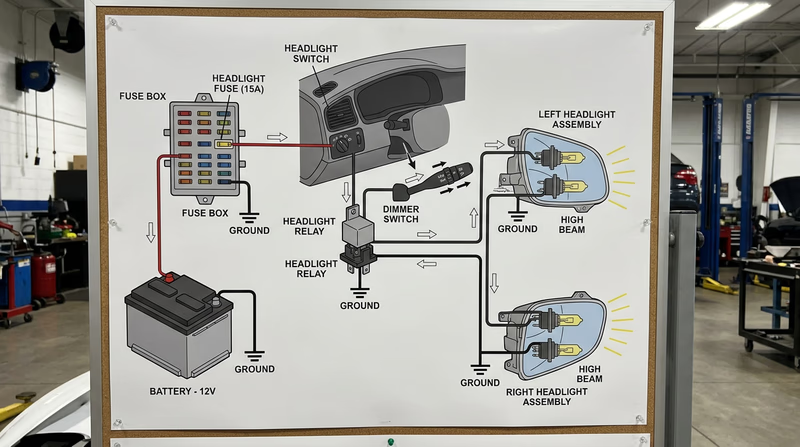
- Lighting system.
For this requirement, you will choose one of the three electrical systems listed, diagram its components, and explain how they work together. Below is an overview of all three options to help you decide which one interests you most — and to prepare you for your counselor discussion.
Option 1: Starting/Charging System
The starting and charging system is responsible for starting the engine and keeping the battery charged while the vehicle is running.
Key components:
- Battery — Stores electrical energy as chemical energy. Provides the initial burst of power to start the engine and powers accessories when the engine is off.
- Starter motor — A powerful electric motor that spins the engine’s flywheel to start the combustion process. It only runs for a few seconds during starting.
- Ignition switch / Start button — Sends the signal to engage the starter motor.
- Solenoid — An electromagnetic switch mounted on the starter motor. When activated by the ignition switch, it pushes a small gear (the pinion) into contact with the flywheel and connects the battery’s power to the starter motor.
- Alternator — A generator driven by the serpentine belt. Once the engine is running, the alternator produces alternating current (AC) electricity, converts it to direct current (DC) through internal diodes, and sends it to the battery to recharge it and to the vehicle’s electrical systems.
- Voltage regulator — Controls the alternator’s output to maintain a consistent voltage (typically 13.5 to 14.5 volts). Prevents overcharging the battery.
How they work together: You turn the key → the solenoid engages → the starter motor spins the flywheel → the engine starts combustion → the alternator takes over, generating electricity to recharge the battery and power all electrical systems.
Option 2: Hybrid or Electric Vehicle Inverter
The inverter is a critical component in hybrid and electric vehicles that converts electricity between two forms.
Key components:
- High-voltage battery pack — Stores energy as direct current (DC). Operates at 200 to 800 volts.
- Inverter — Converts DC from the battery into three-phase alternating current (AC) that the electric motor needs to operate. During regenerative braking, it reverses the process — converting AC from the motor (now acting as a generator) back to DC to recharge the battery.
- Electric motor — Uses AC electricity to produce rotational force (torque) that drives the wheels. Most EVs use permanent magnet or induction motors.
- DC-DC converter — Steps down the high-voltage DC to 12 volts to power the vehicle’s traditional electrical systems (lights, radio, windows).
- Motor controller — Works with the inverter to regulate speed and torque based on accelerator pedal input.
How they work together: You press the accelerator → the motor controller signals the inverter → the inverter converts DC battery power to AC → the electric motor spins → you lift off the accelerator or brake → the motor becomes a generator → the inverter converts AC back to DC → energy returns to the battery.
Option 3: Lighting System
The lighting system provides visibility for the driver and makes the vehicle visible to others on the road.
Key components:
- Headlights — Provide forward illumination. Modern vehicles use halogen, HID (High-Intensity Discharge), or LED bulbs. Most have both low-beam and high-beam settings.
- Taillights / Brake lights — Red lights at the rear. Taillights illuminate when headlights are on; brake lights illuminate brighter when the brake pedal is pressed.
- Turn signals — Amber or yellow blinking lights on the front, rear, and sides that indicate the driver’s intention to turn or change lanes. Controlled by a flasher relay that creates the blinking pattern.
- Lighting switch — Dashboard control that turns headlights, parking lights, and instrument lights on and off. Many modern vehicles have automatic headlights that use a light sensor.
- Dimmer switch — Toggles between low and high beams (usually a stalk on the steering column).
- Fuses and relays — Protect and control the lighting circuits. Each lighting circuit has its own fuse.
- Wiring harness — The network of wires connecting the battery, switches, fuses, and light assemblies.
How they work together: You flip the headlight switch → current flows from the battery through the fuse box → through the headlight relay → through the wiring harness → to the headlight bulbs → current returns to the battery through the ground circuit, completing the loop.