 Getting Started
Introduction & Overview
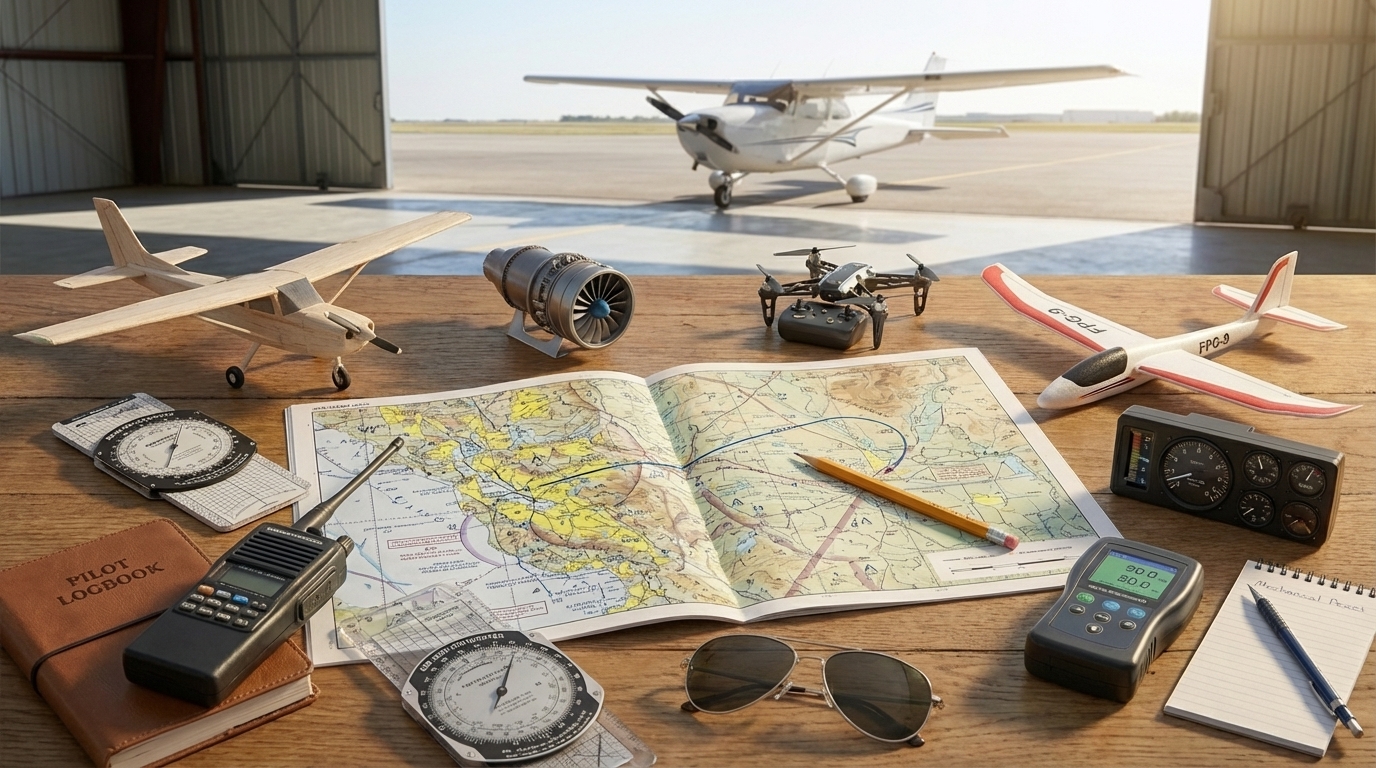
Have you ever looked up at a jet streaking across the sky and wondered what it would be like to sit at the controls? The Aviation merit badge is your chance to find out. You will learn how aircraft fly, how pilots navigate, and what it takes to turn a fascination with flight into a real-world skill — or even a career.
Aviation is about more than airplanes. It is about the human desire to explore, push boundaries, and solve problems. From the first glider experiments to modern drones delivering packages, aviation has shaped the world you live in. This guide will help you understand the science, the history, and the future of flight.
Then and Now
Then — The Dream of Flight
For thousands of years, humans watched birds and dreamed of joining them. Leonardo da Vinci sketched flying machines in the 1480s, but none of them could actually fly. In 1783, the Montgolfier brothers launched the first hot-air balloon in France — proving that people could leave the ground. But powered, controlled flight remained out of reach for another 120 years.
On December 17, 1903, Orville and Wilbur Wright made four flights at Kitty Hawk, North Carolina. The longest lasted just 59 seconds and covered 852 feet — less than the length of three football fields. Within a decade, airplanes were crossing the English Channel. Within half a century, jets were carrying passengers across oceans.
- Purpose: Exploration, military advantage, delivering mail and cargo
- Mindset: “Can it be done?” — every flight was an experiment
Now — The Age of Aviation
Today, more than 100,000 commercial flights take off every day around the world. Aviation connects people, moves goods, fights wildfires, rescues stranded hikers, and monitors weather from the edge of space. Meanwhile, drones are opening an entirely new chapter — from aerial photography to package delivery to search-and-rescue in disaster zones.
- Purpose: Transportation, commerce, defense, science, recreation
- Mindset: “How can we do it better?” — safer, faster, greener, and more accessible
Get Ready! Whether you dream of becoming a pilot, an aerospace engineer, or you just want to understand the science behind every flight, this guide will get you off the ground. Let’s clear the runway.

Kinds of Aviation
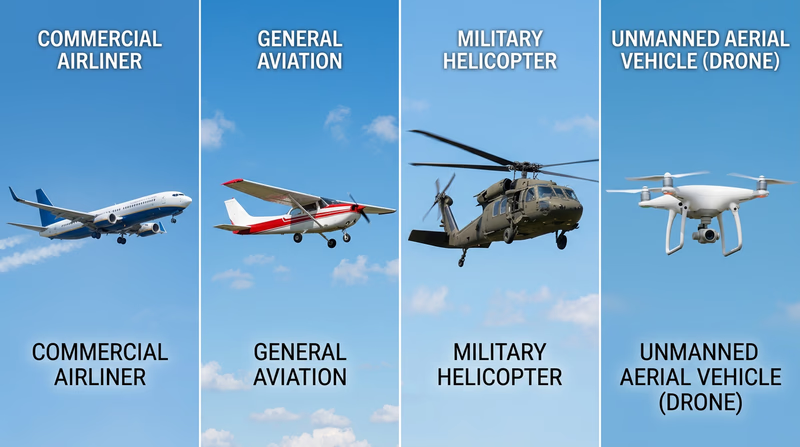
Aviation is a huge field. Before you dive into the requirements, take a look at the major categories of flight.
Commercial Aviation
Commercial aviation is what most people think of when they hear the word “aviation.” Airlines carry billions of passengers every year on scheduled routes around the globe. From regional turboprops hopping between small cities to wide-body jets crossing the Pacific, commercial aviation keeps the world connected.
General Aviation
General aviation covers everything that is not a military flight or a scheduled airline flight. That includes private pilots flying for fun on a Saturday morning, crop dusters treating farm fields, air ambulances rushing patients to hospitals, and flight schools training the next generation of pilots. In the United States, there are more general aviation airports than commercial ones.
Military Aviation
Military aviation includes fighter jets, bombers, transport aircraft, helicopters, and surveillance drones operated by the armed forces. Military needs have driven some of the biggest leaps in aviation technology — jet engines, radar, stealth design, and in-flight refueling all started as military innovations before finding their way into civilian life.
Unmanned Aircraft (Drones & UAS)
Unmanned Aircraft Systems — commonly called drones — are the fastest-growing segment of aviation. They range from palm-sized quadcopters to large fixed-wing platforms that can stay airborne for hours. Drones are used for aerial photography, agriculture, infrastructure inspections, search and rescue, and even delivering medical supplies to remote areas.
Space and Emerging Aviation
The boundary between aviation and space is blurring. Companies are developing aircraft that fly at the edge of space, electric-powered air taxis designed to carry passengers across cities, and supersonic jets that could cut transoceanic flight times in half. The next chapter of aviation is being written right now — and you could be part of it.
Now let’s take to the sky and explore the requirements for the Aviation merit badge.