Req 10 — Three-Day Treks
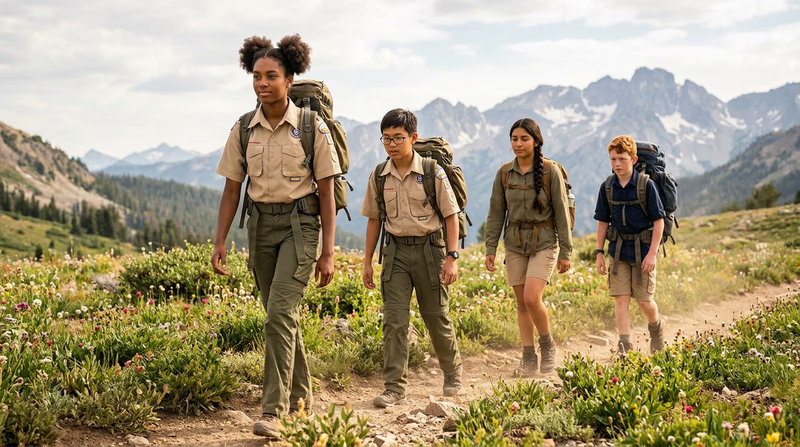
This is where the Backpacking merit badge gets real. Three separate treks — each at least three days long and covering at least 15 miles — with everything you need on your back. These treks are your chance to put every skill you have learned into practice.
Understanding the Requirements
Let’s break down what is required:
- Three treks — not one long trip, but three separate outings. This gives you the chance to learn from each experience and improve on the next one.
- At least three days each — this means a minimum of two nights in the backcountry per trek.
- At least 15 miles each — that is about 5 miles per day, a moderate pace with a loaded pack. You do not need to hike all 15 miles in one day.
- At least two different campsites per trek — you must move camp at least once during each trek, which means packing up and setting up your full camp twice.
- Carry everything — no resupply drops, no cache of supplies waiting at camp. Everything you need for three days rides on your back from the trailhead.
Planning Your Three Treks
Do not try to make all three treks identical. Use each one as an opportunity to experience something different:
Trek 1: The Learning Trek Choose a well-established trail with reliable water sources and designated campsites. Keep the route straightforward. Focus on dialing in your gear, perfecting your campsite routine, and building confidence. This is your shakedown trip.
Trek 2: The Challenge Trek Step it up. Try a trail with more elevation gain, less-established campsites, or more remote terrain. Practice your navigation skills by choosing a route with trail junctions. Experiment with different meals and cooking techniques.
Trek 3: The Adventure Trek Go somewhere new and push your limits. Try a different region, a different season, or more demanding terrain. By now, your gear is dialed, your camp routine is smooth, and you are ready for a real wilderness experience.
Leave No Trace on Multi-Day Treks
On a three-day trek, your Leave No Trace practices are tested more than on a day hike. You are cooking, sleeping, and living in the backcountry — which means more opportunities for impact.
Multi-Day Leave No Trace
Practices for extended backcountry travel
- Pack out all trash from every campsite — do a thorough sweep before leaving.
- Use established campsites whenever possible; spread out in pristine areas.
- Scatter gray water at least 200 feet from water sources.
- Store food properly every night (bear canister, bear hang, or bear box).
- Use catholes for human waste, 200 feet from water, trails, and camp.
- Do not build new fire rings — use your stove for all cooking.
- Stay on established trails even when shortcuts are tempting.
- Respect wildlife by keeping a safe distance and never feeding animals.
Practical Tips for Multi-Day Success
Food planning: For a three-day trek, plan about 1.5 to 2 pounds of food per person per day. Choose high-calorie, lightweight foods: freeze-dried meals, instant oatmeal, trail mix, peanut butter, tortillas, hard cheese, and energy bars.
Water planning: Study your route and know where every reliable water source is. Carry enough water to get between sources, plus a safety margin. Carry at least one backup water treatment method.
Pace yourself: Five miles per day is a comfortable pace. Do not rush. Enjoy the scenery, take photos, and stop to identify plants, birds, and geological features. The point of backpacking is not just to cover miles — it is to experience the wilderness.