Req 11 — The Big Trek
This is the capstone of the Backpacking merit badge — a five-day, 30-mile trek that you plan from start to finish. It covers:
- Writing a comprehensive trek plan with route, schedule, food, gear, safety, and budget
- Executing the trek with at least three campsites and a service project
- Keeping a daily journal documenting your experience
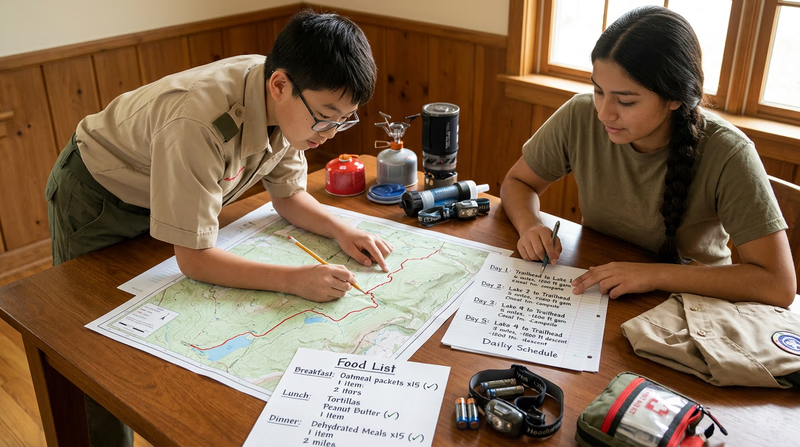
11a. The Trek Plan
This plan is significantly more detailed than the one you wrote for Requirement 9. A five-day trek requires careful logistics — you need to carry more food, plan for more variables, and think further ahead.
Route Description and Access
- Describe the trek area: geography, terrain, elevation range, and notable features
- Provide driving directions to the trailhead
- Note any permits required and how to obtain them
- Identify the trail(s) you will follow, with distances between landmarks
- Mark water sources on your map and note their reliability
Daily Schedule
Build a day-by-day itinerary. Here is a sample framework:
| Day | Start | End Camp | Miles | Notes |
|---|---|---|---|---|
| 1 | Trailhead | Camp A | 5 | Easy pace, settle in |
| 2 | Camp A | Camp B | 7 | Longest day, big climb |
| 3 | Camp B | Camp C | 6 | Service project |
| 4 | Camp C | Camp B or D | 7 | Flexible route |
| 5 | Final camp | Trailhead | 5 | Pack out |
Food and Equipment List
- Create a complete meal plan for all five days: breakfast, lunch, dinner, and snacks
- Calculate total food weight (1.5–2 pounds per person per day)
- List every piece of personal and crew gear
- Assign crew gear to specific crew members
- Identify where you will resupply water and how much you will carry between sources
Safety and Emergency Plan
Your safety plan should be more detailed than for a weekend trip because you will be farther from help for a longer time:
- Emergency contacts (ranger station, search and rescue, hospital)
- Evacuation routes from each section of your route
- Communication plan (cell coverage map, satellite communicator if available)
- Medical information for all crew members
- Bad-weather contingency plan (where to shelter, alternate routes)
- Wildlife precautions (bear country protocols, food storage method)
Budget
- Permit fees
- Travel/gas costs to the trailhead
- Food costs (itemize by meal)
- Fuel costs (stove fuel)
- Any gear rentals or purchases needed
- Emergency fund
11b. Execute the Trek
This is the adventure you have been building toward. Five days in the backcountry, covering at least 30 miles, sleeping at three or more different campsites, and completing a service project along the way.
The Service Project
Your service project should be approved by your counselor before the trek. Ideas include:
- Trail maintenance: Clear fallen branches, remove rocks from the trail, or repair water bars (drainage structures that prevent trail erosion)
- Campsite restoration: Clean up and naturalize an overused or damaged campsite
- Litter cleanup: Collect and pack out litter from a trail or campsite area
- Invasive species removal: Pull non-native plants from a trail corridor (get guidance from a ranger)
Making the Most of Five Days
Five days is long enough to experience a true rhythm of backcountry life. By day three, the trail starts to feel like home. The routine of hiking, cooking, and camping becomes natural. You start noticing details you missed on shorter trips — the way light changes through the day, the sounds of the forest at different hours, the satisfaction of covering miles under your own power.
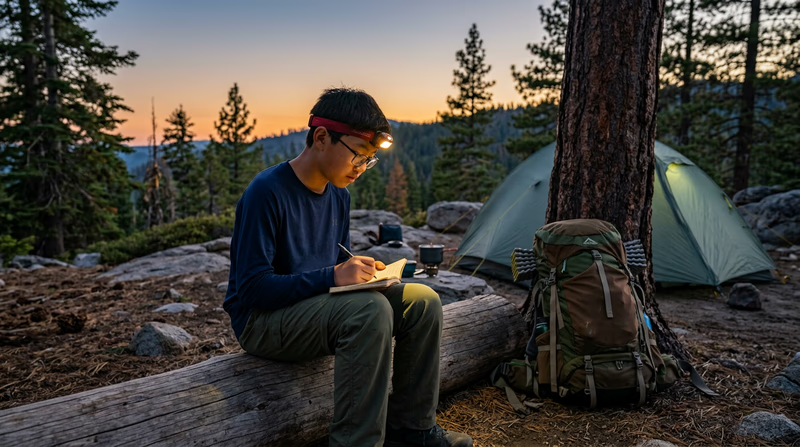
11c. The Daily Journal
Your journal is both a personal record and a learning tool. At the end of each day, take 15–20 minutes to write about your experience.
What to Include
For each day, write about:
- Miles covered and route taken — where did you start and end?
- Weather and conditions — what was the weather like? How did it affect your day?
- Highlights — what was the best part of the day? A view? A wildlife sighting? A great meal?
- Challenges — what was hard? Steep climbs? Rain? Blisters? Group dynamics?
- What worked well — gear, meals, pace, campsite choice, navigation
- What you would improve — did you pack too much? Not enough? Was the schedule realistic?
- Personal reflections — how are you feeling physically and mentally? What are you learning about yourself?