Req 2a — Essential Gear
When you are deep in the backcountry, the gear in your pack is your lifeline. Forgetting a critical item could mean going thirsty, getting lost, or spending a cold night without shelter. The items below form the foundation of every backpacker’s gear list — the things you should never leave home without.
The Backpacker’s Essentials
These items are sometimes called the “Ten Essentials” — a concept first developed by The Mountaineers climbing club in the 1930s. Over the decades, the list has evolved, but the core idea remains: carry the tools you need to handle emergencies, navigate safely, and survive an unexpected night outdoors.
Essential Backpacking Gear
Items every backpacker should carry
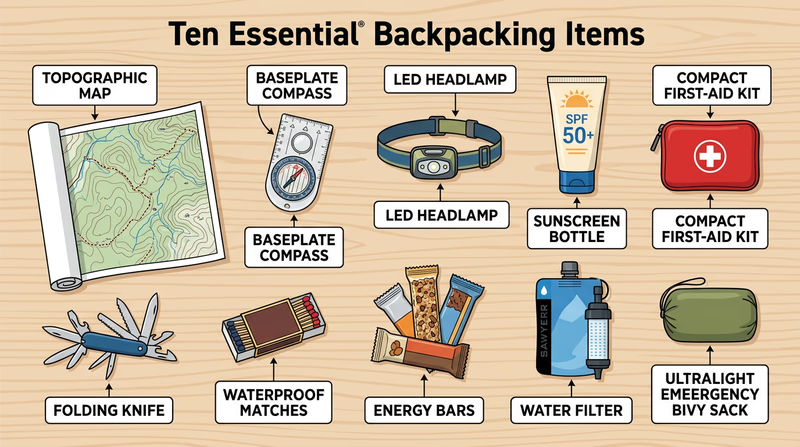
- Navigation tools (map and compass): A topographic map and baseplate compass let you find your way even when GPS batteries die or signals drop. You will learn more about these in Requirement 6.
- Sun protection (sunscreen, sunglasses, hat): Sunburn and snow blindness can happen fast at high altitudes or in open terrain. A hat with a brim, UV-rated sunglasses, and SPF 30+ sunscreen protect you all day.
- Insulation (extra clothing layers): Weather changes quickly in the mountains. An extra insulating layer and a rain shell can prevent hypothermia even if conditions turn bad.
- Illumination (headlamp with extra batteries): A headlamp keeps your hands free for setting up camp, reading a map, or handling an emergency after dark. Always pack spare batteries.
- First-aid kit: Your personal first-aid kit should include bandages, moleskin, antiseptic, pain relievers, tweezers, and any personal medications. See Requirement 1 for what to include.
- Fire-starting tools (matches, lighter, fire starter): You may need fire for warmth, signaling, or water purification in an emergency. Carry waterproof matches or a lighter and a small fire starter.
- Repair tools and knife: A pocketknife or multi-tool handles everything from cutting cord to repairing a broken pack strap. Duct tape wrapped around a trekking pole doubles as an emergency repair kit.
- Nutrition (extra food): Always carry at least one extra day’s worth of high-calorie, no-cook food like trail mix, energy bars, or jerky. If you are delayed by weather or injury, you will be glad you did.
- Hydration (water and treatment): Carry enough water for your day and a way to treat additional water from natural sources. Filters, chemical tablets, or UV purifiers let you safely drink from streams and lakes.
- Emergency shelter (tent, tarp, or bivy): Your tent or tarp is your home in the backcountry. Even on a day hike that turns into an unexpected overnight, an emergency bivy or space blanket can save your life.
Why These Specific Items?
Notice that every essential item on this list serves at least one of three purposes:
- Prevention — stopping a problem before it starts (sun protection, insulation, nutrition)
- Navigation — finding your way and staying found (map, compass, headlamp)
- Emergency response — surviving when things go wrong (first aid, fire, shelter)
If you look at any item and cannot connect it to one of these three purposes, it probably does not belong on the essentials list. Everything else — camp chairs, books, extra snacks — is nice to have but not critical.
Beyond the Ten
For multi-day backpacking treks, you will also need items like a stove, fuel, cookware, a sleeping bag, and a sleeping pad. These are covered in later requirements. But the ten essentials listed above are non-negotiable — they go in your pack on every single trip, no exceptions.