Req 5 — Water Treatment & Hydration
This requirement covers two essential water topics:
- Water treatment — how to make backcountry water safe to drink
- Hydration — why staying hydrated is critical and how to do it
5a. Water Treatment
Water from streams, lakes, and springs in the backcountry may look crystal clear, but it can contain invisible threats: bacteria (like E. coli and Salmonella), protozoa (like Giardia and Cryptosporidium), and viruses (like norovirus). Drinking untreated water can cause severe gastrointestinal illness — vomiting, diarrhea, and cramps — that can be debilitating when you are miles from the trailhead.
Water treatment is not optional. Every drop of water you drink from a natural source must be treated first.
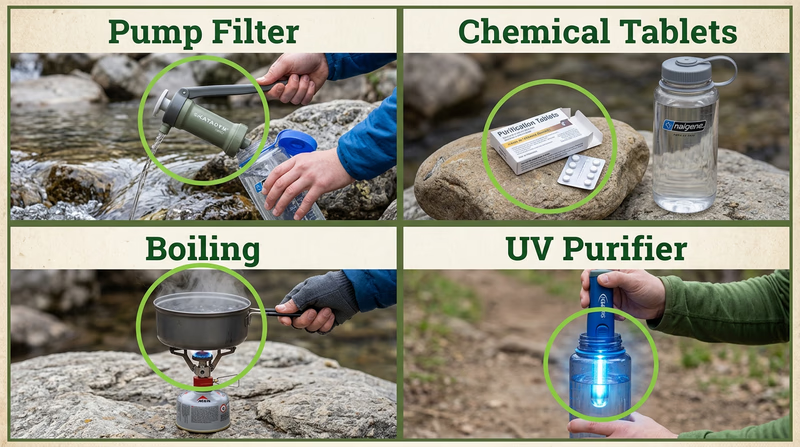
Here are the most common treatment methods:
Pump and Gravity Filters
Portable water filters use a fine membrane or cartridge to physically remove bacteria and protozoa from water. Pump filters require manual effort to push water through the filter. Gravity filters use the weight of water hanging in a bag to push it through — you fill the bag, hang it from a tree branch, and let gravity do the work.
- Pros: Fast, no chemicals or aftertaste, works on cloudy water, reusable
- Cons: Does not remove viruses (usually not a concern in North American backcountry), filters can clog in silty water, adds weight to your pack
- Best for: Groups (gravity filters can treat large volumes) and day-to-day trail use
Chemical Treatment (Tablets or Drops)
Chemical treatments use iodine or chlorine dioxide to kill pathogens in water. You add the tablet or drops, wait a specified time (usually 15–30 minutes for bacteria, up to 4 hours for Cryptosporidium with chlorine dioxide), and then drink.
- Pros: Extremely lightweight, inexpensive, no moving parts to break
- Cons: Requires wait time, can leave a slight taste, iodine should not be used long-term or by people with thyroid conditions
- Best for: Backup method, ultralight backpacking, emergency kits
Boiling
Boiling is the oldest and most reliable water treatment method. Bringing water to a rolling boil for one minute (three minutes above 6,500 feet elevation) kills all bacteria, protozoa, and viruses.
- Pros: 100% effective against all pathogens, requires no special equipment beyond a pot and stove
- Cons: Uses fuel, takes time to heat and cool, impractical for treating water on the move
- Best for: Camp use, when you are cooking anyway, emergency backup
UV Light Purifiers
UV purifiers (like the SteriPEN) use ultraviolet light to destroy the DNA of pathogens, making them unable to reproduce. You stir the device in a bottle of water for 60–90 seconds.
- Pros: Fast, no chemicals, lightweight
- Cons: Requires batteries, does not work on cloudy water (particles block UV light), fragile electronics
- Best for: Solo hikers, clear water sources
5b. Staying Hydrated
Water makes up about 60% of your body weight and plays a role in nearly every bodily function. When you are hiking with a heavy pack, your body works harder, sweats more, and needs significantly more water than it does during a normal day.
Why Hydration Matters
Dehydration — even mild dehydration — affects your performance, judgment, and safety:
- Physical performance drops. Losing just 2% of your body weight in water reduces endurance and strength. Your muscles cramp, your heart works harder, and you fatigue faster.
- Mental clarity suffers. Dehydration impairs concentration, decision-making, and reaction time. On a trail where navigation and hazard awareness matter, a foggy brain is dangerous.
- Temperature regulation fails. Your body sweats to cool itself. Without enough water, sweating decreases, and your risk of heat illness skyrockets.
- Digestion slows. Water helps your body process the high-calorie trail food you are eating. Without it, you may feel nauseous and lose your appetite — which makes the problem worse.
How Much to Drink
A general rule: drink about half a liter (16 ounces) per hour of moderate hiking. In hot weather, at high altitude, or when carrying a heavy pack, you may need up to a full liter per hour.
Do not wait until you are thirsty — thirst is a lagging indicator. By the time you feel thirsty, you have already lost 1–2% of your body weight in water.
Hydration Strategy
A simple plan for staying on top of your water intake
- Drink 16–20 ounces of water in the morning before you start hiking.
- Take 3–4 sips every 15–20 minutes while on the trail.
- Monitor your urine color — pale yellow means well-hydrated; dark yellow means drink more.
- Add electrolyte tablets or powder to your water during long, hot days to replace lost salts.
- Drink water with every meal and snack.
- Know where your next water source is and plan your intake accordingly.