 Getting Started
Introduction & Overview
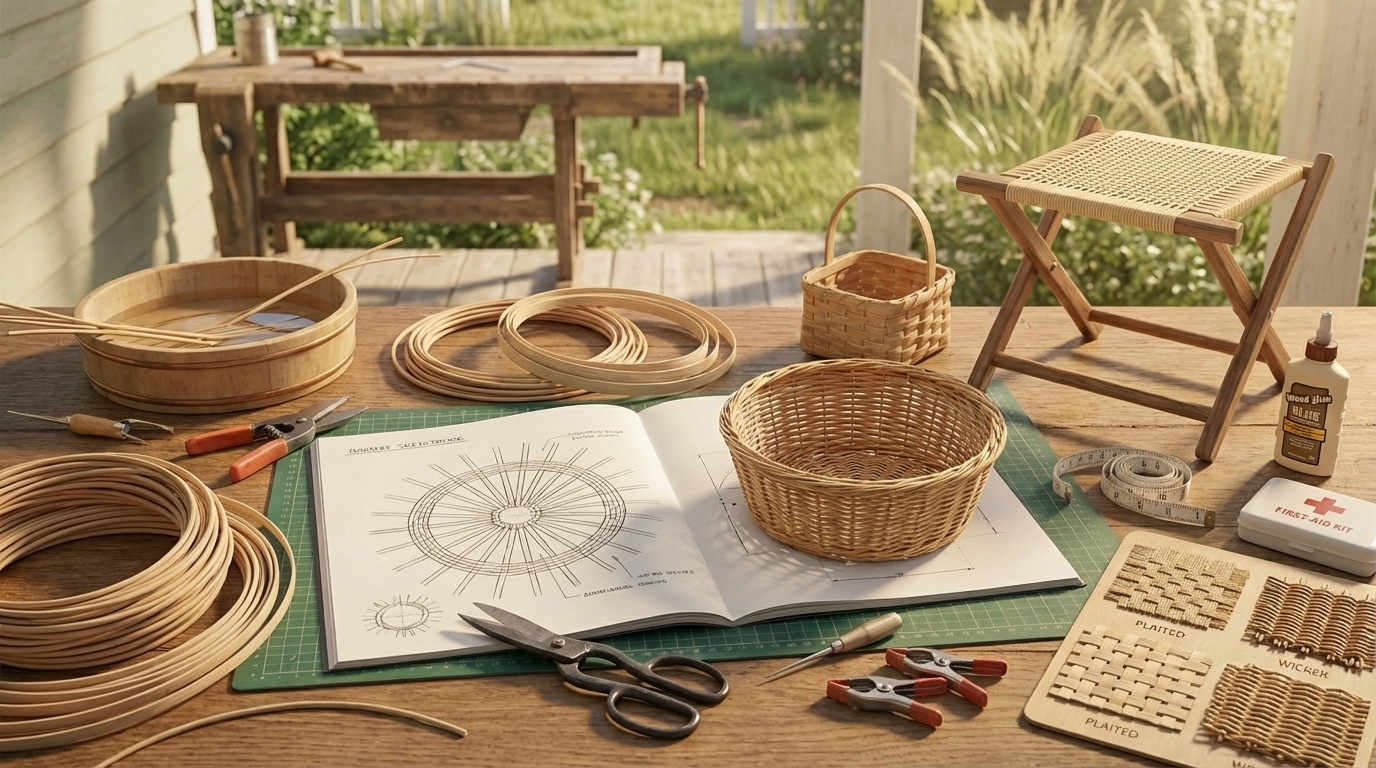
Basketry is one of the oldest crafts in human history — and one of the most satisfying to learn. With just a few simple materials, your hands, and a little patience, you can weave something useful and beautiful from scratch. Whether you are making a sturdy basket for carrying gear or a seat for a camp chair, you are practicing a skill that connects you to thousands of years of human ingenuity.
This guide will walk you through everything you need to know to earn the Basketry merit badge. You will learn about safety, explore different basket styles and weaving techniques, and then put your skills to work by weaving three real projects.
Then and Now
Then — Weaving for Survival
Long before people learned to make pottery, they were weaving baskets. Archaeologists have found basket fragments dating back more than 10,000 years — making basketry one of humanity’s earliest technologies. Ancient peoples wove baskets to carry food, store grain, trap fish, and even waterproof their shelters. Every culture on every continent developed its own basket-making traditions using whatever materials grew nearby: willow, palm, birch bark, sweetgrass, or bamboo.
- Purpose: Carrying, storing, trapping, building
- Materials: Whatever nature provided — grasses, bark, roots, reeds
- Method: Passed from generation to generation by hand
Now — A Living Art and Practical Skill
Today, basketry is both a respected art form and a hands-on craft. Contemporary basket makers create everything from functional household items to gallery-worthy sculptures. Traditional techniques are preserved by Indigenous communities and cultural organizations around the world. And for Scouts, basketry is a chance to slow down, work with your hands, and create something you can actually use.
- Purpose: Art, craft, cultural preservation, outdoor skill
- Materials: Natural reed, flat reed, round reed, raffia, and more
- Method: Taught in workshops, Scout programs, art schools, and online
Get Ready! You are about to learn a craft that connects you to makers across centuries and cultures. All you need is some reed, a little water, and the willingness to weave. Let’s get started!
Kinds of Basketry
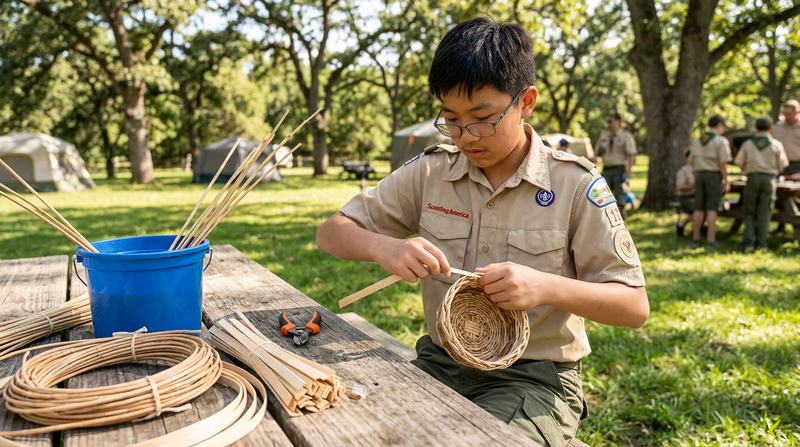
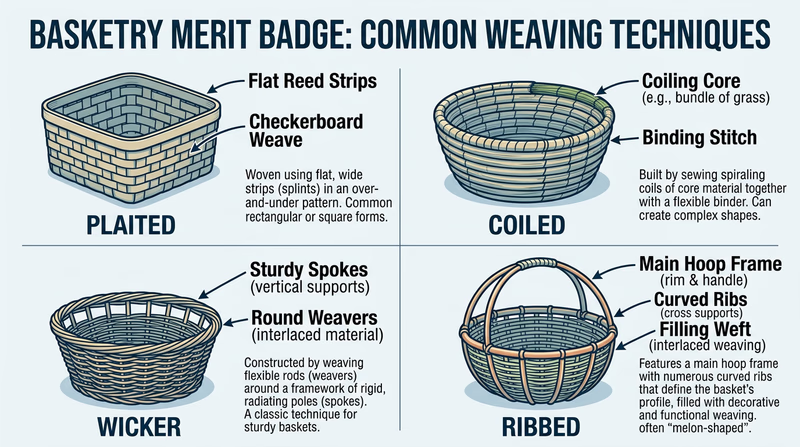
Before you start weaving, it helps to know that not all baskets are built the same way. There are four main types of baskets, each with a different structure and technique. You will need to identify all four for Requirement 2, so pay attention to how they differ.
Plaited Baskets
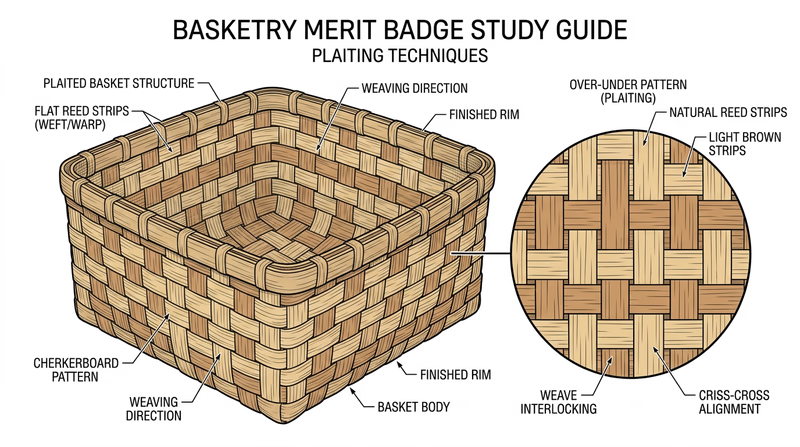
Plaited baskets are made by weaving flat strips over and under each other at right angles — like a checkerboard pattern. Think of how you might weave strips of paper together in a craft project. The materials are usually flat reed, splint, or palm leaves. Plaited baskets tend to have a clean, geometric look.
Coiled Baskets
Coiled baskets are built by wrapping a bundle of material (called the “core”) in a spiral and stitching each new row to the one below it. The stitching holds everything together. Coiled baskets are often associated with Native American and African traditions and can be incredibly detailed, with patterns woven right into the stitching.
Wicker Baskets
Wicker baskets use round, flexible materials — like willow branches or round reed — woven around a frame of rigid spokes. The spokes radiate out from the base, and the weaver works flexible “weavers” in and out of them. Wicker is probably the style most people picture when they hear the word “basket.”
Ribbed Baskets
Ribbed baskets (sometimes called “rib baskets” or “melon baskets”) start with a frame of intersecting hoops or ribs, and the weaver fills in the spaces between the ribs. They have a distinctive rounded, boat-like shape. The classic egg basket — wide on the sides and narrow at the top — is a well-known example.
Now that you know what kinds of baskets are out there, let’s talk about staying safe while you work.