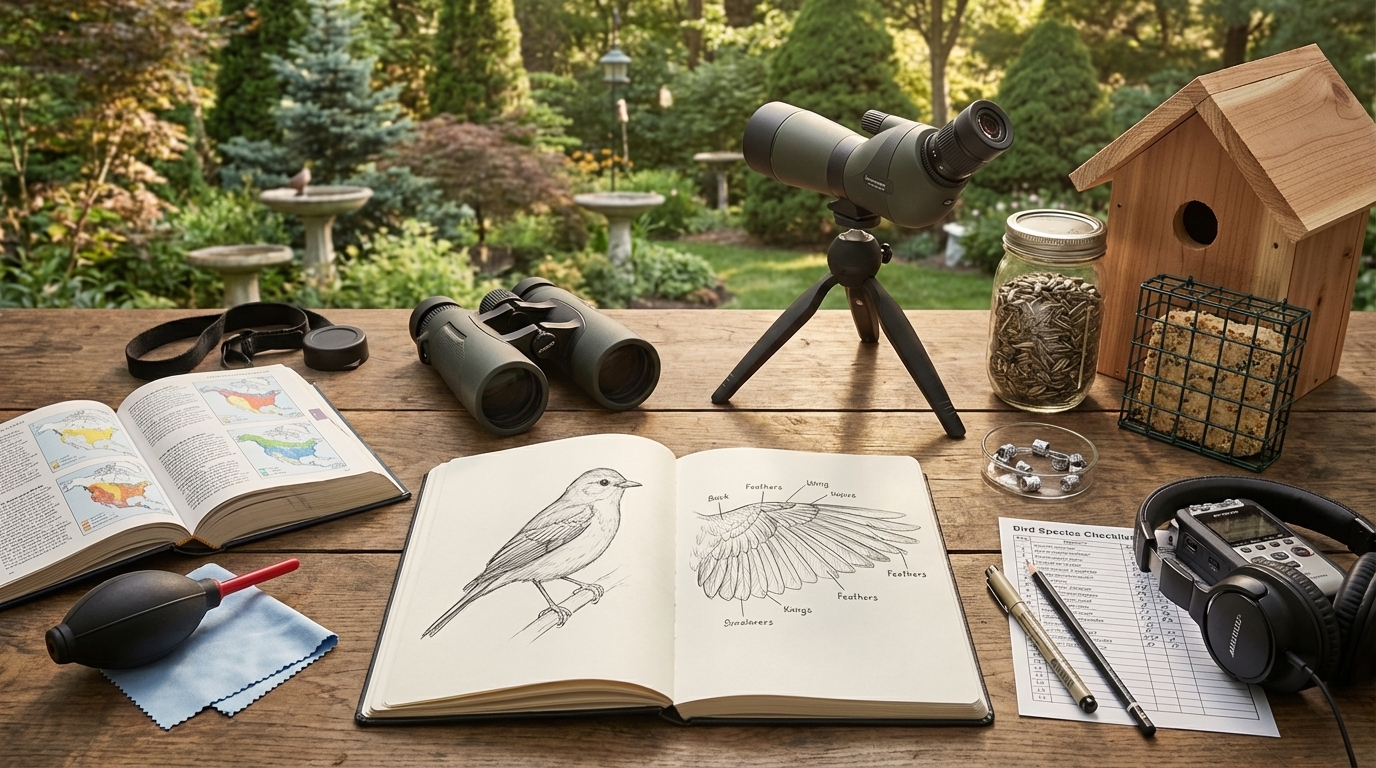
Bird Study Merit Badge — Complete Digital Resource Guide
https://merit-badge.university/merit-badges/bird-study/guide/
Introduction & Overview
Look up. Listen. That flash of red in the tree, the tiny silhouette gliding overhead, the song that wakes you at dawn — birds are everywhere, and once you start paying attention to them, the world gets a whole lot more interesting.
Bird Study is one of the most rewarding merit badges you can earn. It takes you outside, sharpens your observation skills, and opens the door to a lifelong hobby enjoyed by millions of people around the world. Whether you are scanning the sky from your backyard or hiking through a national wildlife refuge, this badge will teach you how to find, identify, and understand the birds that share your world.
Then and Now
Then — The Naturalist Tradition
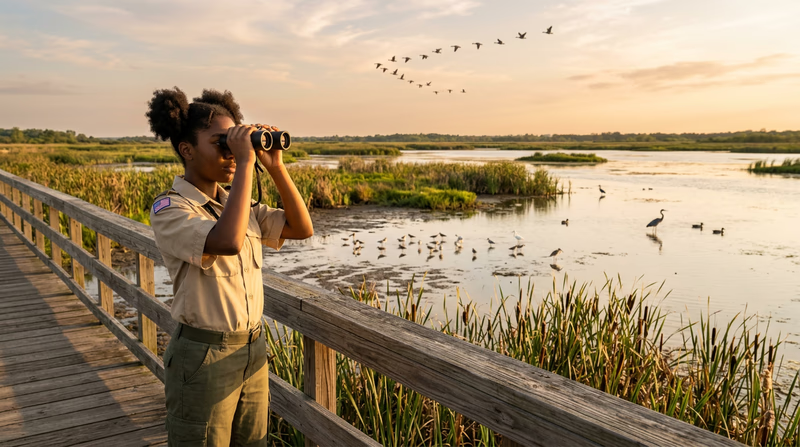
For centuries, learning about birds meant collecting them. Naturalists like John James Audubon shot hundreds of birds so he could pose them and paint their portraits in exacting detail. His masterwork, The Birds of America (1827–1838), contained 435 life-size illustrations — and every single subject was a specimen. Egg collecting was a popular hobby, and museum drawers filled with preserved skins were the primary tools of ornithology.
It was a different time. There were no binoculars powerful enough for field identification, no field guides small enough to carry in a pocket, and no cameras fast enough to freeze a bird in flight. If you wanted to study a bird up close, you had to hold it in your hand.
- Tools: Shotguns, specimen trays, hand-painted illustrations
- Approach: Collect first, study later
- Legacy: The detailed records left by early naturalists still inform science today
Now — The Citizen Science Revolution
Today, a smartphone in your pocket is more powerful than any tool Audubon ever had. Apps like Merlin can identify a bird by its song in seconds. The eBird platform, run by the Cornell Lab of Ornithology, collects millions of bird sightings from everyday observers around the world — making birders the largest network of wildlife monitors on the planet.
Modern bird study is about observation, not collection. You watch, you listen, you record what you see, and your data joins a global effort to understand and protect birdlife.
- Tools: Binoculars, field guides, smartphone apps, acoustic recorders
- Approach: Observe, identify, and contribute to science
- Impact: Citizen science data drives real conservation decisions
Get Ready! You are about to join a community of observers, scientists, and nature lovers who find wonder in the world of birds. Grab a pair of binoculars, a notebook, and your curiosity — the birds are waiting.
Kinds of Birding
Birding comes in many flavors. Before you head out, here is a look at the different ways people enjoy watching birds.
Backyard Birding
You do not need to go anywhere special to start birding. A feeder, a birdbath, or even a window with a view of some trees is all it takes. Backyard birding is how many of the world’s best birders got their start. You will be surprised how many species visit your own yard once you know what to look for.
Field Birding
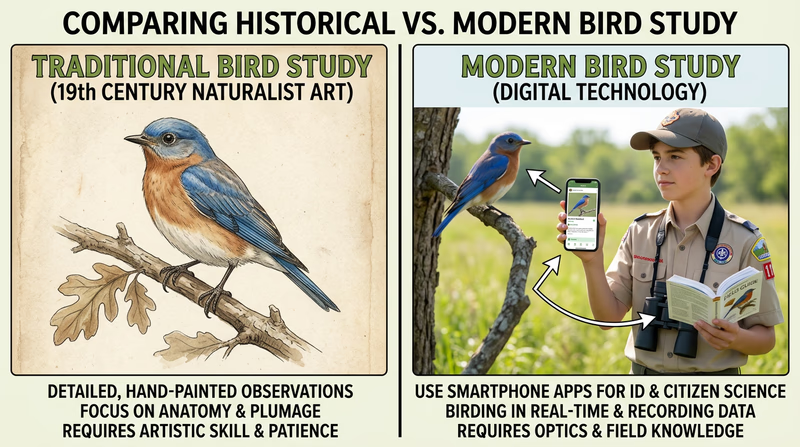
Field birding means heading out to parks, wildlife refuges, forests, and shorelines to find birds in their natural habitats. You bring binoculars, a field guide, and a notebook. This is the heart of the Bird Study merit badge — getting out into the field and observing birds where they live.
Pelagic Birding
Pelagic birding takes you offshore on boats to find seabirds that never come close to land. Albatrosses, petrels, shearwaters, and puffins are just some of the species you can only see far out at sea. These trips are led by experienced guides and are a thrilling adventure for any birder.
Hawk Watching
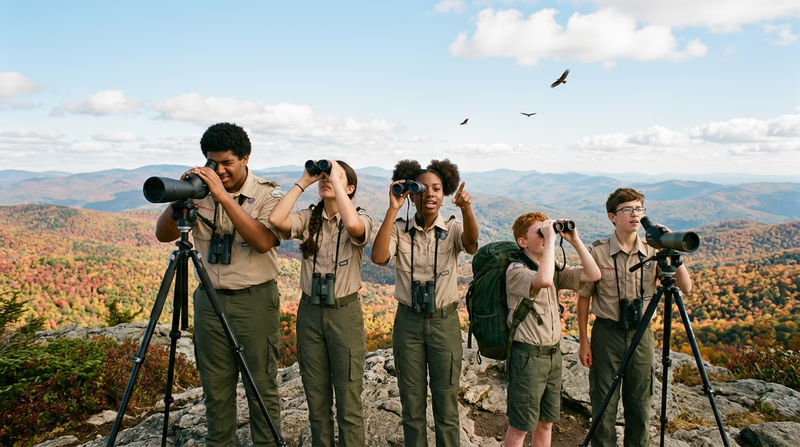
Every fall, raptors — hawks, eagles, falcons, and vultures — migrate south along mountain ridges and coastlines. Hawk watch sites are places where birders gather to count and identify these birds of prey as they stream overhead, sometimes by the thousands in a single day.
Birding by Ear
Many experienced birders identify more birds by sound than by sight. Learning bird songs and calls takes practice, but it is one of the most valuable skills you can develop. A bird hidden deep in a thicket can still be identified by its voice — and Requirement 7 of this badge will challenge you to do exactly that.
Big Day and Big Year Birding
Competitive birding is a real thing. A “Big Day” is a race to identify as many species as possible in 24 hours. A “Big Year” stretches the challenge across an entire calendar year. These events inspire birders to explore new habitats and push their identification skills to the limit.
Ready to discover why birds matter — and why scientists consider them some of the most important animals on the planet? Let’s start with Requirement 1.
Req 1 — Birds & the Environment
This requirement asks you to understand three big ideas:
- Why we study birds — what makes them worth paying attention to
- Why birds are environmental indicators — how their health reflects the health of the world around them
- How birds fit into ecosystems — the roles they play in nature’s web
Why Study Birds?
Birds are found on every continent, in every habitat, from frozen Antarctic shores to scorching desert canyons. There are roughly 10,000 known bird species worldwide, and about 900 of those have been recorded in North America. That variety alone makes them fascinating — but there are practical reasons to study birds, too.
Birds are relatively easy to observe. Unlike many mammals that are nocturnal or hide underground, most birds are active during the day, visible, and vocal. This makes them one of the most accessible groups of wild animals to study. Scientists have been keeping detailed records of bird populations for over a century, which gives us a long, reliable timeline to compare against.
Birds as Environmental Indicators
An environmental indicator is a species whose health and population trends tell us something about the overall health of an ecosystem. Birds are outstanding indicators for several reasons:
- They respond quickly to change. When a habitat is damaged — by pollution, development, or climate shifts — bird populations often decline before other species. They act as an early warning system.
- They occupy many levels of the food chain. Some birds eat seeds, some eat insects, some eat fish, and some eat other birds. A decline in bird populations can signal problems anywhere in the food web.
- They are widespread and diverse. Because birds live in so many habitats, changes in their populations can reveal environmental problems across entire regions.
- They are easy to count. Citizen science programs like the Christmas Bird Count and eBird give scientists massive datasets to analyze.
The Canary in the Coal Mine
You may have heard the phrase “canary in a coal mine.” In the early 1900s, coal miners brought caged canaries underground with them. If toxic gases like carbon monoxide built up, the canary — being smaller and more sensitive — would show symptoms before the miners did, giving them time to evacuate. Birds still serve this role in a broader sense: when bird populations drop, something in the environment is going wrong.
Real-World Examples
- Bald Eagle and DDT: DDT pesticide caused eggshell thinning in Bald Eagles and other raptors, crashing their populations. The ban on DDT in 1972 — prompted in part by Rachel Carson’s book Silent Spring — allowed eagle populations to recover.
- Spotted Owl and Old-Growth Forests: The Northern Spotted Owl’s decline signaled that old-growth forests in the Pacific Northwest were being logged too quickly.
- Grassland Birds and Agriculture: Species like the Eastern Meadowlark have declined steeply as native grasslands have been converted to cropland, revealing the impact of large-scale farming on ecosystems.
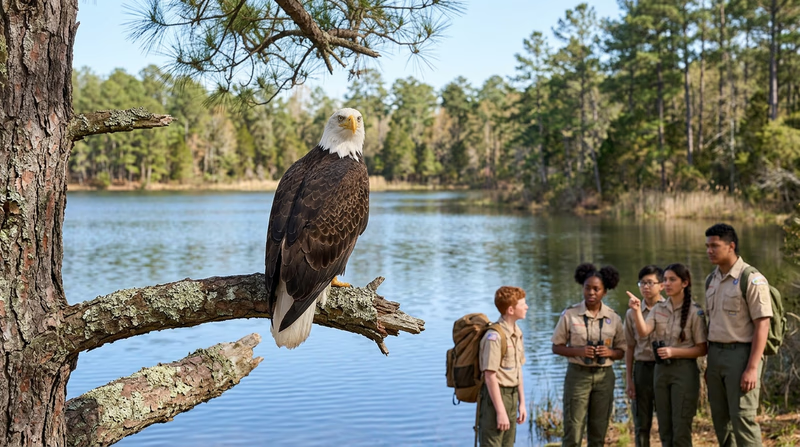
Birds in the Ecosystem
An ecosystem is a community of living organisms interacting with each other and their physical environment. Birds play several critical roles in these systems:
Seed Dispersal
Many birds eat fruits and berries, then fly to a new location before excreting the seeds. This spreads plants across the landscape, helping forests and grasslands regenerate. Some plants depend almost entirely on birds for seed dispersal.
Pollination
Hummingbirds, sunbirds, and honeyeaters pollinate flowers as they feed on nectar. In some ecosystems, certain plants cannot reproduce without their bird pollinators.
Pest Control
A single barn swallow can eat up to 850 insects per day. Warblers, flycatchers, and woodpeckers consume enormous quantities of insects that would otherwise damage crops and forests. Birds provide billions of dollars in natural pest control every year.
Scavenging
Vultures and other scavengers clean up dead animals, preventing the spread of disease. In regions where vulture populations have crashed, carcass decomposition slows and disease rates in other animals — including livestock — increase.
Food Web Connections
Birds are prey for larger predators like hawks, owls, foxes, and snakes. They are also predators themselves, keeping insect and rodent populations in check. Remove birds from an ecosystem, and the entire food web shifts out of balance.
All About Birds — Cornell Lab of Ornithology The Cornell Lab's free bird guide with species profiles, range maps, sounds, and ID tips for every North American bird. Link: All About Birds — Cornell Lab of Ornithology — https://www.allaboutbirds.org/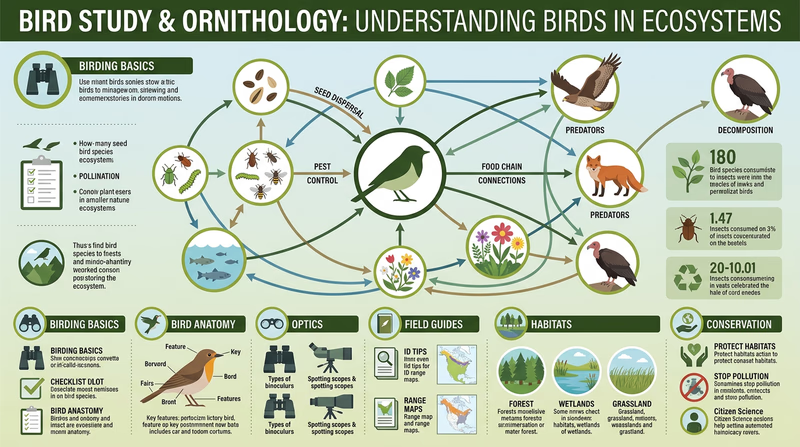
Now that you understand why birds matter, it is time to learn their anatomy — starting with the parts of a perched bird.
Req 2a — Bird Body Parts
Knowing the parts of a bird is like knowing the positions on a soccer field — it gives you a shared language to describe what you see. When you spot a bird and want to identify it or describe it to someone else, you need to know whether that flash of color was on the bird’s crown, its nape, or its rump. This requirement builds that vocabulary.
The 15 Parts You Need to Know
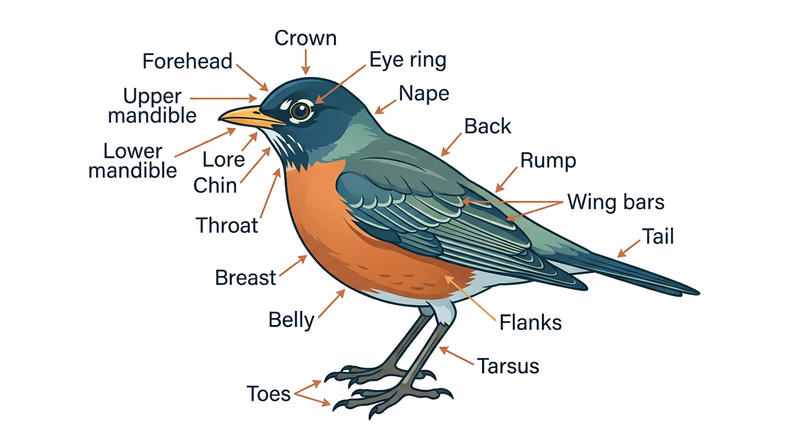
Here are the major external parts of a perched bird. You will sketch or trace a bird and label at least 15 of these:
Head Region
- Crown — The top of the head. Many species have distinctive crown colors or patterns (think of the Ruby-crowned Kinglet’s hidden red patch).
- Forehead — The area between the base of the bill and the crown.
- Nape — The back of the neck, just below the crown. Some warblers have distinctive nape patterns.
- Eye ring — A ring of color (often white or pale) surrounding the eye. This is a key field mark for many species.
- Lore — The small area between the eye and the base of the bill. Dark lores can give a bird a “masked” appearance.
- Chin — The small area directly below the bill.
- Throat — Below the chin, the front of the neck. Many birds have brightly colored throats (like the Ruby-throated Hummingbird).
Bill
- Upper mandible — The top half of the bill.
- Lower mandible — The bottom half of the bill.
Bill shape is one of the most important clues for identifying a bird’s diet and family group. You will explore this more in Requirement 6.
Body
- Breast — The upper front of the body, below the throat. The American Robin’s orange breast is one of the most recognized field marks in North America.
- Belly — The lower front of the body, below the breast.
- Flanks — The sides of the body, between the breast/belly and the wings.
- Back — The upper surface of the body between the wings.
- Rump — The lower back area, just above the tail. The Yellow-rumped Warbler gets its name from this feature.
Wings and Tail
- Wing bars — Pale or colored stripes across the folded wing, formed by the tips of the wing coverts. Many species have two wing bars.
- Tail — The fan of feathers extending behind the body. Tail shape (forked, rounded, squared) is a useful field mark.
Legs and Feet
- Tarsus — The lower leg (the visible “leg” of a perched bird, which is actually equivalent to your foot and ankle).
- Toes — Most perching birds have three toes forward and one back, an arrangement called anisodactyl.
Tips for Your Sketch
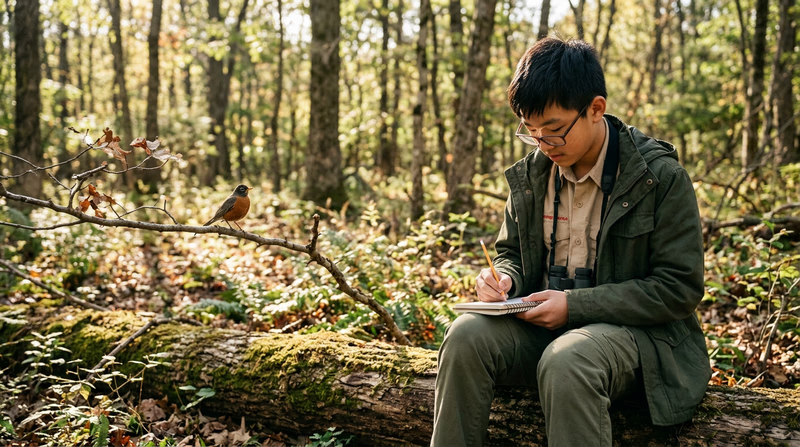
You do not need to be an artist to complete this requirement. The goal is to learn where each part is located, not to create a museum-quality drawing. Here are some tips:
Sketching Success
Follow these steps for a clean, labeled drawing- Find a reference image: Use a clear side-view photo from a field guide or the Cornell Lab website.
- Trace or sketch the outline: Focus on the overall shape — head, body, tail, legs.
- Add major features: Bill, eye, wing, tail feathers.
- Label each part: Use lines that point clearly to each feature, and write the name at the end of each line.
- Include at least 15 labels: Choose from the list above.
- Keep labels on one side if possible: This keeps the drawing clean and readable.
Now that you know the parts of a perched bird, it is time to zoom in on the wing and learn the different types of feathers.
Req 2b — Wing Feathers
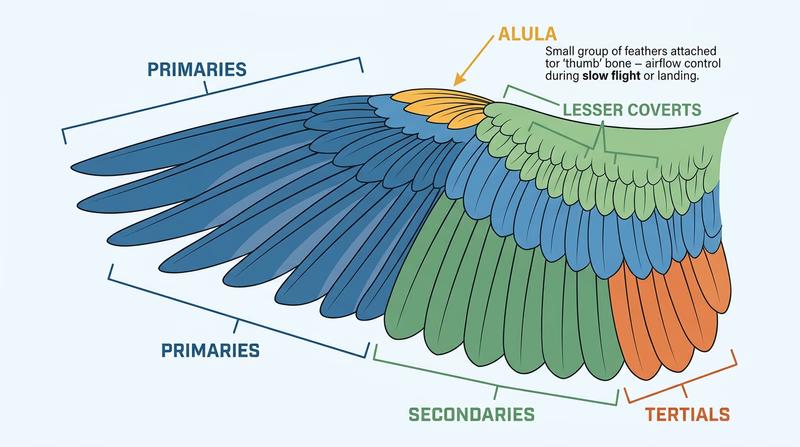
A bird’s wing is an engineering marvel. Every feather has a specific job, and together they create the lift, thrust, and maneuverability that make flight possible. This requirement teaches you to identify the six main types of wing feathers so you can understand how a wing works.
The Six Types of Wing Feathers
When you look at a bird’s wing fully extended (spread open), the feathers are arranged in overlapping layers from the leading edge to the trailing edge. Here are the six types you need to label:
1. Primaries
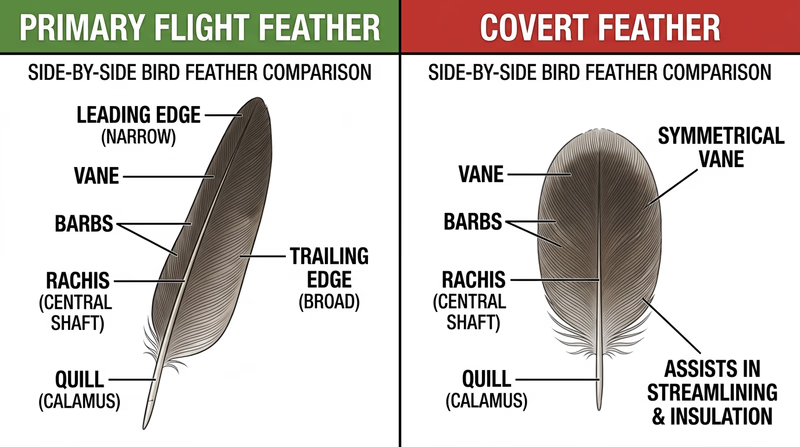
The primaries are the long, stiff feathers at the outer tip of the wing. Most birds have 10 primaries on each wing. These feathers provide thrust — they are the “engine” that pushes the bird through the air. Primaries are attached to the bones of the bird’s “hand” (equivalent to your fingers and palm).
2. Secondaries
The secondaries are the long feathers on the inner part of the wing, between the primaries and the body. They are attached to the bird’s “forearm” (the ulna bone). Secondaries provide lift — they are the “wing” that keeps the bird in the air. The number of secondaries varies by species: a hummingbird has 6, while an albatross has over 30.
3. Tertials
The tertials (sometimes called tertiaries) are the innermost flight feathers, closest to the body. They overlap the secondaries when the wing is folded and help create a smooth aerodynamic surface. In many species, tertials have distinctive patterns that are useful for identification.
4. Greater Coverts
The greater coverts are a row of feathers that overlap the base of the secondaries. They smooth out the wing surface and help air flow cleanly over the flight feathers. “Covert” means “covering” — and that is exactly what they do.
5. Lesser Coverts
The lesser coverts are smaller feathers covering the area between the greater coverts and the leading edge of the wing. They fill in gaps and create the smooth, rounded shape of the upper wing surface.
6. Alula
The alula (sometimes called the “bastard wing”) is a small group of feathers — usually three to five — attached to the bird’s “thumb.” The alula works like the slats on an airplane wing: when the bird raises it during slow flight or landing, it prevents stalling by directing airflow over the wing surface. Watch a bird come in for a landing and you might see the alula pop up.
Tips for Your Wing Sketch
Like the body sketch in Req 2a, this does not need to be a work of art. The goal is learning where each feather group is located.
Wing Sketching Guide
Steps for a clear, labeled wing drawing- Find a reference image: Search for “bird wing anatomy diagram” or use the Cornell Lab’s resources.
- Draw or trace the wing outline: Show it fully extended with feathers spread.
- Mark the feather groups: Start from the tip (primaries) and work inward.
- Use bracket lines: Draw brackets along each feather group rather than pointing to a single feather.
- Label all six types: Primaries, secondaries, tertials, greater coverts, lesser coverts, alula.
- Add a directional note: Mark which end is the wingtip and which is closest to the body.
How Feathers Work Together
Understanding feather types is not just about labeling — it helps you understand flight. Each feather group has a job:
| Feather Type | Job | Analogy |
|---|---|---|
| Primaries | Generate thrust | Propeller |
| Secondaries | Generate lift | Airplane wing |
| Tertials | Smooth body-to-wing transition | Fairing on a car |
| Greater coverts | Smooth airflow over flight feathers | Roof shingles |
| Lesser coverts | Fill gaps at the leading edge | Weatherstripping |
| Alula | Prevent stalling at low speed | Airplane slat |
You now know both the external parts of a bird and the anatomy of its wing. Next, you will learn about the tools that help you see birds up close — binoculars, spotting scopes, and monoculars.
Req 3a — Specification Numbers
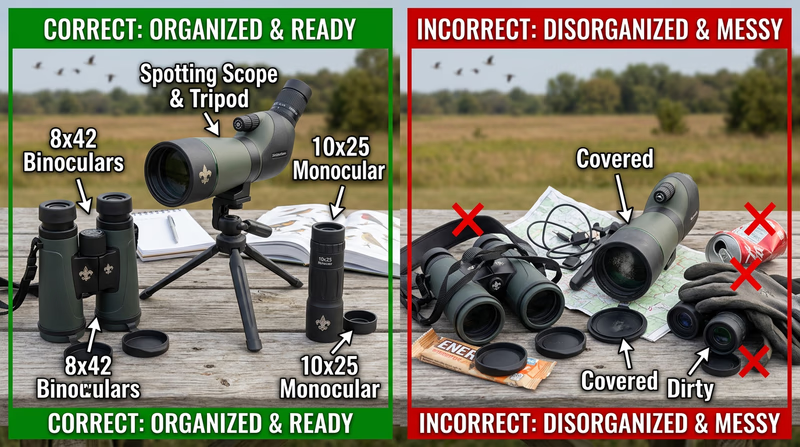
Every pair of binoculars, every spotting scope, and every monocular has a set of numbers printed on it — something like 8x42 or 10x50. These numbers tell you exactly what the optic can do. Understanding them will help you choose the right tool for the job and explain your choice to your counselor.
Decoding the Numbers
The specification numbers follow the same format for all three types of optics: magnification × objective lens diameter.
Magnification (the first number)
The first number tells you how many times closer an object will appear. If your binoculars say 8x, a bird 80 feet away will look as if it were 10 feet away (80 ÷ 8 = 10).
- Lower magnification (7x–8x): Wider field of view, easier to hold steady, better for scanning and finding birds.
- Higher magnification (10x–12x): Objects appear closer, but the field of view is narrower and image shake increases.
Objective Lens Diameter (the second number)
The second number is the diameter of the front lenses in millimeters. Larger lenses gather more light, which means a brighter, clearer image — especially in dim conditions like dawn, dusk, or deep forest.
- Smaller objectives (25–32 mm): Compact and lightweight, great for day use in bright conditions.
- Larger objectives (42–50 mm): Brighter images, better in low light, but heavier.
Putting It Together
| Specification | Magnification | Objective | Best For |
|---|---|---|---|
| 8x42 | 8 times closer | 42 mm lens | General birding (most popular choice) |
| 10x42 | 10 times closer | 42 mm lens | Birding where subjects are farther away |
| 8x25 | 8 times closer | 25 mm lens | Compact travel binoculars |
| 20–60x80 | 20–60 times closer | 80 mm lens | Spotting scope for distant shorebirds |
Binoculars vs. Spotting Scope vs. Monocular
Binoculars
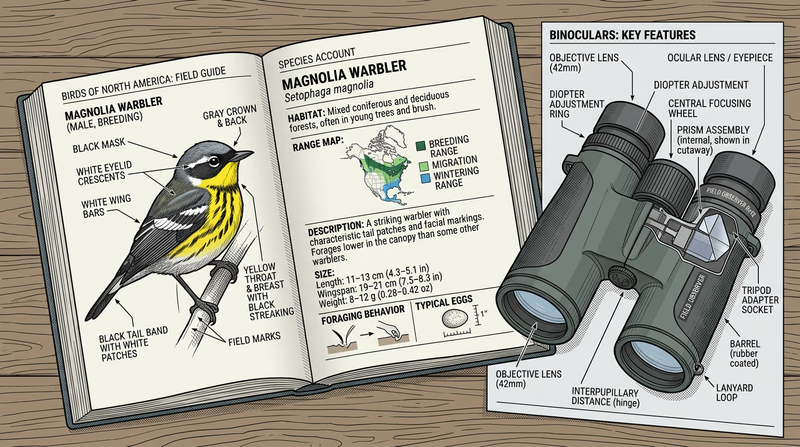
Two barrels, two eyes. Binoculars are the primary tool for birding. They are portable, quick to use, and give you a natural depth-of-field view. Most birders use 8x42 or 10x42 binoculars.
Spotting Scope
A single-barrel telescope on a tripod. Spotting scopes offer much higher magnification (20x–60x), making them ideal for viewing distant shorebirds, waterfowl, or hawks. The tripod keeps the image steady at those high magnifications.
Monocular
A single-barrel, handheld optic — essentially half of a pair of binoculars. Monoculars are compact and lightweight, making them a good backup or budget option. However, viewing through one eye for extended periods is less comfortable than binoculars.
Now that you know what the numbers mean, let’s learn how to actually use your optics — starting with adjusting the eyepiece and focusing.
Req 3b — Focus & Adjustment
Getting a sharp, comfortable view through binoculars is not just about turning the focus wheel. You need to calibrate the optics to your own eyes first. Most people’s eyes are slightly different from each other, and binoculars are designed to compensate for that. Here is how to set them up properly.
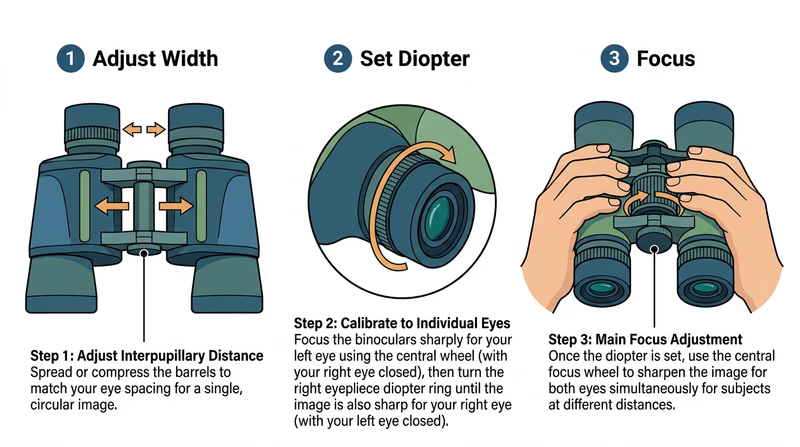
Step-by-Step: Adjusting and Focusing Binoculars
Step 1: Adjust the Interpupillary Distance
Binoculars have a hinge in the center that lets you adjust the distance between the two barrels. Fold or unfold the barrels until you see a single, round circle of light — not two overlapping circles and not a figure-eight shape. This matches the binoculars to the distance between your eyes.
Step 2: Set the Diopter
The diopter adjustment ring is usually on the right eyepiece (sometimes on the center focus knob). It compensates for differences in vision between your two eyes. Here is how to set it:
- Close your right eye (or cover the right lens).
- Look through the left barrel at a distant object with sharp detail — a sign, a tree branch, a building.
- Turn the center focus wheel until that object is perfectly sharp through your left eye.
- Now close your left eye (or cover the left lens).
- Look through the right barrel at the same object.
- Turn the diopter ring on the right eyepiece until the object is sharp through your right eye. Do not touch the center focus wheel during this step.
- Open both eyes. The image should be crisp and comfortable.
Once the diopter is set, you generally do not need to adjust it again unless someone else uses your binoculars. Some birders note their diopter setting so they can reset it quickly.
Step 3: Focus in the Field
Once your diopter is set, focusing on a bird is simple: turn the center focus wheel until the image is sharp. With practice, you will be able to focus on a bird in under a second.
Quick-focus technique: Keep your binoculars around your neck, set to focus at a “resting distance” of about 30–50 feet. Most birds you spot will be in that range, so you will only need a small adjustment.
Focusing a Spotting Scope
Spotting scopes use a similar focus wheel, but because of the higher magnification, focusing is more sensitive. Small turns make big changes. Start at low magnification (e.g., 20x) to find your subject, focus until sharp, then zoom in to higher magnification and refine the focus.
Focusing a Monocular
A monocular typically has a single focus wheel on the barrel. Since there is only one eyepiece, there is no diopter adjustment or interpupillary distance to set.
Eye Relief and Eyecups
If you wear glasses, twist or fold down the rubber eyecups on your binoculars so you can get your glasses closer to the eyepiece lenses. If you do not wear glasses, extend the eyecups for a comfortable viewing position. Proper eye relief prevents the dark crescent shadows that appear at the edges of the image.
How to Use Binoculars — Optics Planet Step-by-step guide to binocular setup, including diopter adjustment and focusing techniques. Link: How to Use Binoculars — Optics Planet — https://www.opticsplanet.com/howto/how-to-use-binoculars.htmlYour optics are adjusted and focused. Next, learn how to keep those lenses clean and in top condition.
Req 3c — Lens Care
Your binoculars are your most important birding tool. Dirty lenses mean blurry views, and careless cleaning can scratch the coatings that make those lenses work. Learning to care for your optics properly will keep them performing well for years.
Daily Care
The best way to keep your lenses clean is to prevent them from getting dirty in the first place.
Lens Protection Habits
Simple habits that prevent most lens problems- Keep lens caps on: Use the objective (front) lens caps whenever binoculars are not in use. Many binoculars have attached caps that flip down when you raise them.
- Use the neck strap: Always wear the strap around your neck to prevent drops.
- Store them properly: Keep binoculars in their case when not in use, in a dry place.
- Avoid touching the glass: Oils from your fingers leave smudges that attract dust.
- Keep away from extreme heat: Never leave optics in a hot car — heat can damage internal lubricants and cause lenses to separate from their mountings.
How to Clean Your Lenses
When your lenses do get dirty — and they will — follow this process. The order matters. Wiping a dusty lens without removing particles first can grind grit across the coating and scratch it.
Step 1: Remove Loose Particles
Use a lens blower brush (a small rubber bulb with a brush tip) to blow dust and debris off the lens surface. If you do not have one, hold the binoculars upside down so particles fall away from the lens rather than settling deeper.
Never blow on the lens with your mouth. Your breath deposits moisture and tiny saliva droplets that can leave residue.
Step 2: Brush Gently
If particles remain, use a soft lens brush (camel hair or similar) to gently sweep them away. Brush from the center outward in a single direction — do not rub back and forth.
Step 3: Wipe with a Lens Cloth
Use a clean microfiber lens cloth or lens tissue (the kind made for camera lenses or eyeglasses). Apply a small amount of lens cleaning solution to the cloth — not directly to the lens. Wipe in gentle, circular motions from the center outward.
Step 4: Dry and Inspect
Use a dry section of the microfiber cloth to remove any remaining moisture. Hold the binoculars up to the light and check for smudges or streaks. Repeat if needed.

Caring for the Body
Lenses get most of the attention, but the rest of the optic needs care too:
- Wipe the body with a damp cloth to remove dirt, mud, or salt spray.
- Check the hinge and focus wheel for smooth operation. If they feel gritty, do not force them.
- Dry thoroughly after use in rain or humid conditions. Leave the lens caps off in a dry room so moisture can evaporate.
- Never disassemble the binoculars yourself. If something is wrong internally, take them to a professional.
Your optics are clean and ready to use. Now let’s figure out which type of viewing device works best in different situations.
Req 3d — Choosing Your Optics
Binoculars, spotting scopes, and monoculars each have strengths and limitations. The best birders know when to reach for each one — and sometimes they use more than one on the same outing.
Binoculars — The Everyday Essential
Binoculars are the single most important tool in birding. They are versatile enough for almost any situation.
Best for:
- Woodland and forest birding — Birds move quickly through trees, and binoculars let you scan and follow them with both eyes.
- Backyard birding — Quick and easy to grab when a bird appears at the feeder.
- Hiking and field trips — Lightweight enough to carry all day around your neck.
- General-purpose scanning — A wide field of view makes it easy to find birds in flight or flitting through brush.
Limitations:
- Not powerful enough for very distant birds (shorebirds on a mudflat, waterfowl far out on a lake).
- At magnifications above 10x, image shake becomes noticeable without a rest.
Recommended for Bird Study
For this merit badge, binoculars will be your primary tool. If you can only have one optic, make it binoculars.
Spotting Scope — The Long-Range Specialist
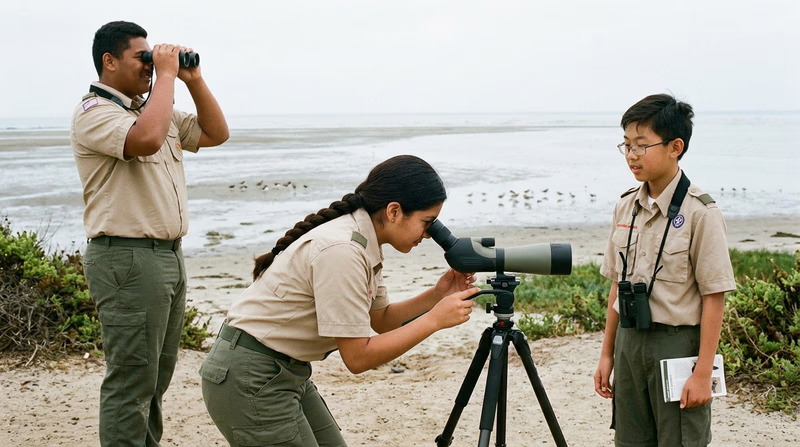
A spotting scope is a small telescope designed for field use, mounted on a tripod for stability.
Best for:
- Shorebird and waterbird observation — Birds feeding on distant mudflats or swimming far from shore.
- Hawk watching — Identifying raptors soaring high overhead or riding thermals far away.
- Stationary observation points — Set up at one location and watch birds come and go.
- Studying details — At 30x–60x magnification, you can see feather patterns, eye color, and leg bands that are invisible through binoculars.
Limitations:
- Heavy and awkward to carry on long hikes.
- Requires a tripod — not a grab-and-go tool.
- Narrow field of view at high magnifications makes finding birds harder.
- Not practical for quick-moving woodland birds.
Monocular — The Compact Backup
A monocular is essentially one half of a pair of binoculars. It fits in a pocket and weighs almost nothing.
Best for:
- Quick checks — You hear a bird and want a quick look without pulling out binoculars.
- Weight-conscious outings — When every ounce matters (long backpacking trips).
- Budget birding — A decent monocular costs less than binoculars of similar quality.
- Supplemental use — Pair with binoculars as a lightweight backup.
Limitations:
- Viewing with one eye is less comfortable and reduces depth perception.
- Generally lower image quality than comparable binoculars.
- Harder to hold steady than two-barreled binoculars.
Choosing the Right Tool for the Habitat
| Habitat / Situation | Best Device | Why |
|---|---|---|
| Forest or woodland | Binoculars | Quick tracking of fast-moving birds in dense cover |
| Open shoreline or mudflat | Spotting scope | Distant shorebirds need high magnification |
| Backyard or feeder | Binoculars | Convenient, quick to use |
| Long hike or backpacking | Binoculars (compact) | Lightweight and versatile |
| Hawk watch overlook | Spotting scope + binoculars | Scope for distant IDs, binoculars for scanning |
| Boat or canoe | Binoculars (waterproof) | Stable viewing from an unstable platform |
| Quick field check | Monocular | Fastest to deploy from a pocket |
You now know your optics inside and out. Next up: learning to use the most important reference tool in bird study — the field guide.
Req 4 — Using a Field Guide
This requirement covers two essential birding skills and asks you to demonstrate them for six different bird types:
- Using a field guide — finding a species quickly and reading its account
- Reading range maps — understanding where a species lives during different seasons
The six bird types you need to look up are:
- (a) Seabird
- (b) Plover
- (c) Falcon or hawk
- (d) Warbler or vireo
- (e) Heron or egret
- (f) Sparrow
How a Field Guide Is Organized
Most field guides organize birds by taxonomic order — grouping related species together. This means all the ducks are together, all the hawks are together, all the warblers are together, and so on. Here is the general order you will find in most North American field guides:
- Waterfowl (ducks, geese, swans)
- Gamebirds (grouse, quail, turkeys)
- Seabirds (petrels, pelicans, cormorants)
- Wading birds (herons, egrets, ibises)
- Shorebirds (sandpipers, plovers)
- Gulls and terns
- Raptors (hawks, eagles, falcons)
- Owls
- Woodpeckers
- Songbirds (flycatchers, vireos, jays, swallows, wrens, thrushes, warblers, sparrows, finches)
Knowing this order helps you flip to the right section quickly. If you spot a large wading bird, go to section 4 — you do not need to search the whole book.
What a Species Account Tells You
Each species in a field guide has an account that typically includes:
- Illustration or photograph — Showing the bird in different plumages (male, female, juvenile, breeding, non-breeding).
- Field marks — Key features pointed out with arrows or labels: color patterns, bill shape, tail shape, wing bars.
- Size — Length from bill tip to tail tip, and sometimes wingspan.
- Habitat — Where this bird is typically found.
- Voice — A written description of the bird’s songs and calls.
- Range map — A color-coded map showing where the bird lives during different seasons.
Reading Range Maps
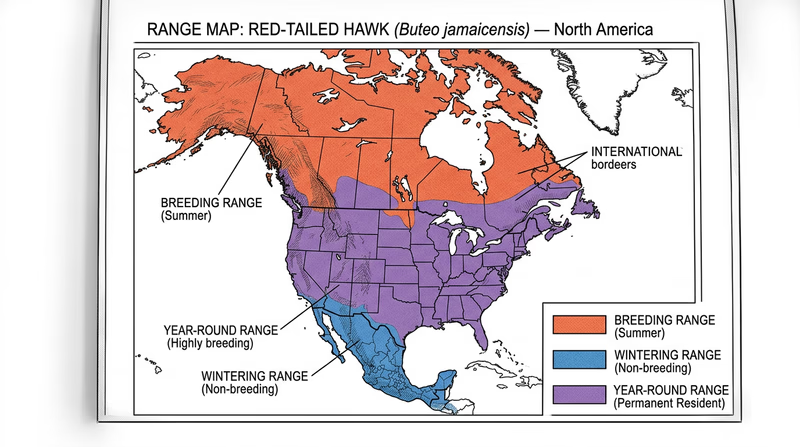
Range maps are one of the most useful tools in your field guide. They show you where a bird can be found — and when. Most range maps use a standard color code:
| Color | Meaning |
|---|---|
| Red / Orange | Breeding range (summer) — the bird nests here |
| Blue | Wintering range — the bird spends the cold months here |
| Purple / Green | Year-round range — the bird lives here all year |
| Yellow | Migration path — the bird passes through during spring or fall |
How to Read a Range Map
- Find the species in your field guide.
- Locate your area on the range map.
- Check the color at your location to determine when (or if) the bird is present.
- Note boundaries — if your area is at the edge of a range, the bird may be uncommon or difficult to find there.
Your Six Bird Types
For this requirement, you need to find one species from each of the following types and show your counselor its range map. Here are some suggestions to get you started — but feel free to choose any species from the correct group:
(a) Seabird
Seabirds spend most of their lives over open ocean. Examples: Atlantic Puffin, Brown Pelican, Northern Gannet, Black-legged Kittiwake.
(b) Plover
Plovers are small to medium shorebirds with round heads and short bills. Examples: Killdeer (common across North America), Semipalmated Plover, Black-bellied Plover, Piping Plover.
(c) Falcon or Hawk
Raptors — birds of prey. Examples: Red-tailed Hawk (the most common hawk in North America), American Kestrel (smallest North American falcon), Peregrine Falcon, Cooper’s Hawk.
(d) Warbler or Vireo
Small, often colorful songbirds. Examples: Yellow Warbler, Black-and-white Warbler, Red-eyed Vireo, Yellow-rumped Warbler.
(e) Heron or Egret
Tall, long-legged wading birds. Examples: Great Blue Heron, Great Egret, Green Heron, Snowy Egret.
(f) Sparrow
Small, seed-eating songbirds, often with streaky brown plumage. Examples: Song Sparrow, White-throated Sparrow, Chipping Sparrow, House Sparrow (note: House Sparrow is non-native).
Range Map Practice
What to point out for each species- Breeding range (summer): Where does this bird nest?
- Wintering range: Where does it spend the cold months?
- Year-round range: Is there an area where this bird lives all year?
- Migration corridor: Does the field guide show where this bird passes through?
- Your location: Is this bird expected in your area? If so, during which season?
Digital Field Guides
While printed field guides remain essential tools, digital alternatives are powerful companions:
- Merlin Bird ID (free, from Cornell Lab) — Identifies birds from photos, sounds, or a series of questions about what you saw.
- eBird (free, from Cornell Lab) — Shows real-time sighting data, including range maps based on actual observer reports.
- Audubon Bird Guide (free) — Digital field guide with illustrations, photos, and range maps.
You can now navigate a field guide and read range maps. Next, it is time to put those skills to work in the field — by observing and recording 20 bird species.
Req 5 — Field Notebook
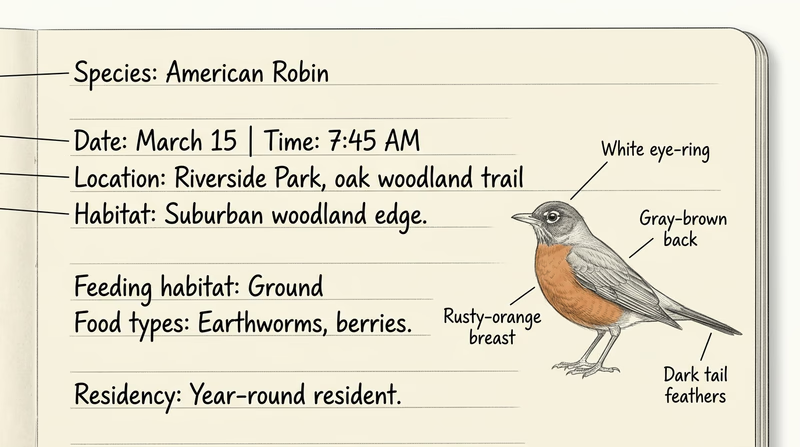
This requirement is the heart of the Bird Study merit badge. You will go outside, observe real birds, and build a field notebook with 20 species entries. For each species, you need to record:
- (a) Date and time of observation
- (b) Location and habitat
- (c) Main feeding habitat and two likely food types
- (d) Whether the bird is a migrant or a summer, winter, or year-round resident
Setting Up Your Field Notebook
Your field notebook can be a physical notebook, a binder with printed pages, or a digital document — but a physical notebook is traditional and practical in the field. Whatever format you choose, create a consistent layout for each entry so you do not forget any of the required information.
Bird Study Field Notebook Worksheet Resource: Bird Study Field Notebook Worksheet — /merit-badges/bird-study/guide/field-notebook-worksheet/What Each Entry Should Include
Date and time — When did you observe the bird? Record the date and the approximate time. Early morning observations are different from midday sightings — many birds are most active at dawn.
Location and habitat — Where were you? Be specific: “Oak woodland trail behind Sunset Elementary School” is better than “a park.” Describe the habitat type: forest, grassland, wetland, suburban yard, lakeshore, etc.
Main feeding habitat and two food types — Where does this species typically feed? On the ground? In the tree canopy? Over water? Then list two types of food the bird is likely to eat. You can observe this directly (you watched a robin pull a worm from the ground) or research it in your field guide.
Residency status — Is this bird a year-round resident, a summer breeder, a winter visitor, or a migrant passing through? Your field guide’s range map will help you determine this. Check what color your area falls in on the range map.
How to Find 20 Species
Twenty species might sound like a lot, but it is very achievable. Here are strategies for building your list:
Start in Your Yard
You can probably find 5–10 species without leaving home. Common backyard birds include American Robin, Northern Cardinal, Blue Jay, House Sparrow, Mourning Dove, American Goldfinch, Black-capped Chickadee, and White-breasted Nuthatch. Set up a feeder or birdbath to attract more visitors.
Visit Different Habitats
Different habitats hold different birds. A trip to a local pond will give you waterfowl and wading birds. A walk through a forest will reveal woodpeckers, warblers, and thrushes. A visit to an open field might produce hawks, sparrows, and meadowlarks.
Habitat Hopping
Visit these habitats to diversify your species list- Your backyard or neighborhood: Common songbirds, sparrows, doves.
- A pond, lake, or stream: Ducks, geese, herons, kingfishers.
- A wooded park or forest: Woodpeckers, warblers, thrushes, owls (listen at dusk).
- An open field or meadow: Hawks overhead, sparrows in the grass, swallows in flight.
- A shoreline or mudflat: Gulls, sandpipers, plovers.
Go at the Right Time
Birds are most active during the first two hours after sunrise and the last hour before sunset. These are the best times to observe and identify the most species. Midday tends to be quieter, especially in warm weather.
Recording Feeding Habitat and Food Types
For each species, you need to note the bird’s main feeding habitat and list two types of food it is likely to eat. Here are some common patterns:
| Feeding Habitat | Example Species | Typical Foods |
|---|---|---|
| Ground | American Robin | Earthworms, berries |
| Tree trunk/bark | Downy Woodpecker | Insects (beetle larvae), suet |
| Tree canopy | Yellow Warbler | Caterpillars, small insects |
| Air (catching insects in flight) | Barn Swallow | Flying insects, beetles |
| Water surface | Mallard | Aquatic plants, seeds |
| Shoreline | Great Blue Heron | Fish, frogs |
Determining Residency Status
Use your field guide’s range map to determine whether each species is:
- Year-round resident — Lives in your area all year (shown in purple/green on most maps).
- Summer resident (breeder) — Nests in your area during spring and summer, migrates south for winter (shown in red/orange).
- Winter resident — Spends the cold months in your area, breeds farther north (shown in blue).
- Migrant — Passes through your area during spring or fall migration but does not stay to nest or overwinter (shown in yellow, if indicated).
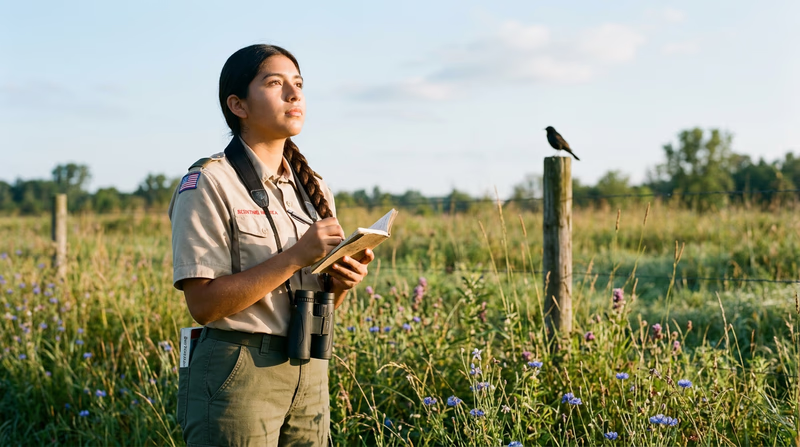
You are building your bird list and recording your observations. Next, you will learn how different birds are uniquely adapted to their habitats.
Req 6 — Habitat Adaptations
This requirement covers four types of physical adaptations that help birds thrive in their habitats:
- (a) Beak
- (b) Body
- (c) Leg and foot
- (d) Feathers/plumage
Every bird is shaped by its environment. Over millions of years of evolution, birds have developed specialized body parts that match the places they live and the food they eat. Understanding these adaptations is one of the most fascinating parts of bird study — and once you see the patterns, you will start noticing them everywhere.
Beak Adaptations
A bird’s beak (also called a bill) is its primary tool for gathering food. The size and shape of the beak tells you a lot about what a bird eats and how it feeds.
| Beak Type | Shape | Food / Function | Example Species |
|---|---|---|---|
| Conical | Short, thick, strong | Cracking seeds and nuts | Northern Cardinal, House Finch |
| Hooked | Curved, sharp tip | Tearing meat from prey | Red-tailed Hawk, Peregrine Falcon |
| Long and thin | Needle-like | Probing flowers for nectar | Ruby-throated Hummingbird |
| Flat and wide | Spatula-shaped | Straining food from water | Mallard, Northern Shoveler |
| Chisel-shaped | Straight, strong | Drilling into wood for insects | Downy Woodpecker, Pileated Woodpecker |
| Long and pointed | Spear-like | Stabbing fish | Great Blue Heron, Green Heron |
| Short and flat | Wide gape | Catching insects in flight | Common Nighthawk, Eastern Whip-poor-will |
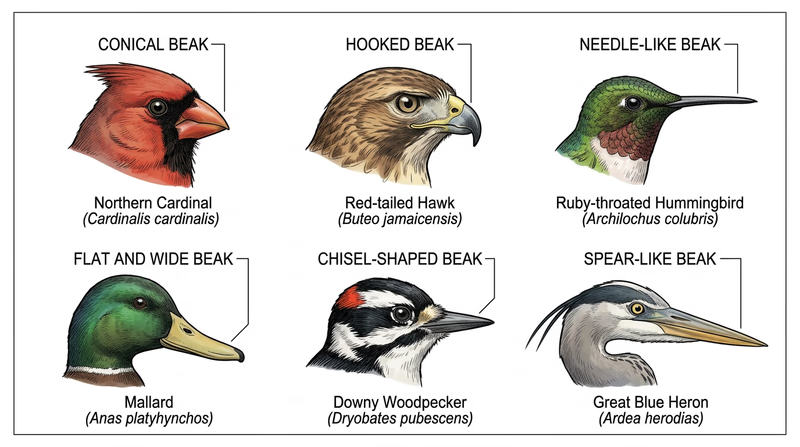
Body Adaptations
A bird’s overall body shape reflects how it moves through its environment.
Raptors (hawks, eagles, falcons) have compact, muscular bodies with broad chests. Their bodies are built for power — either soaring for long periods or diving at high speed. The Peregrine Falcon’s streamlined body allows it to reach speeds over 200 mph in a hunting dive (called a stoop).
Waterfowl (ducks, geese, swans) have wide, flat bodies that sit low in the water, providing stability. Their bodies are heavily insulated with dense down feathers and waterproof outer feathers.
Wading birds (herons, egrets) have tall, slender bodies that move quietly through shallow water. Their long necks can coil like a spring and strike at fish with lightning speed.
Songbirds (warblers, sparrows, finches) tend to have small, lightweight bodies that allow them to perch on thin branches and move quickly through dense vegetation.
Penguins have torpedo-shaped bodies adapted for swimming rather than flying. Their wings have evolved into flippers, and their dense bones help them dive deep.
Leg and Foot Adaptations
A bird’s legs and feet reveal where it spends most of its time.
| Foot Type | Features | Function | Example Species |
|---|---|---|---|
| Perching (anisodactyl) | Three toes forward, one back | Gripping branches | American Robin, most songbirds |
| Zygodactyl | Two toes forward, two back | Climbing and gripping bark | Woodpeckers, owls |
| Webbed | Toes connected by membrane | Swimming and paddling | Mallard, Canada Goose |
| Lobed | Toes with fleshy flaps | Swimming and walking on mud | American Coot, grebes |
| Raptorial (talons) | Large, curved, sharp claws | Seizing and killing prey | Red-tailed Hawk, Great Horned Owl |
| Wading | Long legs, long spread toes | Walking in shallow water | Great Blue Heron, Killdeer |
Leg length matters too. Herons and egrets have extremely long legs for wading in deeper water. Ducks have short legs set far back on the body, perfect for swimming but awkward on land (that is why they waddle). Hawks have short, powerful legs for striking prey.
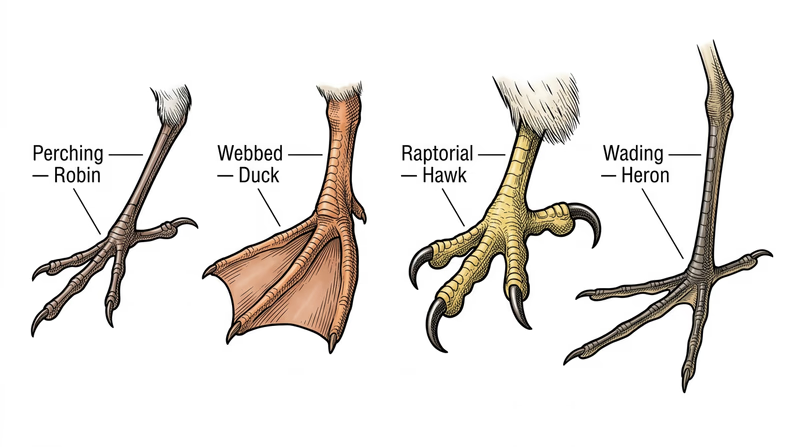
Feather and Plumage Adaptations
Feathers do far more than enable flight. They are critical for survival in every habitat.
Waterproofing: Ducks and other waterfowl have tightly interlocking outer feathers coated with oil from the preen gland near the tail. This creates a waterproof barrier that keeps the soft down feathers (and the bird’s skin) completely dry, even after hours of swimming.
Insulation: Penguins have the densest feathers of any bird — about 100 feathers per square inch. This extreme insulation allows them to survive Antarctic temperatures far below zero.
Camouflage: Many ground-nesting birds (like the American Woodcock or Killdeer) have mottled brown plumage that blends perfectly with leaves, soil, and grass. A sitting woodcock is nearly invisible from a few feet away.
Display: Male birds often have bright, elaborate plumage to attract mates. The Peacock’s spectacular tail fan is the most famous example, but many North American species — like the Wood Duck, Painted Bunting, and Scarlet Tanager — have stunning breeding plumage too.
Seasonal change: Some species molt into different plumages for different seasons. The American Goldfinch is bright yellow in summer but olive-drab in winter. This helps it blend in during the colder months when there is less cover.
Putting It All Together
When you discuss adaptations with your counselor, pick a specific bird order and describe how all four characteristics — beak, body, legs/feet, and feathers — work together for its habitat. For example:
Great Blue Heron (Order Pelecaniformes, wading habitat):
- Beak: Long, spear-like — stabs fish in shallow water
- Body: Tall, slender — moves quietly through marshes
- Legs/feet: Extremely long legs, long spread toes — wades in deep water without getting its body wet
- Feathers: Specialized powder-down feathers that shed a fine dust used for cleaning fish slime off its plumage
You now understand how birds are physically adapted to their habitats. Next, you will explore one of the most distinctive adaptations of all — their voices.
Req 7 — Songs & Calls
Birding by ear is one of the most powerful skills you can develop. On a typical morning walk through a forest, you might see a handful of birds — but you can hear dozens. Learning to identify birds by their sounds will dramatically increase the number of species you can detect, and it will deepen your understanding of bird behavior.
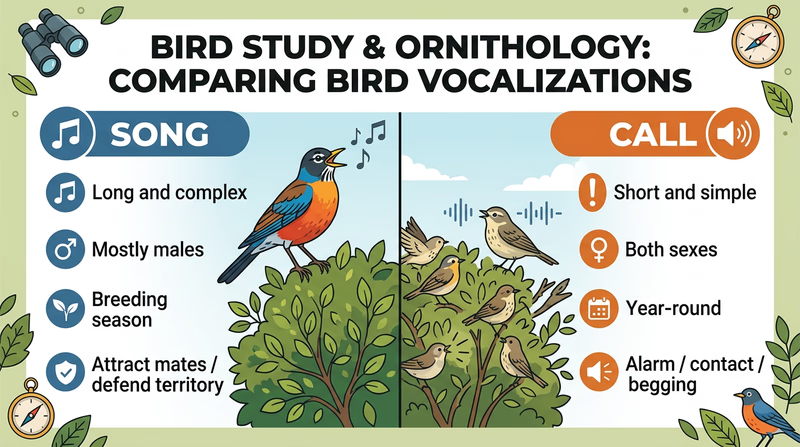
Songs vs. Calls — What Is the Difference?
This is a key distinction for your counselor conversation:
Songs
Songs are typically long, complex, and musical. They are produced almost exclusively by male songbirds (with some exceptions), primarily during the breeding season. Songs serve two main functions:
- Attracting a mate — A male’s song advertises his fitness and territory to females.
- Defending territory — A song warns other males: “This area is taken. Stay away.”
Songs are usually learned — young birds hear their father’s song and practice it until they get it right. Some species, like the Northern Mockingbird, learn and reproduce the songs of many other species.
Calls
Calls are short, simple sounds made by both males and females throughout the year. They serve practical, immediate purposes:
- Alarm calls — Warning of a predator (“Hawk! Get down!”)
- Contact calls — Staying in touch with the flock (“I am here, where are you?”)
- Begging calls — Nestlings begging parents for food
- Flight calls — Coordinating group movement during migration or flock flight
| Feature | Song | Call |
|---|---|---|
| Length | Long, complex | Short, simple |
| Who sings | Mostly males | Both males and females |
| When | Mainly breeding season | Year-round |
| Purpose | Attract mate, defend territory | Alarm, contact, begging |
| Learned? | Usually learned from parents | Mostly innate (born knowing it) |
Why Do Birds Sing?
The function of bird song comes down to survival and reproduction:
Territory defense — A singing bird is announcing ownership of a patch of habitat that contains food, shelter, and nesting sites. Studies have shown that when a territorial male is removed, neighboring males quickly expand into his area — but when a speaker playing his song is placed in the territory, the neighbors stay away. The song alone is enough to defend the territory.
Mate attraction — Females often choose mates based on the quality and complexity of their songs. A male with a bigger song repertoire may signal better genes, better health, or more experience — all desirable traits in a partner.
Species recognition — Each species has a unique song pattern. This helps birds find mates of their own species, even in habitats shared with many other species.
Learning to Identify Birds by Sound
For this requirement, you need to identify five of the 20 species in your field notebook by song or call alone. Here is how to build that skill:
Start with Common, Distinctive Songs
Some birds have songs that are easy to remember because they sound like English phrases. These mnemonics (memory aids) have been used by birders for generations:
| Bird | Mnemonic | Sound Description |
|---|---|---|
| Barred Owl | “Who cooks for you? Who cooks for you-all?” | Deep, hooting rhythm |
| White-throated Sparrow | “Oh sweet Canada, Canada, Canada” | Clear, whistled notes |
| Carolina Wren | “Teakettle, teakettle, teakettle” | Loud, rolling phrase |
| American Robin | “Cheerily, cheer up, cheer up, cheerily” | Rich, caroling melody |
| Black-capped Chickadee | “Chick-a-dee-dee-dee” (call) | Buzzy, staccato notes |
Use Technology
- Merlin Bird ID (free app) — Has a “Sound ID” feature that listens through your phone’s microphone and identifies birds singing in real time. Use it to confirm what you hear.
- Cornell Lab’s Macaulay Library — The world’s largest archive of bird sounds. You can listen to recordings of any North American species online.
- eBird — Species pages include sound recordings alongside photos and range maps.
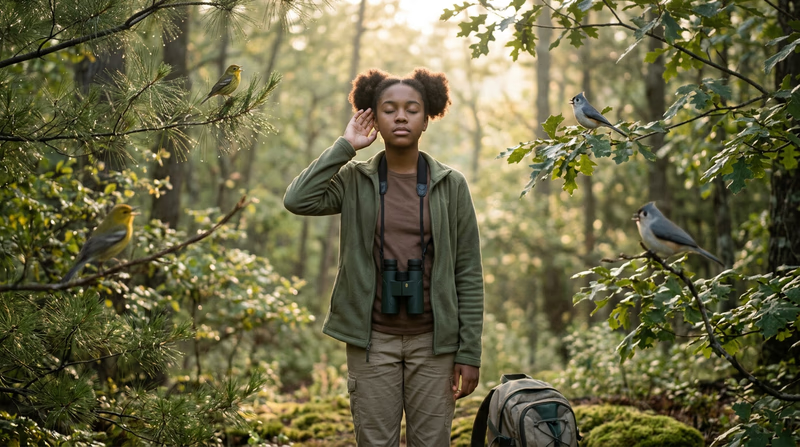
Recording Your Five Species
For each of the five species you identify by sound, your field notebook entry should include:
- A description of the song or call — Use words like buzzy, whistled, trilled, warbled, harsh, musical, ascending, descending. Try to capture the rhythm and pattern.
- The behavior of the bird — What was the bird doing while singing? Perched on a high branch? Hidden in a thicket? Flying overhead?
- Why you think it was making that sound — Was it defending territory (singing from an exposed perch)? Alarming about a predator (short, rapid call notes)? Calling to a mate or flock?
You have explored the world of bird sound. Now it is time to choose an immersive birding experience — a field trip, the Christmas Bird Count, or bird banding.
Req 8 — Choose Your Adventure
For this requirement, you choose one of three birding experiences. Read through all three options below, then pick the one that works best for your location and interests.
- Option A: Go on a field trip with a local birding club or experienced birders
- Option B: Research the Christmas Bird Count nearest your home
- Option C: Participate in a bird banding program
Option A — Birding Field Trip
Go on a field trip with a local birding club or with others who are knowledgeable about birds in your area. This is a great option if you have an Audubon chapter, nature center, or birding group nearby.
What You Need to Do
- Keep a list of all birds your group observed during the trip.
- Tell your counselor which birds you saw and why some species were common while others were present in small numbers.
- Explain what makes the area you visited good for finding birds.
How to Find a Field Trip
- Local Audubon Society chapters regularly lead free bird walks open to the public. Search your local chapter at audubon.org.
- Nature centers and wildlife refuges often schedule guided bird walks, especially during spring and fall migration.
- Your merit badge counselor may know local birding experts who would be willing to take you out.
- eBird Hotspots — Check eBird for hotspot locations near you. These are places where birders report lots of species.
Why Are Some Birds Common and Others Rare?
After the trip, your counselor will want to know why certain species were abundant while others were scarce. Think about these factors:
- Habitat match — Species whose habitat needs are met at that location will be common. A pond attracts ducks; a forest attracts woodpeckers.
- Food availability — Birds go where the food is. A meadow full of seed-bearing grasses will attract sparrows and finches.
- Time of year — Migration seasons bring temporary visitors. Breeding season concentrates certain species in their nesting habitats.
- Range and population — Some species simply have smaller populations or more restricted ranges.
Option B — Christmas Bird Count
The Christmas Bird Count (CBC) is the longest-running citizen science bird survey in the world, organized by the National Audubon Society since 1900. Every year between December 14 and January 5, tens of thousands of volunteers count every bird they can find within designated 15-mile-diameter circles across the Americas.
What You Need to Do
- Find the name and location of the Christmas Bird Count circle nearest your home.
- Obtain the results of a recent count.
- Explain what kinds of information are collected during the event.
- Tell your counselor which species were most common and why they are abundant.
- Identify uncommon species, explain why they were present in small numbers, and discuss whether their populations are declining and what could be done.
Finding Your Local Count
Visit the Audubon Society’s Christmas Bird Count website to search for count circles near you. Each circle has a compiler — a volunteer coordinator — who can share recent results and may welcome your participation.
Audubon Christmas Bird Count Find your nearest Christmas Bird Count circle, view results from past years, and learn how to participate. Link: Audubon Christmas Bird Count — https://www.audubon.org/conservation/science/christmas-bird-countWhat Data Is Collected
Each CBC circle records:
- Total number of each species observed within the circle during the count day
- Number of observers and party-hours (total hours spent in the field by all groups)
- Weather conditions during the count
- Effort data — miles driven, walked, and hours at feeders
This data, accumulated over more than 120 years, provides one of the most valuable long-term datasets in ornithology. Scientists use it to track population trends, range shifts, and the effects of climate change.
Option C — Bird Banding
Bird banding involves capturing wild birds, attaching a small, uniquely numbered aluminum band to their leg, recording measurements, and releasing them unharmed. When a banded bird is recaptured or found later, scientists learn about its movements, lifespan, and population health.
What You Need to Do
- Participate in a banding session with an approved federal or state agency, university researcher, bird observatory, or certified private individual.
- Explain who is able to band birds and why (it requires a federal permit).
- Explain why birds get banded.
- Explain what kinds of birds get banded.
- Describe how the birds were captured, the number of species recorded during your visit, and your role in the program.
Who Can Band Birds?
Bird banding in the United States requires a federal Bird Banding Permit issued by the U.S. Geological Survey (USGS) Bird Banding Laboratory. Only trained, licensed individuals may handle and band wild birds. This protects the birds from injury and ensures data quality. Permit holders have demonstrated their ability to safely handle birds, identify species, and take accurate measurements.
Why Band Birds?
- Track migration — Where does a specific bird go in winter? Banding reveals migration routes and timing.
- Study survival — How long do birds live? Recapturing banded birds provides lifespan data.
- Monitor populations — Are populations growing, stable, or declining? Banding data provides population estimates.
- Understand behavior — Do birds return to the same nesting site? How far do young birds disperse from where they hatched?
How to Find a Banding Station
Contact your local bird observatory, wildlife management area, or university biology department. Many banding stations welcome volunteers and visitors, especially during fall migration when they are busiest.
USGS Bird Banding Laboratory Learn about the federal bird banding program, find banding stations, and report a banded bird. Link: USGS Bird Banding Laboratory — https://www.usgs.gov/labs/bird-banding-laboratory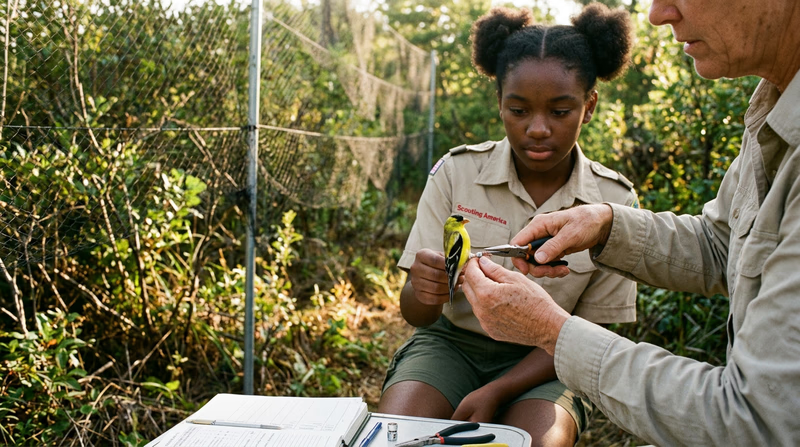
Whichever option you chose, you have gained hands-on experience in the field. Next, you will build something to attract birds to your own backyard.
Req 9 — Build for Birds
For this requirement, you choose one project and build or design it. For every option, you must also explain:
- What birds you hope to attract and why those species
- What maintenance your project requires to stay effective
Read through all five options and pick the one that fits your situation best.
Option A — Build a Bird Feeder
Build a bird feeder and place it in an appropriate location in your yard or another suitable spot.
What to Consider
The type of feeder you build determines which birds visit. A platform feeder attracts ground-feeding species like juncos and sparrows. A tube feeder with small perches attracts finches and chickadees. A suet cage attracts woodpeckers, nuthatches, and wrens.
Placement Tips
- Place feeders within 3 feet of a window or more than 30 feet away — distances in between are the most dangerous for window strikes.
- Position near cover (trees or shrubs within 10–15 feet) so birds have a quick escape route from predators.
- Keep feeders at least 5 feet off the ground to reduce squirrel and cat access.
Maintenance
- Refill regularly — empty feeders teach birds to stop coming.
- Clean the feeder every two weeks with a dilute bleach solution (1 part bleach to 9 parts water) to prevent disease.
- Remove old, wet, or moldy seed promptly.
- Clear the area below the feeder of seed hulls to prevent mold growth.
Option B — Build a Birdbath
Build a birdbath and place it in an appropriate location.
What to Consider
All birds need water — for drinking and for bathing (which keeps their feathers in good condition). A birdbath attracts species that might not visit a feeder, including warblers, thrushes, and tanagers. Moving water (a small fountain or dripper) is especially attractive because birds can hear it from a distance.
Design Tips
- Keep the water shallow — no deeper than 2–3 inches at the deepest point. Place a flat stone in the center to give small birds a place to stand.
- Rough surfaces are better than smooth ones — birds need traction.
- Place the birdbath in a shaded area to keep algae growth down and water temperature comfortable.
Maintenance
- Change the water every 2–3 days to prevent mosquito breeding and algae growth.
- Scrub the basin weekly with a stiff brush (no soap).
- In freezing weather, use a birdbath heater or bring the bath indoors. Do not add antifreeze — it is toxic to birds.
Option C — Build a Backyard Sanctuary
Create a backyard bird sanctuary by planting trees and shrubs that provide food and cover.
What to Consider
A backyard sanctuary goes beyond feeders and birdbaths. You are creating a mini habitat — a place where birds can find natural food (berries, seeds, insects attracted by the plants), shelter from weather and predators, and potential nesting sites.
Planning Your Sanctuary
- Choose native plants. Native species produce the berries and attract the insects that local birds have evolved to eat. Non-native ornamental plants often offer little food value.
- Plant in layers. Use tall trees for canopy cover, mid-sized shrubs for nesting and berries, and low groundcover for ground-feeding birds.
- Include evergreens. Conifers provide year-round cover and winter shelter — critical for birds in cold climates.
- Leave some “messy” areas. Brush piles, leaf litter, and standing dead trees (snags) provide insect habitat and nesting sites.
Maintenance
- Water new plantings until established.
- Avoid pesticides — they kill the insects birds eat and can poison the birds directly.
- Prune only when necessary, and avoid pruning during nesting season (spring through mid-summer).
Option D — Build a Nest Box
Build a birdhouse (nest box) for a species of your choice using plans approved by your counselor.
What to Consider
Not all birds use nest boxes — only cavity-nesting species like bluebirds, wrens, chickadees, swallows, and some owls. The entrance hole size determines which species can use the box and which are excluded.
| Entrance Hole Size | Target Species |
|---|---|
| 1⅛ inches | House Wren, Black-capped Chickadee |
| 1½ inches | Eastern Bluebird, Tree Swallow |
| 2 inches | Hairy Woodpecker |
| 3 inches | Wood Duck, American Kestrel |
| Oval (3 x 4 inches) | Barn Owl |
Design Tips
- Use untreated wood (cedar or pine) — paint and chemicals can harm nesting birds.
- Include drainage holes in the bottom and ventilation slots near the top.
- Make the front panel removable or hinged for easy cleaning.
- Do not include a perch below the entrance — perches help predators and House Sparrows more than they help target species.
Maintenance
- Clean the box after each nesting season (late fall). Remove old nesting material.
- Check for damage from weather, woodpeckers, or predators. Repair as needed.
- Monitor during nesting season to track occupancy and success.
Option E — Design a Habitat Plan
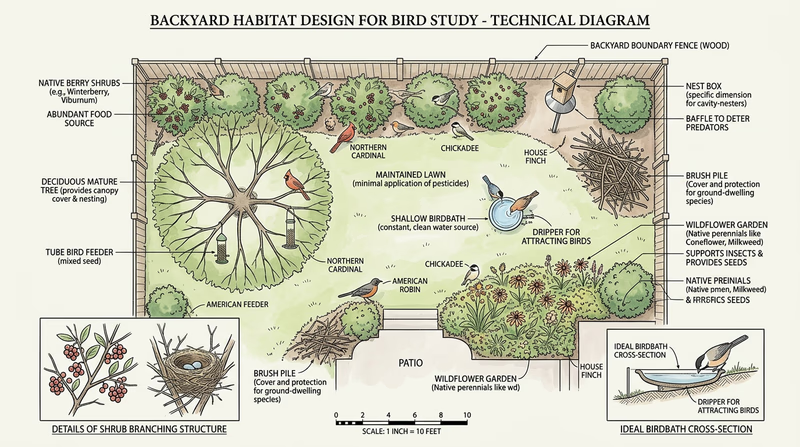
Describe the elements of a backyard bird habitat for a given area and draw a plan, including lists of birds you hope to attract, plantings for food and cover, and nesting features.
What to Consider
This option is about planning rather than building. You will create a detailed design for a bird-friendly habitat — even if you do not plant it right away. This is a great choice if you enjoy design and want to think strategically about bird habitat.
Elements to Include in Your Plan
Habitat Plan Elements
Include all of these in your design- Food sources: Native berry-producing shrubs, seed-bearing wildflowers, trees that attract insects.
- Water feature: Birdbath, shallow pond, or drip system.
- Cover and shelter: Dense shrubs, evergreen trees, brush piles.
- Nesting sites: Nest boxes, dense hedges, dead snags (if safe to leave standing).
- Open space: A small lawn or clearing for ground-feeding birds.
- Target species list: Which birds you hope to attract, matched to the plants and features you choose.
- Seasonal considerations: Plants that provide food in different seasons (spring flowers, summer berries, fall seeds, winter fruits).
Drawing Your Plan
Create a bird’s-eye-view sketch of the area showing where each feature goes. Label each planting with the species name and note what it provides (food, cover, nesting). Include a legend and a list of target bird species.
You have created something tangible to help birds. Now let’s turn to a more serious topic — the conservation status of bird species and what threatens their survival.
Req 10a — Extinct, Endangered, Threatened
These three terms describe where a species falls on the road to disappearing forever. Understanding the differences — and recognizing how conservation can stop or reverse the decline — is essential knowledge for any birder.
The Three Categories
Extinct
A species is extinct when the last individual has died and there are absolutely no living members of that species anywhere on Earth. Extinction is permanent — once a species is gone, it is gone forever.
Bird examples:
- Passenger Pigeon — Once the most abundant bird in North America, with flocks estimated at billions of individuals. The last Passenger Pigeon, a female named Martha, died at the Cincinnati Zoo on September 1, 1914. Overhunting and habitat destruction wiped out the entire species in less than a century.
- Carolina Parakeet — The only parrot native to the eastern United States. The last known individual died in 1918, also at the Cincinnati Zoo.
- Dodo — A large, flightless bird from the island of Mauritius, hunted to extinction by 1681.
Endangered
A species is endangered when it is in danger of extinction throughout all or a significant portion of its range. Without active conservation efforts, an endangered species could disappear. Under the U.S. Endangered Species Act (ESA), it is illegal to harm, harass, capture, or kill an endangered species.
Bird examples:
- Whooping Crane — Reduced to just 15 individuals in 1941, the Whooping Crane is slowly recovering through captive breeding and habitat protection, but remains one of North America’s rarest birds.
- California Condor — Down to 22 birds in 1982. An aggressive captive breeding program has increased the population to over 500, but they remain endangered.
Threatened
A species is threatened when it is likely to become endangered in the foreseeable future. This is the “yellow light” category — the species is declining, and without intervention, it could reach endangered status. Threatened species receive legal protection under the ESA, similar to endangered species.
Bird examples:
- Piping Plover — A small shorebird that nests on open sand beaches, which are increasingly disturbed by human activity and development.
- Spotted Owl — Depends on old-growth forest habitat that has been reduced by logging.
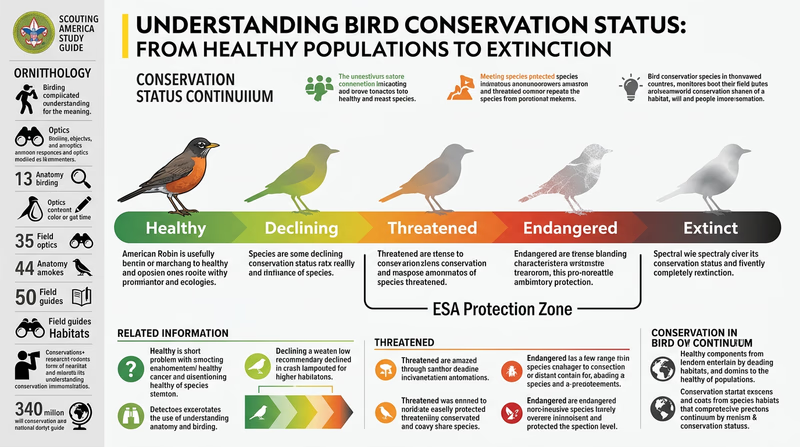
The Progression
Think of it as a continuum:
Healthy → Declining → Threatened → Endangered → Extinct
Conservation aims to catch species before they reach the right side of that line and push them back toward the left. The Endangered Species Act is specifically designed to intervene at the “threatened” and “endangered” stages.
Key Differences at a Glance
| Status | Definition | Can It Be Reversed? | Legal Protection? |
|---|---|---|---|
| Extinct | No living individuals anywhere on Earth | No — permanent | N/A |
| Endangered | In danger of extinction across its range | Yes, with intervention | Yes (ESA) |
| Threatened | Likely to become endangered soon | Yes, with intervention | Yes (ESA) |
Success Stories
Conservation works. Several bird species have been moved off the endangered list thanks to protection:
- Bald Eagle — Removed from the endangered list in 2007 after DDT was banned and habitat was protected.
- Brown Pelican — Delisted in 2009 after populations recovered from DDT-related declines.
- Peregrine Falcon — Delisted in 1999 after captive breeding programs and DDT bans restored populations.
These stories show that “endangered” does not have to mean “doomed.” Active conservation can bring species back from the brink.
U.S. Fish & Wildlife Service — Endangered Species Search for endangered and threatened species by state, view recovery plans, and learn about the Endangered Species Act. Link: U.S. Fish & Wildlife Service — Endangered Species — https://www.fws.gov/program/endangered-speciesNow that you understand the categories, let’s look at a specific bird species that is currently endangered or threatened.
Req 10b — Endangered Species
For this requirement, you need to research one specific endangered or threatened bird species in depth. You will explain what went wrong, what is being done to fix it, and what needs to happen for the species to recover. Here are several species you might choose from, with background to get your research started.
Species to Consider
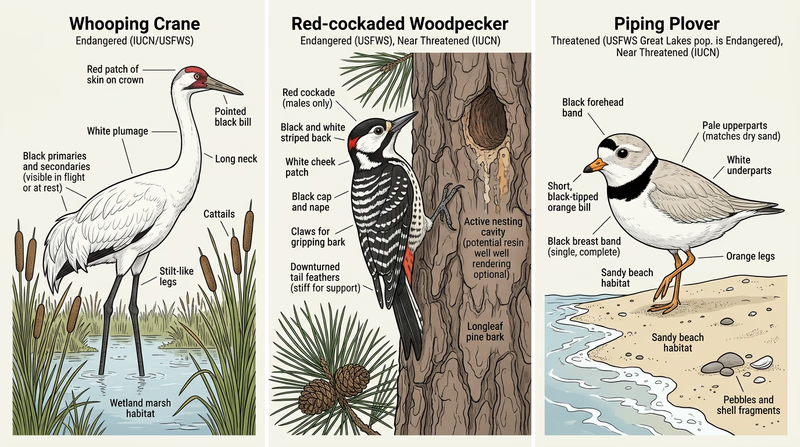
Whooping Crane (Endangered)
The Whooping Crane is the tallest bird in North America, standing nearly 5 feet tall with a wingspan of over 7 feet. It is also one of the rarest.
What caused the decline:
- Habitat loss — the vast wetlands and prairies the cranes depended on were drained and converted to farmland throughout the 1800s and early 1900s.
- Hunting — Whooping Cranes were shot for food and sport before protections were enacted.
- Small population vulnerability — with so few individuals, every death matters. Storms, powerline collisions, and predators can all set back recovery.
What is being done:
- Captive breeding programs at the International Crane Foundation and Patuxent Wildlife Research Center.
- Winter habitat protection at Aransas National Wildlife Refuge in Texas.
- Experimental reintroduction programs to establish new flocks.
What needs to happen for delisting:
- A self-sustaining wild population of at least 1,000 individuals across multiple flocks.
- Sufficient protected habitat along migration corridors and at breeding/wintering grounds.
Red-cockaded Woodpecker (Endangered)
The Red-cockaded Woodpecker is the only North American woodpecker that excavates its nest cavity in living pine trees — specifically old-growth longleaf pines, which take 80–120 years to mature.
What caused the decline:
- Logging of old-growth longleaf pine forests, which once covered 90 million acres in the southeastern United States. Today, less than 3% remains.
- Fire suppression — longleaf pine forests depend on periodic fire to prevent hardwood understory from taking over. Without fire, the open parkland habitat the woodpeckers need disappears.
What is being done:
- Prescribed burning programs to restore longleaf pine habitat.
- Installation of artificial nest cavities to supplement natural ones.
- Protection of existing colonies on federal and state lands.
Piping Plover (Threatened)
The Piping Plover is a small, sand-colored shorebird that nests on open sandy beaches — the same beaches that millions of people use for recreation.
What caused the decline:
- Beach development and recreation disturbance — vehicles, dogs, and foot traffic destroy nests and drive adults away from eggs and chicks.
- Predation — increased predator populations (crows, gulls, foxes, raccoons) near developed beaches.
- Sea level rise and storms — changing coastlines destroy nesting habitat.
What is being done:
- Beach closures and fencing during nesting season.
- Predator management near nesting areas.
- Public education campaigns about sharing the beach with nesting birds.
How to Research Your Chosen Species
Research Checklist
Questions to answer about your endangered or threatened bird- What is the species’ current conservation status (endangered or threatened)?
- What is its estimated population today?
- What was its population before the decline?
- What specific factors caused the decline? (habitat loss, hunting, pollution, climate, predation)
- What conservation programs are currently in place?
- What is the recovery goal — how many individuals or populations are needed for delisting?
- What is the biggest remaining challenge to recovery?
What Can Be Done to Help
When discussing solutions with your counselor, think about actions at multiple levels:
Individual actions:
- Support organizations that protect bird habitat (donations, volunteering).
- Follow beach and wildlife area regulations designed to protect nesting birds.
- Keep cats indoors — domestic cats kill an estimated 2.4 billion birds per year in the United States alone.
- Reduce window strikes at your home (decals, screens, or films on large windows).
Community actions:
- Support local habitat restoration projects.
- Advocate for preservation of natural areas in your community.
- Participate in citizen science programs that monitor threatened species.
Policy actions:
- The Endangered Species Act provides the legal framework for protecting and recovering species.
- Funding for conservation programs (land acquisition, habitat restoration, captive breeding) comes from federal and state budgets.
- International agreements protect migratory birds that cross borders.
You have studied a specific endangered or threatened species. Now let’s look at the broader picture — how we can protect birds before they reach the endangered list.
Req 10c — Protecting Birds in Decline
Prevention is always better than a crisis response. By the time a bird reaches the endangered list, its population may already be dangerously small and recovery is expensive and uncertain. This requirement asks you to think about proactive conservation — catching declines early and acting before the situation becomes critical.
Addressing Birds in Decline
A 2019 study published in the journal Science found that North America has lost nearly 3 billion birds since 1970 — a 29% decline. This loss is not limited to rare species. Many common, familiar birds — like sparrows, warblers, and blackbirds — are declining significantly. Here is how we address that trend:
Early Warning Systems
- Citizen science monitoring — Programs like eBird, the Christmas Bird Count, and the Breeding Bird Survey track bird populations across the continent. When trends show a species declining, scientists can flag it for attention before it reaches endangered status.
- Watchlists — Organizations like Partners in Flight maintain “watchlists” of species whose populations are declining but have not yet reached the threshold for legal protection. These lists prioritize conservation action.
Proactive Conservation
- Protect habitat before it is lost — It is cheaper and more effective to protect existing habitat than to restore damaged habitat or rescue a critically endangered species.
- Manage working lands — Farms, ranches, and managed forests can be bird-friendly if managed with conservation practices (delayed mowing, buffer strips, reduced pesticide use).
- Fund research — Understanding why a species is declining is the first step to reversing the trend.
Protecting Habitat
Habitat loss is the number one threat to birds worldwide. Here are the key strategies for protecting the places birds need:
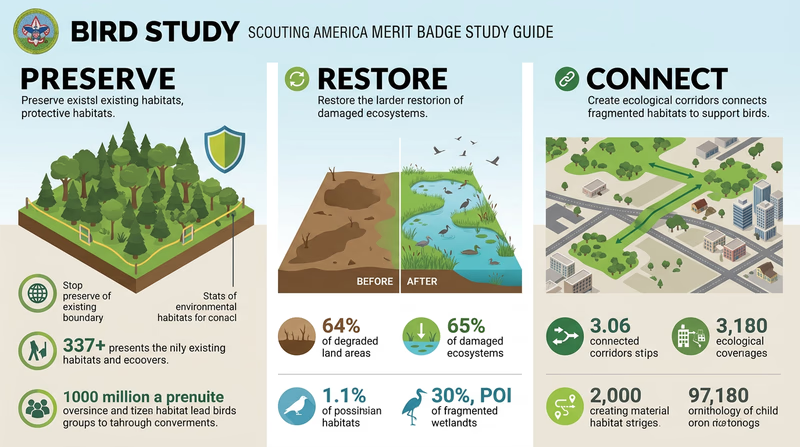
Preserve Natural Areas
- National Wildlife Refuges — The U.S. has over 560 National Wildlife Refuges managed specifically for wildlife, including birds.
- State and local parks — Even small urban parks can provide critical stopover habitat for migrating birds.
- Conservation easements — Landowners can legally commit to keeping their land undeveloped while continuing to own and use it.
Restore Degraded Habitat
- Wetland restoration — Drained wetlands can be re-flooded and replanted to provide habitat for waterfowl, shorebirds, and wading birds.
- Grassland restoration — Replanting native grasses on former cropland creates habitat for grassland species.
- Forest management — Selective logging, prescribed burns, and invasive plant removal can improve forest habitat quality.
Connect Habitat Corridors
Isolated patches of habitat are less valuable than connected ones. Birds — especially migrating species — need continuous corridors of suitable habitat to move safely across the landscape. Wildlife corridors connect fragmented habitat areas, allowing birds and other animals to travel between them.
Threats to Migratory Birds
Migratory birds face a gauntlet of threats on their journeys, which can cover thousands of miles twice a year.
Habitat Loss Along Migration Routes
Many migratory species depend on specific stopover sites — places where they rest and refuel during their journey. If these stopover habitats are destroyed, the birds have nowhere to rest, and they may not survive the trip.
Window Collisions
An estimated 600 million to 1 billion birds die from window collisions in the United States every year. Birds cannot see glass and fly into it at full speed. This affects both resident and migratory species, but migrants are especially vulnerable because they fly at night and are drawn toward lit buildings.
Outdoor Cats
Free-roaming domestic cats kill an estimated 2.4 billion birds per year in the United States. Cats are non-native predators, and most birds have no evolved defense against them.
Light Pollution
Artificial light at night disorients migrating birds, which navigate partly by the stars. Brightly lit buildings in cities cause birds to circle in confusion, exhausting themselves or colliding with structures. “Lights Out” programs in major cities encourage buildings to turn off unnecessary lights during peak migration periods.
Pesticides
Insecticides reduce the insect populations that many birds depend on for food. Herbicides eliminate the plants that produce seeds and berries. Neonicotinoid insecticides, widely used in agriculture, are particularly harmful — they can disorient and kill birds directly, not just reduce their food supply.
Climate Change
Shifting weather patterns alter the timing of seasons, which can cause a mismatch between when birds arrive at breeding grounds and when their food (insects, caterpillars) is available. Species that cannot adapt their timing may fail to successfully raise young.
Protecting Food Supply
Reduce Pesticide Use
- Support organic and sustainable agriculture that limits insecticide and herbicide use.
- In your own yard, avoid chemical pesticides. Healthy bird populations are natural pest controllers.
Plant Native Species
Native plants support native insect populations, which in turn feed birds. A single native oak tree can support over 500 species of caterpillars — a critical food source for nesting songbirds. Non-native ornamental trees may support fewer than 5.
Protect Insect Habitat
Leave leaf litter and brush piles in your yard. These harbor the insects, spiders, and other invertebrates that birds eat. A “messy” yard is a bird-friendly yard.
Maintain Seed and Berry Sources
Plant shrubs and wildflowers that produce seeds and berries at different times of year, providing food across all seasons.
3 Billion Birds Gone The campaign behind the landmark 2019 study documenting the loss of 3 billion North American birds, with seven simple actions anyone can take. Link: 3 Billion Birds Gone — https://www.3billionbirds.org/You have explored the big picture of bird conservation. Now let’s look at a different kind of threat — birds that do not belong here.
Req 11 — Non-Native Birds
A non-native (or introduced) bird is a species that did not originally live in North America but was brought here — intentionally or accidentally — by humans. Some introduced species have become invasive, meaning they spread aggressively, outcompete native species, and damage ecosystems. This requirement asks you to identify one and understand why non-native species can be harmful.
Major Non-Native Birds in North America
House Sparrow (Passer domesticus)
Origin: England and continental Europe
How it got here: In 1851, a group of about 100 House Sparrows was deliberately released in Brooklyn, New York. The idea was that they would eat insects harmful to crops (they did not — House Sparrows are primarily seed eaters). More releases followed throughout the 1850s and 1860s. By 1900, the House Sparrow had spread across the entire continent.
Ecological damage:
- Nest competition — House Sparrows aggressively take over nest cavities used by native species like Eastern Bluebirds, Tree Swallows, and Purple Martins. They will kill adult birds and nestlings, destroy eggs, and build their own nests on top of the remains.
- Disease — They can spread diseases to native bird populations.
- Abundance — With no natural predators adapted to controlling them, House Sparrow populations are enormous.
European Starling (Sturnus vulgaris)
Origin: Europe and western Asia
How it got here: In 1890, a man named Eugene Schieffelin released 60 European Starlings into New York City’s Central Park. He was part of a society that wanted to introduce every bird species mentioned in the works of Shakespeare to North America. (The starling appears in Henry IV, Part 1.) A second release of 40 birds followed in 1891. From those 100 birds, the North American starling population has exploded to over 200 million.
Ecological damage:
- Cavity competition — Starlings take over nesting cavities from woodpeckers, bluebirds, and other native cavity nesters.
- Agricultural damage — Massive starling flocks consume and contaminate livestock feed, damage fruit crops, and cost the agricultural industry hundreds of millions of dollars per year.
- Flocking hazards — Large starling roosts create noise, mess, and can pose health risks from accumulated droppings.
Rock Pigeon (Columba livia)
Origin: Europe, North Africa, and western Asia
How it got here: Rock Pigeons were brought to North America by European colonists in the early 1600s, originally as a food source and for carrying messages. Escaped and released birds established wild populations in cities across the continent.
Ecological damage:
- Structural damage — Pigeon droppings are acidic and corrode buildings, bridges, and statues.
- Disease — Pigeons can carry diseases transmissible to humans, including histoplasmosis and cryptococcosis.
- Competition — They compete with native species for food and roosting sites in urban areas.
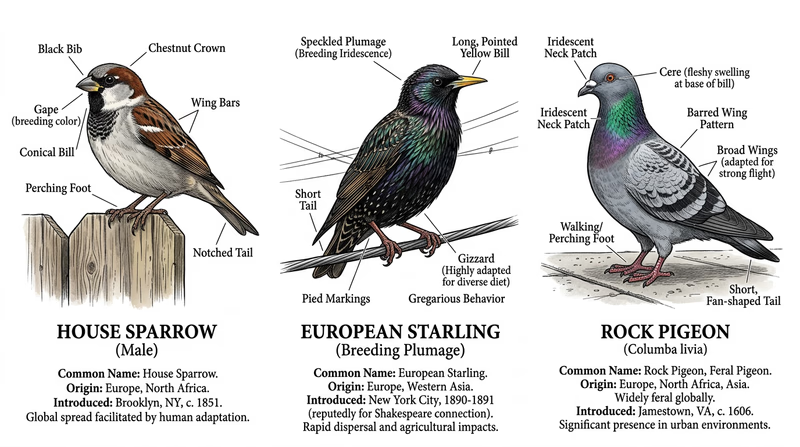
How Non-Native Birds Become Damaging
Not every introduced bird becomes a problem, but those that do tend to share certain traits:
Why Some Species Succeed (and Cause Harm)
- Generalist diet — They eat a wide variety of foods, so they can thrive in many environments. House Sparrows eat seeds, insects, garbage, and almost anything else.
- Aggressive behavior — They outcompete native species for nest sites, food, and territory through intimidation or violence.
- High reproductive rate — They produce many offspring in a single year, allowing their populations to grow quickly.
- Adaptability — They thrive in human-modified habitats (cities, farms, suburbs) where native species may struggle.
- No natural predators — They evolved in a different ecosystem, so North American predators may not control them effectively.
The Impact on Native Species
When non-native birds outcompete natives for nest sites, food, or territory, the native populations decline. This can trigger a cascade of ecological effects:
- Fewer native cavity nesters → fewer predators of forest insects → increased insect damage to trees
- Fewer native seed-dispersing birds → reduced plant regeneration → habitat degradation
- Fewer native pollinators → reduced pollination of native plants → ecosystem simplification
You understand the threat of non-native species. Now let’s connect bird study to the outdoor ethics you practice as a Scout.
Req 12 — Leave No Trace
Bird study takes you into natural areas where your actions directly affect the wildlife you are there to observe. The Leave No Trace Seven Principles and the Outdoor Code are not just rules to follow — they are the foundation of ethical birding. This requirement asks you to connect these principles specifically to your bird study activities.
The Leave No Trace Seven Principles — Applied to Birding
1. Plan Ahead and Prepare
General principle: Know the area you are visiting and prepare for the conditions.
Applied to birding:
- Research the habitat and species you expect to find before you go.
- Check whether nesting closures or seasonal restrictions are in effect.
- Bring everything you need (binoculars, water, field guide, notebook) so you do not need to improvise in the field.
- Know the regulations of the area — some wildlife refuges restrict access to certain trails during nesting season.
2. Travel and Camp on Durable Surfaces
General principle: Walk on established trails and avoid creating new paths.
Applied to birding:
- Stay on trails and boardwalks, even if a bird is just off the path. Trampling vegetation destroys the habitat you are there to appreciate.
- Do not cut through marshes, meadows, or brush to get a closer look at a bird.
- Use observation blinds and viewing platforms where they are available — they exist to minimize your impact.
3. Dispose of Waste Properly
General principle: Pack out all trash. Leave the area cleaner than you found it.
Applied to birding:
- Pack out all food wrappers, water bottles, and other waste.
- If you bring bird seed or food to attract birds for observation, clean up any spills. Unattended food can attract predators that threaten nesting birds.
4. Leave What You Find
General principle: Leave natural and cultural features undisturbed.
Applied to birding:
- Do not collect eggs, feathers, nests, or other bird-related items. Under the Migratory Bird Treaty Act, it is illegal to possess feathers, nests, or eggs of most native bird species — even if you find them on the ground.
- Do not remove plants, rocks, or other natural features that provide bird habitat.
- Leave nest sites undisturbed.
5. Minimize Campfire Impacts
General principle: Use established fire rings and keep fires small.
Applied to birding:
- If birding during a camping trip, keep fires in designated areas. Wildfires destroy bird habitat.
- Be aware that smoke and fire can disturb nesting birds nearby.
6. Respect Wildlife
General principle: Observe wildlife from a distance. Do not follow or approach them.
Applied to birding: This is the most important principle for bird study.
- Keep your distance. If a bird changes its behavior because of your presence — stops feeding, flies away, gives alarm calls — you are too close. Back off.
- Do not approach nests. Your presence can cause parents to abandon eggs or chicks, and your scent trail can lead predators to the nest.
- Do not use recordings (playback) excessively. Playing bird songs to attract them can stress territorial birds, disrupt their normal behavior, and interfere with breeding. If you use playback, keep it brief, low-volume, and never near active nests.
- Do not feed wild birds in the field (backyard feeders are different — they are maintained and cleaned). Feeding wild birds in natural areas can cause dependency and alter natural behavior.
7. Be Considerate of Other Visitors
General principle: Respect others enjoying the outdoors.
Applied to birding:
- Keep noise levels low — loud voices and sudden movements scare birds away from everyone, not just you.
- Share viewing spots and spotting scopes with other birders.
- If you find a rare bird, report it through eBird so others can enjoy it too — but avoid posting exact nest locations of sensitive species.
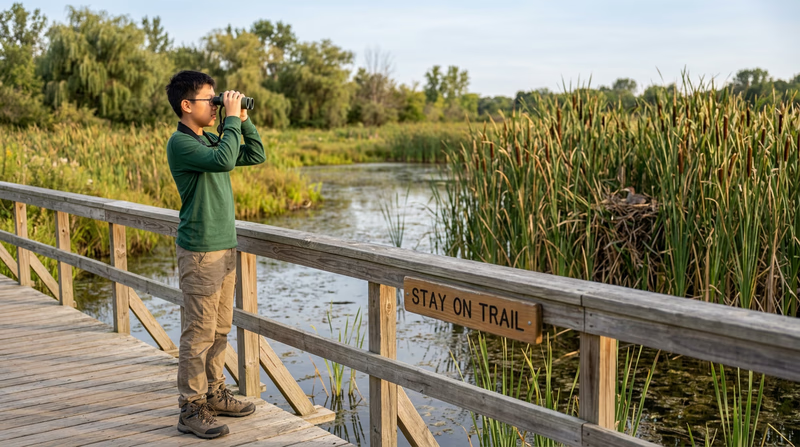
The Outdoor Code
The Outdoor Code is a pledge every Scout knows:
As an American, I will do my best to be clean in my outdoor manners, be careful with fire, be considerate in the outdoors, and be conservation-minded.
Applied to Bird Study
- Be clean in my outdoor manners — Pack out all trash. Leave birding sites pristine.
- Be careful with fire — Wildfires destroy the habitat birds depend on.
- Be considerate in the outdoors — Share the outdoors with birds and other visitors. Keep noise down. Stay on trails.
- Be conservation-minded — Everything you have learned in this badge — protecting habitat, respecting wildlife, supporting citizen science — is conservation in action.
Your Personal Experience
Your counselor will ask you to describe how you have followed these principles during your own field observations for this badge. Think about specific examples:
Leave No Trace — Seven Principles The official Leave No Trace website with detailed guidance on each of the Seven Principles. Link: Leave No Trace — Seven Principles — https://lnt.org/why/7-principles/You have connected outdoor ethics to bird study. One more requirement to go — exploring how bird study connects to careers and hobbies.
Req 13 — Careers or Hobbies
For this requirement, choose one of two paths:
- Option A: Explore careers that use bird study skills
- Option B: Explore birding as a personal hobby
Option A — Career Exploration
Identify three career opportunities that use skills and knowledge from bird study. Pick one and research it in depth — training, education, experience, expenses, employment prospects, starting salary, advancement, and career goals.
Careers Connected to Bird Study
Here are several careers worth investigating. Pick three to identify for your counselor, then deep-dive into one:
Ornithologist — A scientist who studies birds. Ornithologists work at universities, museums, government agencies, and conservation organizations. They research bird behavior, ecology, evolution, and conservation. Most positions require a master’s degree or PhD in biology, ecology, or a related field.
Wildlife Biologist — Manages wildlife populations and habitats for federal or state agencies (like the U.S. Fish and Wildlife Service or state departments of natural resources). Many wildlife biologists focus on bird species. A bachelor’s degree in wildlife biology or ecology is the typical entry point.
Park Ranger / Naturalist — Works at national parks, state parks, or nature centers. Naturalists lead educational programs, including bird walks, and may conduct bird surveys. A bachelor’s degree in environmental education, biology, or natural resources is common.
Environmental Consultant — Conducts environmental impact assessments for development projects. Before a new building, road, or pipeline can be built, consultants survey the area for sensitive species — including birds. A bachelor’s degree in environmental science or biology is typical.
Bird Guide / Ecotourism Leader — Leads birding tours locally or internationally. Some guides work for tour companies; others are self-employed. Deep birding knowledge and strong communication skills are essential. No specific degree is required, but experience and reputation matter.
Conservation Biologist — Works to protect endangered species and their habitats. Many conservation biologists specialize in birds. They may work for nonprofits (like the Audubon Society or American Bird Conservancy), universities, or government agencies.
Research Framework
When researching your chosen career, answer these questions:
Career Research
Key questions for your chosen career- What education or degree is required? (high school, bachelor’s, master’s, PhD)
- Are certifications or licenses needed?
- What kind of experience is expected for entry-level positions?
- What are the expected expenses for education and training?
- What are the employment prospects? (growing field, stable, competitive)
- What is the starting salary range?
- What advancement opportunities exist?
- What are typical long-term career goals in this field?
Option B — Personal Hobby Exploration
Identify how you might use bird study skills as a personal hobby. Research additional training, expenses, and organizations that would help you maximize the enjoyment and benefit.
Birding as a Lifelong Hobby
Birding is one of the fastest-growing outdoor hobbies in North America. It requires no special athletic ability, can be done anywhere (from your backyard to remote wilderness), and gets more rewarding the more you learn. Here are some ways to pursue birding as a hobby:
Casual backyard birding — Feeders, birdbaths, and a pair of binoculars. Low cost, high enjoyment. A great starting point.
Active field birding — Regular trips to parks, refuges, and hotspots. Carrying binoculars and a field guide, building your life list, and participating in bird walks.
Bird photography — Combining birding with photography. This adds equipment costs (camera, telephoto lens) but produces lasting images and pushes you to develop patience and field skills.
Citizen science participation — Contributing to eBird, the Christmas Bird Count, the Great Backyard Bird Count, or NestWatch. Your hobby becomes science.
Competitive birding — Big Days, Big Years, and birding challenges. Some birders travel across states or countries to add rare species to their lists.
Bird art and journaling — Sketching birds in the field, maintaining an illustrated nature journal, or creating bird-themed art.
What You Need to Get Started
| Item | Estimated Cost | Notes |
|---|---|---|
| Binoculars (8x42) | $100–$500+ | The most important investment. Decent entry-level models start around $100–$150. |
| Field guide | $15–$30 | Sibley, Peterson, or National Geographic are popular choices. |
| Notebook and pen | $5–$10 | For your field notebook and sketches. |
| Merlin app | Free | Bird ID by photo or sound — essential. |
| eBird account | Free | Track your sightings and contribute to science. |
| Birding club membership | $0–$50/year | Many Audubon chapters and local clubs have low or no dues. |
Organizations That Support Birding
- National Audubon Society — Local chapters offer bird walks, education programs, and conservation advocacy.
- American Birding Association (ABA) — Focused on recreational birding. Publishes Birding magazine, maintains the ABA Checklist, and runs birding events.
- Cornell Lab of Ornithology — Runs eBird, Merlin, and NestWatch. Offers free and paid online courses through Bird Academy.
Short-Term and Long-Term Goals
Think about what you want to achieve with birding:
Short-term goals (next year):
- Build your life list to 50 or 100 species.
- Learn the songs of 20 common birds in your area.
- Participate in the Great Backyard Bird Count or Christmas Bird Count.
Long-term goals (next 5+ years):
- Reach 200+ species on your life list.
- Mentor other Scouts or younger birders.
- Visit a famous birding destination (Cape May, Point Pelee, or the Rio Grande Valley).
- Contribute meaningful data to citizen science projects.
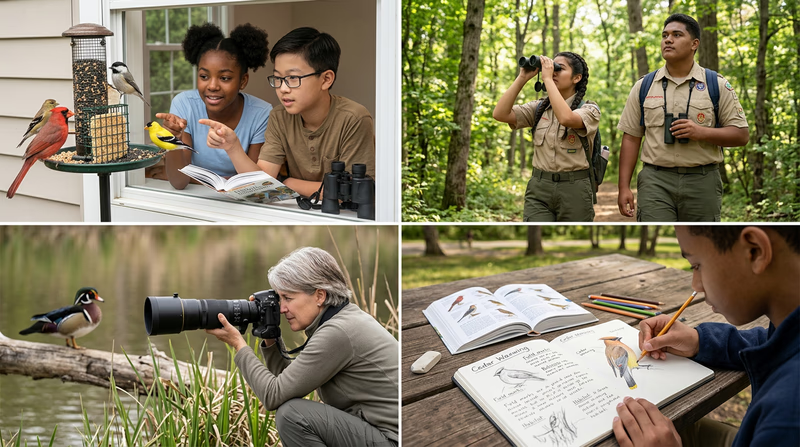
Congratulations — you have worked through all 13 requirements of the Bird Study merit badge. There is always more to learn, and the next page will point you toward deeper exploration.
Extended Learning
A. Congratulations, Birder
You have earned the Bird Study merit badge — and in the process, you have joined a worldwide community of people who find wonder in the world of birds. You can now identify species by sight and sound, read a range map, understand bird anatomy and adaptations, and explain why birds matter to the health of our planet. Those skills will stay with you for life.
But here is the thing about birding: the more you learn, the more there is to discover. The pages ahead will take you deeper into topics that go beyond the requirements — not because you have to, but because they are genuinely fascinating.
B. Migration — The Longest Journeys on Earth
Migration is one of the most extraordinary phenomena in the animal kingdom, and birds are its greatest practitioners. Every year, billions of birds travel thousands of miles between their breeding and wintering grounds, navigating by the stars, the Earth’s magnetic field, landmarks, and even the position of the sun.
How Birds Navigate
Scientists have identified several navigation systems that birds use — often simultaneously:
Star compass — Many nocturnal migrants orient themselves using the pattern of stars around the North Star (Polaris). Young birds learn the star pattern during their first summer and use it for life.
Magnetic sense — Birds have tiny iron-rich crystals in their beaks and a protein called cryptochrome in their eyes that allows them to sense the Earth’s magnetic field. Some researchers believe birds can literally “see” magnetic field lines overlaid on their visual field.
Sun compass — Daytime migrants use the sun’s position to orient themselves, compensating for its movement across the sky using an internal clock.
Landmarks — Experienced birds memorize major landscape features — coastlines, river valleys, mountain ranges — and follow them like highways.
Record-Breaking Migrants
- Arctic Tern — Flies from Arctic to Antarctic and back every year — a round trip of roughly 44,000 miles. Over a 30-year lifespan, an Arctic Tern flies the equivalent of three round trips to the moon.
- Bar-tailed Godwit — Holds the record for the longest nonstop flight by any bird: over 7,000 miles from Alaska to New Zealand without landing, eating, or drinking — a flight that takes 9–11 days.
- Ruby-throated Hummingbird — Weighing less than a nickel, this tiny bird crosses the Gulf of Mexico in a single nonstop flight of 500+ miles. It fuels this journey by nearly doubling its body weight in fat before departure.
Flyways
In North America, most birds migrate along four major flyways — broad corridors that follow geographic features:
- Atlantic Flyway — Along the eastern seaboard
- Mississippi Flyway — Following the Mississippi River valley
- Central Flyway — Through the Great Plains
- Pacific Flyway — Along the western coast
Understanding your local flyway helps you predict which migrants will pass through your area and when. Check eBird’s migration forecast tools to see real-time migration activity near you.
C. Bird Intelligence — Smarter Than You Think
Birds were once dismissed as “bird-brained” — a synonym for stupid. Modern science has demolished that stereotype. Many birds display intelligence that rivals or exceeds that of primates.
Tool use — New Caledonian Crows craft tools from sticks and leaves to extract grubs from tree bark. They even modify and improve their tools, passing innovations to other crows — a form of cultural learning previously thought unique to humans.
Problem solving — In laboratory tests, corvids (crows, ravens, jays) solve multi-step puzzles, use mirrors, plan for the future, and understand cause and effect. Some can solve problems on the first try that require multiple steps to reach a food reward.
Memory — Clark’s Nutcrackers cache up to 30,000 pine seeds in thousands of locations across mountainsides every fall — and remember where most of them are months later, even under deep snow. Scrub-Jays not only remember where they hid food but what type of food it is and how long ago they cached it, prioritizing items that will spoil first.
Counting and language — Parrots and corvids can learn to count, recognize colors, identify shapes, and in the case of African Grey Parrots, use human words with apparent understanding of their meaning. Alex, an African Grey studied by researcher Irene Pepperberg, had a vocabulary of over 100 words and could answer novel questions about objects he had never seen before.
Social intelligence — Ravens engage in deception — pretending to hide food in one spot to mislead competitors while secretly caching it elsewhere. They also form alliances, hold grudges, and reconcile after conflicts.
D. Birding Technology — Tools of the Modern Birder
Technology has transformed bird study in ways that Audubon could never have imagined. Here are some of the most powerful tools available to birders today:
eBird — The world’s largest biodiversity database, with over 1 billion bird sightings. Your observations become part of a global dataset used by scientists, conservationists, and land managers.
Merlin Sound ID — Uses machine learning to identify birds singing in real time through your phone’s microphone. It displays species names on screen as they sing, making birding by ear accessible to beginners.
BirdCast — Uses weather radar data and machine learning to forecast bird migration in real time. You can see how many birds are migrating over your county tonight and which species are most likely to be on the move.
Bird cams — Live streaming cameras on nests, feeders, and wildlife areas around the world. The Cornell Lab’s bird cams include a Red-tailed Hawk nest, a Great Blue Heron rookery, and feeders in Panama.
Acoustic monitoring — Researchers place autonomous recording units in the field that record bird sounds 24/7, then use algorithms to identify species from the recordings. This allows bird surveys in remote areas without a human observer present.
GPS and geolocator tracking — Tiny devices attached to birds track their movements in real time or store location data for later retrieval. These have revealed migration routes that were previously unknown, including ocean crossings and rest stops.
E. Real-World Experiences
Birding Experiences to Seek Out
Adventures that will deepen your skills and enjoyment- Visit a National Wildlife Refuge: Over 560 refuges across the country, many with birding trails and observation blinds. Find one near you at fws.gov/refuges.
- Attend a birding festival: Events like the Space Coast Birding & Wildlife Festival (Florida), Rio Grande Valley Birding Festival (Texas), or Cape May Autumn Weekend (New Jersey) bring together birders of all levels with guided field trips and expert speakers.
- Join a Christmas Bird Count or Great Backyard Bird Count: Citizen science events where your observations contribute to real research.
- Visit a hawk watch site: Hawk Mountain Sanctuary (Pennsylvania), Cape May (New Jersey), and Duluth (Minnesota) are legendary raptor migration observation points.
- Tour a bird banding station: Many bird observatories welcome visitors during fall migration banding season. Watch researchers capture, measure, band, and release wild birds.