Req 10a — Extinct, Endangered, Threatened
These three terms describe where a species falls on the road to disappearing forever. Understanding the differences — and recognizing how conservation can stop or reverse the decline — is essential knowledge for any birder.
The Three Categories
Extinct
A species is extinct when the last individual has died and there are absolutely no living members of that species anywhere on Earth. Extinction is permanent — once a species is gone, it is gone forever.
Bird examples:
- Passenger Pigeon — Once the most abundant bird in North America, with flocks estimated at billions of individuals. The last Passenger Pigeon, a female named Martha, died at the Cincinnati Zoo on September 1, 1914. Overhunting and habitat destruction wiped out the entire species in less than a century.
- Carolina Parakeet — The only parrot native to the eastern United States. The last known individual died in 1918, also at the Cincinnati Zoo.
- Dodo — A large, flightless bird from the island of Mauritius, hunted to extinction by 1681.
Endangered
A species is endangered when it is in danger of extinction throughout all or a significant portion of its range. Without active conservation efforts, an endangered species could disappear. Under the U.S. Endangered Species Act (ESA), it is illegal to harm, harass, capture, or kill an endangered species.
Bird examples:
- Whooping Crane — Reduced to just 15 individuals in 1941, the Whooping Crane is slowly recovering through captive breeding and habitat protection, but remains one of North America’s rarest birds.
- California Condor — Down to 22 birds in 1982. An aggressive captive breeding program has increased the population to over 500, but they remain endangered.
Threatened
A species is threatened when it is likely to become endangered in the foreseeable future. This is the “yellow light” category — the species is declining, and without intervention, it could reach endangered status. Threatened species receive legal protection under the ESA, similar to endangered species.
Bird examples:
- Piping Plover — A small shorebird that nests on open sand beaches, which are increasingly disturbed by human activity and development.
- Spotted Owl — Depends on old-growth forest habitat that has been reduced by logging.
The Progression
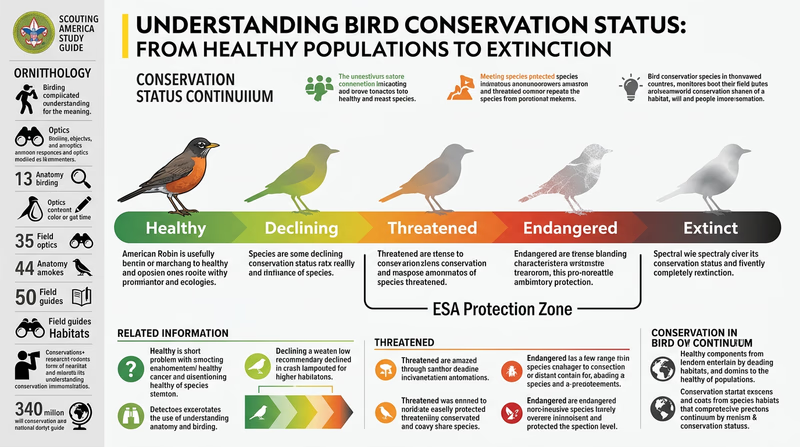
Think of it as a continuum:
Healthy → Declining → Threatened → Endangered → Extinct
Conservation aims to catch species before they reach the right side of that line and push them back toward the left. The Endangered Species Act is specifically designed to intervene at the “threatened” and “endangered” stages.
Key Differences at a Glance
| Status | Definition | Can It Be Reversed? | Legal Protection? |
|---|---|---|---|
| Extinct | No living individuals anywhere on Earth | No — permanent | N/A |
| Endangered | In danger of extinction across its range | Yes, with intervention | Yes (ESA) |
| Threatened | Likely to become endangered soon | Yes, with intervention | Yes (ESA) |
Success Stories
Conservation works. Several bird species have been moved off the endangered list thanks to protection:
- Bald Eagle — Removed from the endangered list in 2007 after DDT was banned and habitat was protected.
- Brown Pelican — Delisted in 2009 after populations recovered from DDT-related declines.
- Peregrine Falcon — Delisted in 1999 after captive breeding programs and DDT bans restored populations.
These stories show that “endangered” does not have to mean “doomed.” Active conservation can bring species back from the brink.
U.S. Fish & Wildlife Service — Endangered Species Search for endangered and threatened species by state, view recovery plans, and learn about the Endangered Species Act.Now that you understand the categories, let’s look at a specific bird species that is currently endangered or threatened.