Req 10b — Endangered Species
For this requirement, you need to research one specific endangered or threatened bird species in depth. You will explain what went wrong, what is being done to fix it, and what needs to happen for the species to recover. Here are several species you might choose from, with background to get your research started.
Species to Consider
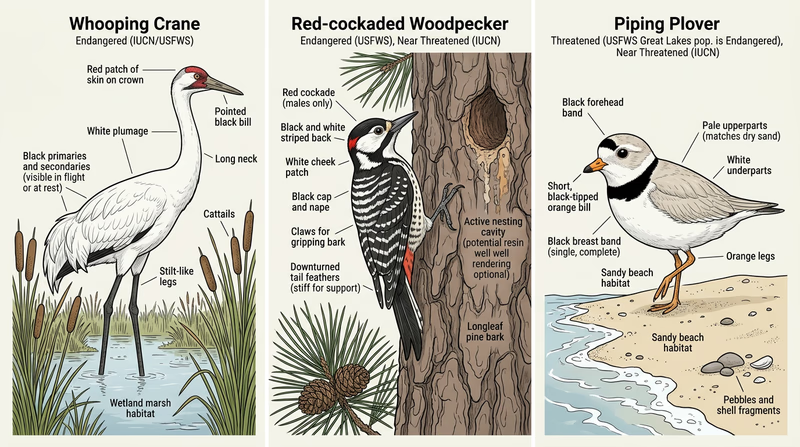
Whooping Crane (Endangered)
The Whooping Crane is the tallest bird in North America, standing nearly 5 feet tall with a wingspan of over 7 feet. It is also one of the rarest.
What caused the decline:
- Habitat loss — the vast wetlands and prairies the cranes depended on were drained and converted to farmland throughout the 1800s and early 1900s.
- Hunting — Whooping Cranes were shot for food and sport before protections were enacted.
- Small population vulnerability — with so few individuals, every death matters. Storms, powerline collisions, and predators can all set back recovery.
What is being done:
- Captive breeding programs at the International Crane Foundation and Patuxent Wildlife Research Center.
- Winter habitat protection at Aransas National Wildlife Refuge in Texas.
- Experimental reintroduction programs to establish new flocks.
What needs to happen for delisting:
- A self-sustaining wild population of at least 1,000 individuals across multiple flocks.
- Sufficient protected habitat along migration corridors and at breeding/wintering grounds.
Red-cockaded Woodpecker (Endangered)
The Red-cockaded Woodpecker is the only North American woodpecker that excavates its nest cavity in living pine trees — specifically old-growth longleaf pines, which take 80–120 years to mature.
What caused the decline:
- Logging of old-growth longleaf pine forests, which once covered 90 million acres in the southeastern United States. Today, less than 3% remains.
- Fire suppression — longleaf pine forests depend on periodic fire to prevent hardwood understory from taking over. Without fire, the open parkland habitat the woodpeckers need disappears.
What is being done:
- Prescribed burning programs to restore longleaf pine habitat.
- Installation of artificial nest cavities to supplement natural ones.
- Protection of existing colonies on federal and state lands.
Piping Plover (Threatened)
The Piping Plover is a small, sand-colored shorebird that nests on open sandy beaches — the same beaches that millions of people use for recreation.
What caused the decline:
- Beach development and recreation disturbance — vehicles, dogs, and foot traffic destroy nests and drive adults away from eggs and chicks.
- Predation — increased predator populations (crows, gulls, foxes, raccoons) near developed beaches.
- Sea level rise and storms — changing coastlines destroy nesting habitat.
What is being done:
- Beach closures and fencing during nesting season.
- Predator management near nesting areas.
- Public education campaigns about sharing the beach with nesting birds.
How to Research Your Chosen Species
Research Checklist
Questions to answer about your endangered or threatened bird
- What is the species’ current conservation status (endangered or threatened)?
- What is its estimated population today?
- What was its population before the decline?
- What specific factors caused the decline? (habitat loss, hunting, pollution, climate, predation)
- What conservation programs are currently in place?
- What is the recovery goal — how many individuals or populations are needed for delisting?
- What is the biggest remaining challenge to recovery?
What Can Be Done to Help
When discussing solutions with your counselor, think about actions at multiple levels:
Individual actions:
- Support organizations that protect bird habitat (donations, volunteering).
- Follow beach and wildlife area regulations designed to protect nesting birds.
- Keep cats indoors — domestic cats kill an estimated 2.4 billion birds per year in the United States alone.
- Reduce window strikes at your home (decals, screens, or films on large windows).
Community actions:
- Support local habitat restoration projects.
- Advocate for preservation of natural areas in your community.
- Participate in citizen science programs that monitor threatened species.
Policy actions:
- The Endangered Species Act provides the legal framework for protecting and recovering species.
- Funding for conservation programs (land acquisition, habitat restoration, captive breeding) comes from federal and state budgets.
- International agreements protect migratory birds that cross borders.
You have studied a specific endangered or threatened species. Now let’s look at the broader picture — how we can protect birds before they reach the endangered list.