Req 10c — Protecting Birds in Decline
Prevention is always better than a crisis response. By the time a bird reaches the endangered list, its population may already be dangerously small and recovery is expensive and uncertain. This requirement asks you to think about proactive conservation — catching declines early and acting before the situation becomes critical.
Addressing Birds in Decline
A 2019 study published in the journal Science found that North America has lost nearly 3 billion birds since 1970 — a 29% decline. This loss is not limited to rare species. Many common, familiar birds — like sparrows, warblers, and blackbirds — are declining significantly. Here is how we address that trend:
Early Warning Systems
- Citizen science monitoring — Programs like eBird, the Christmas Bird Count, and the Breeding Bird Survey track bird populations across the continent. When trends show a species declining, scientists can flag it for attention before it reaches endangered status.
- Watchlists — Organizations like Partners in Flight maintain “watchlists” of species whose populations are declining but have not yet reached the threshold for legal protection. These lists prioritize conservation action.
Proactive Conservation
- Protect habitat before it is lost — It is cheaper and more effective to protect existing habitat than to restore damaged habitat or rescue a critically endangered species.
- Manage working lands — Farms, ranches, and managed forests can be bird-friendly if managed with conservation practices (delayed mowing, buffer strips, reduced pesticide use).
- Fund research — Understanding why a species is declining is the first step to reversing the trend.
Protecting Habitat
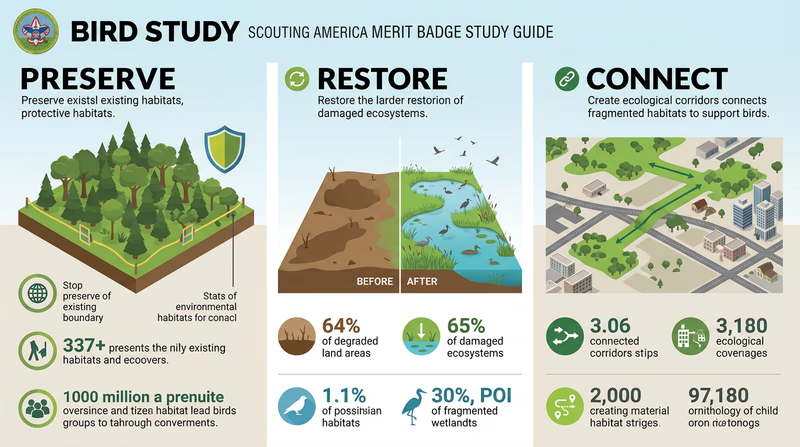
Habitat loss is the number one threat to birds worldwide. Here are the key strategies for protecting the places birds need:
Preserve Natural Areas
- National Wildlife Refuges — The U.S. has over 560 National Wildlife Refuges managed specifically for wildlife, including birds.
- State and local parks — Even small urban parks can provide critical stopover habitat for migrating birds.
- Conservation easements — Landowners can legally commit to keeping their land undeveloped while continuing to own and use it.
Restore Degraded Habitat
- Wetland restoration — Drained wetlands can be re-flooded and replanted to provide habitat for waterfowl, shorebirds, and wading birds.
- Grassland restoration — Replanting native grasses on former cropland creates habitat for grassland species.
- Forest management — Selective logging, prescribed burns, and invasive plant removal can improve forest habitat quality.
Connect Habitat Corridors
Isolated patches of habitat are less valuable than connected ones. Birds — especially migrating species — need continuous corridors of suitable habitat to move safely across the landscape. Wildlife corridors connect fragmented habitat areas, allowing birds and other animals to travel between them.
Threats to Migratory Birds
Migratory birds face a gauntlet of threats on their journeys, which can cover thousands of miles twice a year.
Habitat Loss Along Migration Routes
Many migratory species depend on specific stopover sites — places where they rest and refuel during their journey. If these stopover habitats are destroyed, the birds have nowhere to rest, and they may not survive the trip.
Window Collisions
An estimated 600 million to 1 billion birds die from window collisions in the United States every year. Birds cannot see glass and fly into it at full speed. This affects both resident and migratory species, but migrants are especially vulnerable because they fly at night and are drawn toward lit buildings.
Outdoor Cats
Free-roaming domestic cats kill an estimated 2.4 billion birds per year in the United States. Cats are non-native predators, and most birds have no evolved defense against them.
Light Pollution
Artificial light at night disorients migrating birds, which navigate partly by the stars. Brightly lit buildings in cities cause birds to circle in confusion, exhausting themselves or colliding with structures. “Lights Out” programs in major cities encourage buildings to turn off unnecessary lights during peak migration periods.
Pesticides
Insecticides reduce the insect populations that many birds depend on for food. Herbicides eliminate the plants that produce seeds and berries. Neonicotinoid insecticides, widely used in agriculture, are particularly harmful — they can disorient and kill birds directly, not just reduce their food supply.
Climate Change
Shifting weather patterns alter the timing of seasons, which can cause a mismatch between when birds arrive at breeding grounds and when their food (insects, caterpillars) is available. Species that cannot adapt their timing may fail to successfully raise young.
Protecting Food Supply
Reduce Pesticide Use
- Support organic and sustainable agriculture that limits insecticide and herbicide use.
- In your own yard, avoid chemical pesticides. Healthy bird populations are natural pest controllers.
Plant Native Species
Native plants support native insect populations, which in turn feed birds. A single native oak tree can support over 500 species of caterpillars — a critical food source for nesting songbirds. Non-native ornamental trees may support fewer than 5.
Protect Insect Habitat
Leave leaf litter and brush piles in your yard. These harbor the insects, spiders, and other invertebrates that birds eat. A “messy” yard is a bird-friendly yard.
Maintain Seed and Berry Sources
Plant shrubs and wildflowers that produce seeds and berries at different times of year, providing food across all seasons.
3 Billion Birds Gone The campaign behind the landmark 2019 study documenting the loss of 3 billion North American birds, with seven simple actions anyone can take.You have explored the big picture of bird conservation. Now let’s look at a different kind of threat — birds that do not belong here.