Req 12 — Leave No Trace
Bird study takes you into natural areas where your actions directly affect the wildlife you are there to observe. The Leave No Trace Seven Principles and the Outdoor Code are not just rules to follow — they are the foundation of ethical birding. This requirement asks you to connect these principles specifically to your bird study activities.
The Leave No Trace Seven Principles — Applied to Birding
1. Plan Ahead and Prepare
General principle: Know the area you are visiting and prepare for the conditions.
Applied to birding:
- Research the habitat and species you expect to find before you go.
- Check whether nesting closures or seasonal restrictions are in effect.
- Bring everything you need (binoculars, water, field guide, notebook) so you do not need to improvise in the field.
- Know the regulations of the area — some wildlife refuges restrict access to certain trails during nesting season.
2. Travel and Camp on Durable Surfaces
General principle: Walk on established trails and avoid creating new paths.
Applied to birding:
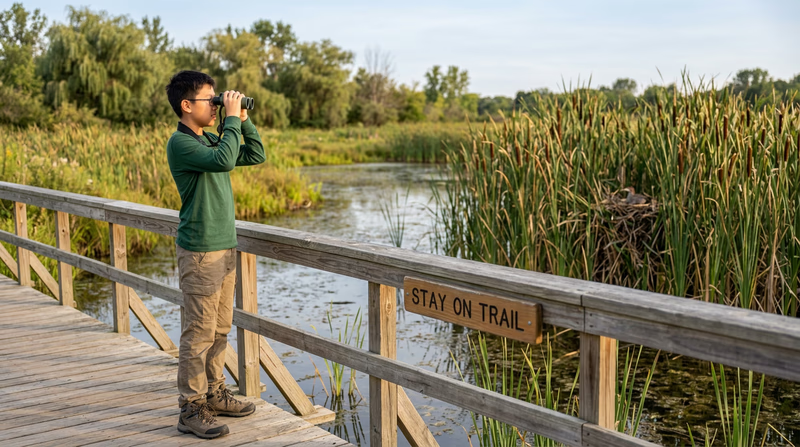
- Stay on trails and boardwalks, even if a bird is just off the path. Trampling vegetation destroys the habitat you are there to appreciate.
- Do not cut through marshes, meadows, or brush to get a closer look at a bird.
- Use observation blinds and viewing platforms where they are available — they exist to minimize your impact.
3. Dispose of Waste Properly
General principle: Pack out all trash. Leave the area cleaner than you found it.
Applied to birding:
- Pack out all food wrappers, water bottles, and other waste.
- If you bring bird seed or food to attract birds for observation, clean up any spills. Unattended food can attract predators that threaten nesting birds.
4. Leave What You Find
General principle: Leave natural and cultural features undisturbed.
Applied to birding:
- Do not collect eggs, feathers, nests, or other bird-related items. Under the Migratory Bird Treaty Act, it is illegal to possess feathers, nests, or eggs of most native bird species — even if you find them on the ground.
- Do not remove plants, rocks, or other natural features that provide bird habitat.
- Leave nest sites undisturbed.
5. Minimize Campfire Impacts
General principle: Use established fire rings and keep fires small.
Applied to birding:
- If birding during a camping trip, keep fires in designated areas. Wildfires destroy bird habitat.
- Be aware that smoke and fire can disturb nesting birds nearby.
6. Respect Wildlife
General principle: Observe wildlife from a distance. Do not follow or approach them.
Applied to birding: This is the most important principle for bird study.
- Keep your distance. If a bird changes its behavior because of your presence — stops feeding, flies away, gives alarm calls — you are too close. Back off.
- Do not approach nests. Your presence can cause parents to abandon eggs or chicks, and your scent trail can lead predators to the nest.
- Do not use recordings (playback) excessively. Playing bird songs to attract them can stress territorial birds, disrupt their normal behavior, and interfere with breeding. If you use playback, keep it brief, low-volume, and never near active nests.
- Do not feed wild birds in the field (backyard feeders are different — they are maintained and cleaned). Feeding wild birds in natural areas can cause dependency and alter natural behavior.
7. Be Considerate of Other Visitors
General principle: Respect others enjoying the outdoors.
Applied to birding:
- Keep noise levels low — loud voices and sudden movements scare birds away from everyone, not just you.
- Share viewing spots and spotting scopes with other birders.
- If you find a rare bird, report it through eBird so others can enjoy it too — but avoid posting exact nest locations of sensitive species.
The Outdoor Code
The Outdoor Code is a pledge every Scout knows:
As an American, I will do my best to be clean in my outdoor manners, be careful with fire, be considerate in the outdoors, and be conservation-minded.
Applied to Bird Study
- Be clean in my outdoor manners — Pack out all trash. Leave birding sites pristine.
- Be careful with fire — Wildfires destroy the habitat birds depend on.
- Be considerate in the outdoors — Share the outdoors with birds and other visitors. Keep noise down. Stay on trails.
- Be conservation-minded — Everything you have learned in this badge — protecting habitat, respecting wildlife, supporting citizen science — is conservation in action.
Your Personal Experience
Your counselor will ask you to describe how you have followed these principles during your own field observations for this badge. Think about specific examples:
Leave No Trace — Seven Principles The official Leave No Trace website with detailed guidance on each of the Seven Principles.You have connected outdoor ethics to bird study. One more requirement to go — exploring how bird study connects to careers and hobbies.