Req 13 — Careers or Hobbies
For this requirement, choose one of two paths:
- Option A: Explore careers that use bird study skills
- Option B: Explore birding as a personal hobby
Option A — Career Exploration
Identify three career opportunities that use skills and knowledge from bird study. Pick one and research it in depth — training, education, experience, expenses, employment prospects, starting salary, advancement, and career goals.
Careers Connected to Bird Study
Here are several careers worth investigating. Pick three to identify for your counselor, then deep-dive into one:
Ornithologist — A scientist who studies birds. Ornithologists work at universities, museums, government agencies, and conservation organizations. They research bird behavior, ecology, evolution, and conservation. Most positions require a master’s degree or PhD in biology, ecology, or a related field.
Wildlife Biologist — Manages wildlife populations and habitats for federal or state agencies (like the U.S. Fish and Wildlife Service or state departments of natural resources). Many wildlife biologists focus on bird species. A bachelor’s degree in wildlife biology or ecology is the typical entry point.
Park Ranger / Naturalist — Works at national parks, state parks, or nature centers. Naturalists lead educational programs, including bird walks, and may conduct bird surveys. A bachelor’s degree in environmental education, biology, or natural resources is common.
Environmental Consultant — Conducts environmental impact assessments for development projects. Before a new building, road, or pipeline can be built, consultants survey the area for sensitive species — including birds. A bachelor’s degree in environmental science or biology is typical.
Bird Guide / Ecotourism Leader — Leads birding tours locally or internationally. Some guides work for tour companies; others are self-employed. Deep birding knowledge and strong communication skills are essential. No specific degree is required, but experience and reputation matter.
Conservation Biologist — Works to protect endangered species and their habitats. Many conservation biologists specialize in birds. They may work for nonprofits (like the Audubon Society or American Bird Conservancy), universities, or government agencies.
Research Framework
When researching your chosen career, answer these questions:
Career Research
Key questions for your chosen career
- What education or degree is required? (high school, bachelor’s, master’s, PhD)
- Are certifications or licenses needed?
- What kind of experience is expected for entry-level positions?
- What are the expected expenses for education and training?
- What are the employment prospects? (growing field, stable, competitive)
- What is the starting salary range?
- What advancement opportunities exist?
- What are typical long-term career goals in this field?
Option B — Personal Hobby Exploration
Identify how you might use bird study skills as a personal hobby. Research additional training, expenses, and organizations that would help you maximize the enjoyment and benefit.
Birding as a Lifelong Hobby
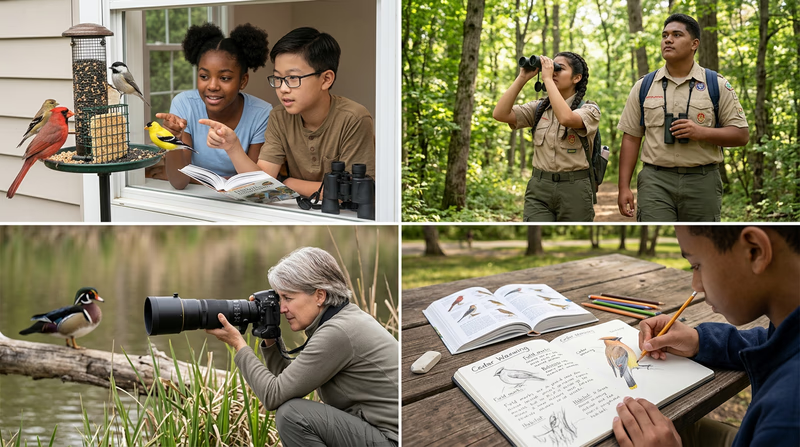
Birding is one of the fastest-growing outdoor hobbies in North America. It requires no special athletic ability, can be done anywhere (from your backyard to remote wilderness), and gets more rewarding the more you learn. Here are some ways to pursue birding as a hobby:
Casual backyard birding — Feeders, birdbaths, and a pair of binoculars. Low cost, high enjoyment. A great starting point.
Active field birding — Regular trips to parks, refuges, and hotspots. Carrying binoculars and a field guide, building your life list, and participating in bird walks.
Bird photography — Combining birding with photography. This adds equipment costs (camera, telephoto lens) but produces lasting images and pushes you to develop patience and field skills.
Citizen science participation — Contributing to eBird, the Christmas Bird Count, the Great Backyard Bird Count, or NestWatch. Your hobby becomes science.
Competitive birding — Big Days, Big Years, and birding challenges. Some birders travel across states or countries to add rare species to their lists.
Bird art and journaling — Sketching birds in the field, maintaining an illustrated nature journal, or creating bird-themed art.
What You Need to Get Started
| Item | Estimated Cost | Notes |
|---|---|---|
| Binoculars (8x42) | $100–$500+ | The most important investment. Decent entry-level models start around $100–$150. |
| Field guide | $15–$30 | Sibley, Peterson, or National Geographic are popular choices. |
| Notebook and pen | $5–$10 | For your field notebook and sketches. |
| Merlin app | Free | Bird ID by photo or sound — essential. |
| eBird account | Free | Track your sightings and contribute to science. |
| Birding club membership | $0–$50/year | Many Audubon chapters and local clubs have low or no dues. |
Organizations That Support Birding
- National Audubon Society — Local chapters offer bird walks, education programs, and conservation advocacy.
- American Birding Association (ABA) — Focused on recreational birding. Publishes Birding magazine, maintains the ABA Checklist, and runs birding events.
- Cornell Lab of Ornithology — Runs eBird, Merlin, and NestWatch. Offers free and paid online courses through Bird Academy.
Short-Term and Long-Term Goals
Think about what you want to achieve with birding:
Short-term goals (next year):
- Build your life list to 50 or 100 species.
- Learn the songs of 20 common birds in your area.
- Participate in the Great Backyard Bird Count or Christmas Bird Count.
Long-term goals (next 5+ years):
- Reach 200+ species on your life list.
- Mentor other Scouts or younger birders.
- Visit a famous birding destination (Cape May, Point Pelee, or the Rio Grande Valley).
- Contribute meaningful data to citizen science projects.
Congratulations — you have worked through all 13 requirements of the Bird Study merit badge. There is always more to learn, and the next page will point you toward deeper exploration.