Req 3a — Specification Numbers
Every pair of binoculars, every spotting scope, and every monocular has a set of numbers printed on it — something like 8x42 or 10x50. These numbers tell you exactly what the optic can do. Understanding them will help you choose the right tool for the job and explain your choice to your counselor.
Decoding the Numbers
The specification numbers follow the same format for all three types of optics: magnification × objective lens diameter.
Magnification (the first number)
The first number tells you how many times closer an object will appear. If your binoculars say 8x, a bird 80 feet away will look as if it were 10 feet away (80 ÷ 8 = 10).
- Lower magnification (7x–8x): Wider field of view, easier to hold steady, better for scanning and finding birds.
- Higher magnification (10x–12x): Objects appear closer, but the field of view is narrower and image shake increases.
Objective Lens Diameter (the second number)
The second number is the diameter of the front lenses in millimeters. Larger lenses gather more light, which means a brighter, clearer image — especially in dim conditions like dawn, dusk, or deep forest.
- Smaller objectives (25–32 mm): Compact and lightweight, great for day use in bright conditions.
- Larger objectives (42–50 mm): Brighter images, better in low light, but heavier.
Putting It Together
| Specification | Magnification | Objective | Best For |
|---|---|---|---|
| 8x42 | 8 times closer | 42 mm lens | General birding (most popular choice) |
| 10x42 | 10 times closer | 42 mm lens | Birding where subjects are farther away |
| 8x25 | 8 times closer | 25 mm lens | Compact travel binoculars |
| 20–60x80 | 20–60 times closer | 80 mm lens | Spotting scope for distant shorebirds |
Binoculars vs. Spotting Scope vs. Monocular
Binoculars
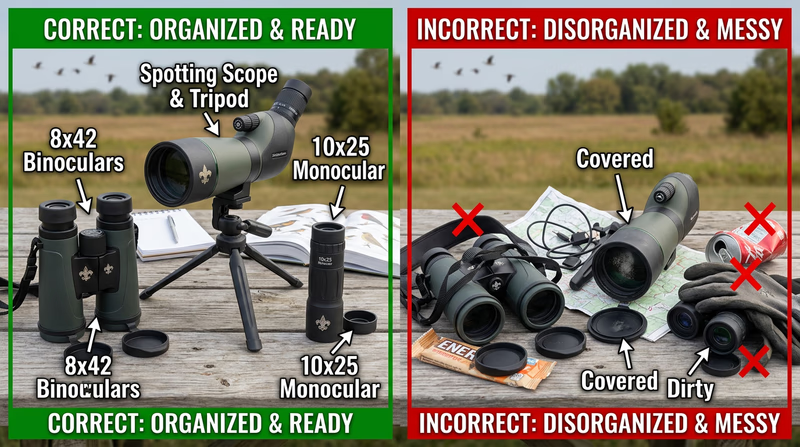
Two barrels, two eyes. Binoculars are the primary tool for birding. They are portable, quick to use, and give you a natural depth-of-field view. Most birders use 8x42 or 10x42 binoculars.
Spotting Scope
A single-barrel telescope on a tripod. Spotting scopes offer much higher magnification (20x–60x), making them ideal for viewing distant shorebirds, waterfowl, or hawks. The tripod keeps the image steady at those high magnifications.
Monocular
A single-barrel, handheld optic — essentially half of a pair of binoculars. Monoculars are compact and lightweight, making them a good backup or budget option. However, viewing through one eye for extended periods is less comfortable than binoculars.
Now that you know what the numbers mean, let’s learn how to actually use your optics — starting with adjusting the eyepiece and focusing.