Req 4 — Using a Field Guide
This requirement covers two essential birding skills and asks you to demonstrate them for six different bird types:
- Using a field guide — finding a species quickly and reading its account
- Reading range maps — understanding where a species lives during different seasons
The six bird types you need to look up are:
- (a) Seabird
- (b) Plover
- (c) Falcon or hawk
- (d) Warbler or vireo
- (e) Heron or egret
- (f) Sparrow
How a Field Guide Is Organized
Most field guides organize birds by taxonomic order — grouping related species together. This means all the ducks are together, all the hawks are together, all the warblers are together, and so on. Here is the general order you will find in most North American field guides:
- Waterfowl (ducks, geese, swans)
- Gamebirds (grouse, quail, turkeys)
- Seabirds (petrels, pelicans, cormorants)
- Wading birds (herons, egrets, ibises)
- Shorebirds (sandpipers, plovers)
- Gulls and terns
- Raptors (hawks, eagles, falcons)
- Owls
- Woodpeckers
- Songbirds (flycatchers, vireos, jays, swallows, wrens, thrushes, warblers, sparrows, finches)
Knowing this order helps you flip to the right section quickly. If you spot a large wading bird, go to section 4 — you do not need to search the whole book.
What a Species Account Tells You
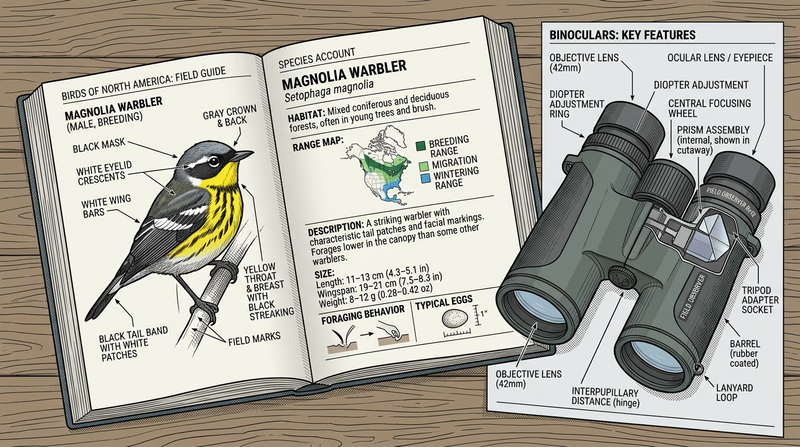
Each species in a field guide has an account that typically includes:
- Illustration or photograph — Showing the bird in different plumages (male, female, juvenile, breeding, non-breeding).
- Field marks — Key features pointed out with arrows or labels: color patterns, bill shape, tail shape, wing bars.
- Size — Length from bill tip to tail tip, and sometimes wingspan.
- Habitat — Where this bird is typically found.
- Voice — A written description of the bird’s songs and calls.
- Range map — A color-coded map showing where the bird lives during different seasons.
Reading Range Maps
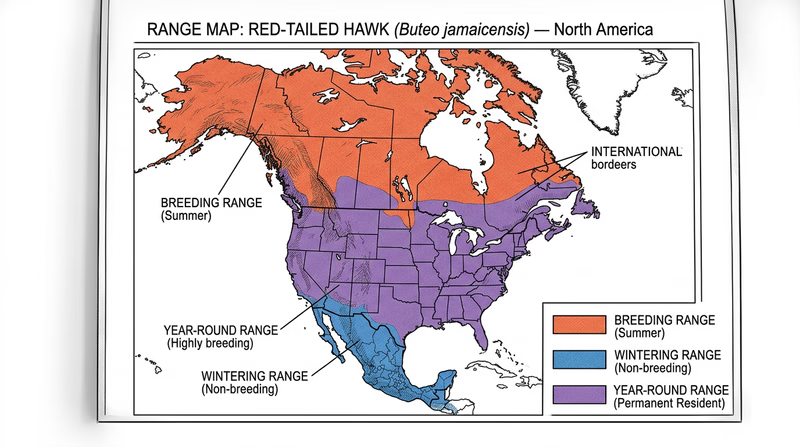
Range maps are one of the most useful tools in your field guide. They show you where a bird can be found — and when. Most range maps use a standard color code:
| Color | Meaning |
|---|---|
| Red / Orange | Breeding range (summer) — the bird nests here |
| Blue | Wintering range — the bird spends the cold months here |
| Purple / Green | Year-round range — the bird lives here all year |
| Yellow | Migration path — the bird passes through during spring or fall |
How to Read a Range Map
- Find the species in your field guide.
- Locate your area on the range map.
- Check the color at your location to determine when (or if) the bird is present.
- Note boundaries — if your area is at the edge of a range, the bird may be uncommon or difficult to find there.
Your Six Bird Types
For this requirement, you need to find one species from each of the following types and show your counselor its range map. Here are some suggestions to get you started — but feel free to choose any species from the correct group:
(a) Seabird
Seabirds spend most of their lives over open ocean. Examples: Atlantic Puffin, Brown Pelican, Northern Gannet, Black-legged Kittiwake.
(b) Plover
Plovers are small to medium shorebirds with round heads and short bills. Examples: Killdeer (common across North America), Semipalmated Plover, Black-bellied Plover, Piping Plover.
(c) Falcon or Hawk
Raptors — birds of prey. Examples: Red-tailed Hawk (the most common hawk in North America), American Kestrel (smallest North American falcon), Peregrine Falcon, Cooper’s Hawk.
(d) Warbler or Vireo
Small, often colorful songbirds. Examples: Yellow Warbler, Black-and-white Warbler, Red-eyed Vireo, Yellow-rumped Warbler.
(e) Heron or Egret
Tall, long-legged wading birds. Examples: Great Blue Heron, Great Egret, Green Heron, Snowy Egret.
(f) Sparrow
Small, seed-eating songbirds, often with streaky brown plumage. Examples: Song Sparrow, White-throated Sparrow, Chipping Sparrow, House Sparrow (note: House Sparrow is non-native).
Range Map Practice
What to point out for each species
- Breeding range (summer): Where does this bird nest?
- Wintering range: Where does it spend the cold months?
- Year-round range: Is there an area where this bird lives all year?
- Migration corridor: Does the field guide show where this bird passes through?
- Your location: Is this bird expected in your area? If so, during which season?
Digital Field Guides
While printed field guides remain essential tools, digital alternatives are powerful companions:
- Merlin Bird ID (free, from Cornell Lab) — Identifies birds from photos, sounds, or a series of questions about what you saw.
- eBird (free, from Cornell Lab) — Shows real-time sighting data, including range maps based on actual observer reports.
- Audubon Bird Guide (free) — Digital field guide with illustrations, photos, and range maps.
You can now navigate a field guide and read range maps. Next, it is time to put those skills to work in the field — by observing and recording 20 bird species.