Req 6 — Habitat Adaptations
This requirement covers four types of physical adaptations that help birds thrive in their habitats:
- (a) Beak
- (b) Body
- (c) Leg and foot
- (d) Feathers/plumage
Every bird is shaped by its environment. Over millions of years of evolution, birds have developed specialized body parts that match the places they live and the food they eat. Understanding these adaptations is one of the most fascinating parts of bird study — and once you see the patterns, you will start noticing them everywhere.
Beak Adaptations
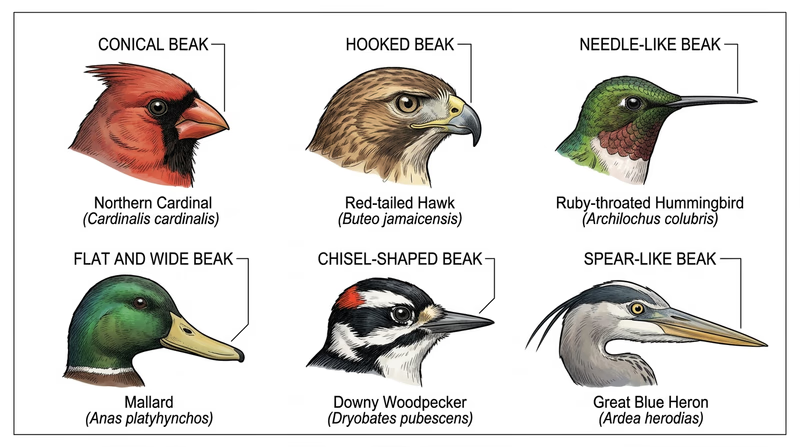
A bird’s beak (also called a bill) is its primary tool for gathering food. The size and shape of the beak tells you a lot about what a bird eats and how it feeds.
| Beak Type | Shape | Food / Function | Example Species |
|---|---|---|---|
| Conical | Short, thick, strong | Cracking seeds and nuts | Northern Cardinal, House Finch |
| Hooked | Curved, sharp tip | Tearing meat from prey | Red-tailed Hawk, Peregrine Falcon |
| Long and thin | Needle-like | Probing flowers for nectar | Ruby-throated Hummingbird |
| Flat and wide | Spatula-shaped | Straining food from water | Mallard, Northern Shoveler |
| Chisel-shaped | Straight, strong | Drilling into wood for insects | Downy Woodpecker, Pileated Woodpecker |
| Long and pointed | Spear-like | Stabbing fish | Great Blue Heron, Green Heron |
| Short and flat | Wide gape | Catching insects in flight | Common Nighthawk, Eastern Whip-poor-will |
Body Adaptations
A bird’s overall body shape reflects how it moves through its environment.
Raptors (hawks, eagles, falcons) have compact, muscular bodies with broad chests. Their bodies are built for power — either soaring for long periods or diving at high speed. The Peregrine Falcon’s streamlined body allows it to reach speeds over 200 mph in a hunting dive (called a stoop).
Waterfowl (ducks, geese, swans) have wide, flat bodies that sit low in the water, providing stability. Their bodies are heavily insulated with dense down feathers and waterproof outer feathers.
Wading birds (herons, egrets) have tall, slender bodies that move quietly through shallow water. Their long necks can coil like a spring and strike at fish with lightning speed.
Songbirds (warblers, sparrows, finches) tend to have small, lightweight bodies that allow them to perch on thin branches and move quickly through dense vegetation.
Penguins have torpedo-shaped bodies adapted for swimming rather than flying. Their wings have evolved into flippers, and their dense bones help them dive deep.
Leg and Foot Adaptations
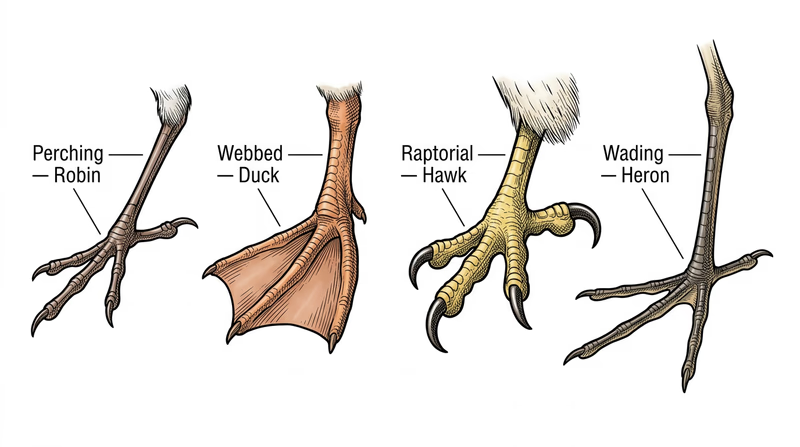
A bird’s legs and feet reveal where it spends most of its time.
| Foot Type | Features | Function | Example Species |
|---|---|---|---|
| Perching (anisodactyl) | Three toes forward, one back | Gripping branches | American Robin, most songbirds |
| Zygodactyl | Two toes forward, two back | Climbing and gripping bark | Woodpeckers, owls |
| Webbed | Toes connected by membrane | Swimming and paddling | Mallard, Canada Goose |
| Lobed | Toes with fleshy flaps | Swimming and walking on mud | American Coot, grebes |
| Raptorial (talons) | Large, curved, sharp claws | Seizing and killing prey | Red-tailed Hawk, Great Horned Owl |
| Wading | Long legs, long spread toes | Walking in shallow water | Great Blue Heron, Killdeer |
Leg length matters too. Herons and egrets have extremely long legs for wading in deeper water. Ducks have short legs set far back on the body, perfect for swimming but awkward on land (that is why they waddle). Hawks have short, powerful legs for striking prey.
Feather and Plumage Adaptations
Feathers do far more than enable flight. They are critical for survival in every habitat.
Waterproofing: Ducks and other waterfowl have tightly interlocking outer feathers coated with oil from the preen gland near the tail. This creates a waterproof barrier that keeps the soft down feathers (and the bird’s skin) completely dry, even after hours of swimming.
Insulation: Penguins have the densest feathers of any bird — about 100 feathers per square inch. This extreme insulation allows them to survive Antarctic temperatures far below zero.
Camouflage: Many ground-nesting birds (like the American Woodcock or Killdeer) have mottled brown plumage that blends perfectly with leaves, soil, and grass. A sitting woodcock is nearly invisible from a few feet away.
Display: Male birds often have bright, elaborate plumage to attract mates. The Peacock’s spectacular tail fan is the most famous example, but many North American species — like the Wood Duck, Painted Bunting, and Scarlet Tanager — have stunning breeding plumage too.
Seasonal change: Some species molt into different plumages for different seasons. The American Goldfinch is bright yellow in summer but olive-drab in winter. This helps it blend in during the colder months when there is less cover.
Putting It All Together
When you discuss adaptations with your counselor, pick a specific bird order and describe how all four characteristics — beak, body, legs/feet, and feathers — work together for its habitat. For example:
Great Blue Heron (Order Pelecaniformes, wading habitat):
- Beak: Long, spear-like — stabs fish in shallow water
- Body: Tall, slender — moves quietly through marshes
- Legs/feet: Extremely long legs, long spread toes — wades in deep water without getting its body wet
- Feathers: Specialized powder-down feathers that shed a fine dust used for cleaning fish slime off its plumage
You now understand how birds are physically adapted to their habitats. Next, you will explore one of the most distinctive adaptations of all — their voices.