Req 7 — Songs & Calls
Birding by ear is one of the most powerful skills you can develop. On a typical morning walk through a forest, you might see a handful of birds — but you can hear dozens. Learning to identify birds by their sounds will dramatically increase the number of species you can detect, and it will deepen your understanding of bird behavior.
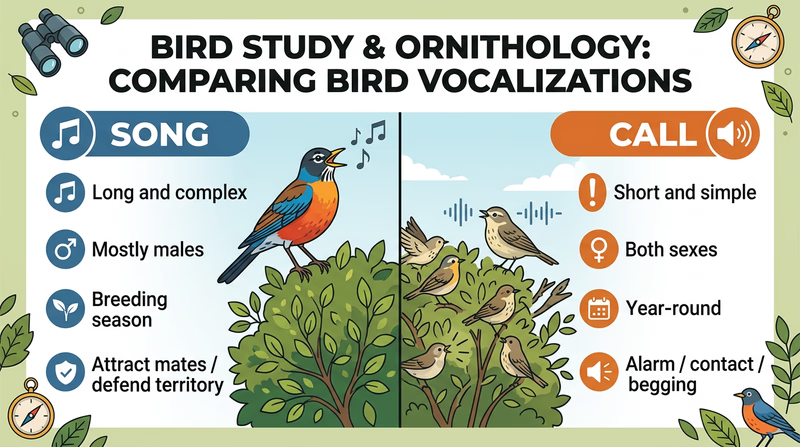
Songs vs. Calls — What Is the Difference?
This is a key distinction for your counselor conversation:
Songs
Songs are typically long, complex, and musical. They are produced almost exclusively by male songbirds (with some exceptions), primarily during the breeding season. Songs serve two main functions:
- Attracting a mate — A male’s song advertises his fitness and territory to females.
- Defending territory — A song warns other males: “This area is taken. Stay away.”
Songs are usually learned — young birds hear their father’s song and practice it until they get it right. Some species, like the Northern Mockingbird, learn and reproduce the songs of many other species.
Calls
Calls are short, simple sounds made by both males and females throughout the year. They serve practical, immediate purposes:
- Alarm calls — Warning of a predator (“Hawk! Get down!”)
- Contact calls — Staying in touch with the flock (“I am here, where are you?”)
- Begging calls — Nestlings begging parents for food
- Flight calls — Coordinating group movement during migration or flock flight
| Feature | Song | Call |
|---|---|---|
| Length | Long, complex | Short, simple |
| Who sings | Mostly males | Both males and females |
| When | Mainly breeding season | Year-round |
| Purpose | Attract mate, defend territory | Alarm, contact, begging |
| Learned? | Usually learned from parents | Mostly innate (born knowing it) |
Why Do Birds Sing?
The function of bird song comes down to survival and reproduction:
Territory defense — A singing bird is announcing ownership of a patch of habitat that contains food, shelter, and nesting sites. Studies have shown that when a territorial male is removed, neighboring males quickly expand into his area — but when a speaker playing his song is placed in the territory, the neighbors stay away. The song alone is enough to defend the territory.
Mate attraction — Females often choose mates based on the quality and complexity of their songs. A male with a bigger song repertoire may signal better genes, better health, or more experience — all desirable traits in a partner.
Species recognition — Each species has a unique song pattern. This helps birds find mates of their own species, even in habitats shared with many other species.
Learning to Identify Birds by Sound
For this requirement, you need to identify five of the 20 species in your field notebook by song or call alone. Here is how to build that skill:
Start with Common, Distinctive Songs
Some birds have songs that are easy to remember because they sound like English phrases. These mnemonics (memory aids) have been used by birders for generations:
| Bird | Mnemonic | Sound Description |
|---|---|---|
| Barred Owl | “Who cooks for you? Who cooks for you-all?” | Deep, hooting rhythm |
| White-throated Sparrow | “Oh sweet Canada, Canada, Canada” | Clear, whistled notes |
| Carolina Wren | “Teakettle, teakettle, teakettle” | Loud, rolling phrase |
| American Robin | “Cheerily, cheer up, cheer up, cheerily” | Rich, caroling melody |
| Black-capped Chickadee | “Chick-a-dee-dee-dee” (call) | Buzzy, staccato notes |
Use Technology
- Merlin Bird ID (free app) — Has a “Sound ID” feature that listens through your phone’s microphone and identifies birds singing in real time. Use it to confirm what you hear.
- Cornell Lab’s Macaulay Library — The world’s largest archive of bird sounds. You can listen to recordings of any North American species online.
- eBird — Species pages include sound recordings alongside photos and range maps.
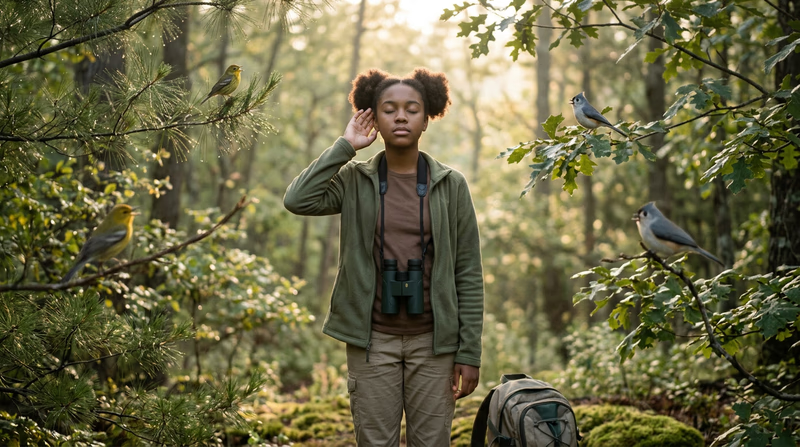
Recording Your Five Species
For each of the five species you identify by sound, your field notebook entry should include:
- A description of the song or call — Use words like buzzy, whistled, trilled, warbled, harsh, musical, ascending, descending. Try to capture the rhythm and pattern.
- The behavior of the bird — What was the bird doing while singing? Perched on a high branch? Hidden in a thicket? Flying overhead?
- Why you think it was making that sound — Was it defending territory (singing from an exposed perch)? Alarming about a predator (short, rapid call notes)? Calling to a mate or flock?
You have explored the world of bird sound. Now it is time to choose an immersive birding experience — a field trip, the Christmas Bird Count, or bird banding.