Req 9 — Build for Birds
For this requirement, you choose one project and build or design it. For every option, you must also explain:
- What birds you hope to attract and why those species
- What maintenance your project requires to stay effective
Read through all five options and pick the one that fits your situation best.
Option A — Build a Bird Feeder
Build a bird feeder and place it in an appropriate location in your yard or another suitable spot.
What to Consider
The type of feeder you build determines which birds visit. A platform feeder attracts ground-feeding species like juncos and sparrows. A tube feeder with small perches attracts finches and chickadees. A suet cage attracts woodpeckers, nuthatches, and wrens.
Placement Tips
- Place feeders within 3 feet of a window or more than 30 feet away — distances in between are the most dangerous for window strikes.
- Position near cover (trees or shrubs within 10–15 feet) so birds have a quick escape route from predators.
- Keep feeders at least 5 feet off the ground to reduce squirrel and cat access.
Maintenance
- Refill regularly — empty feeders teach birds to stop coming.
- Clean the feeder every two weeks with a dilute bleach solution (1 part bleach to 9 parts water) to prevent disease.
- Remove old, wet, or moldy seed promptly.
- Clear the area below the feeder of seed hulls to prevent mold growth.
Option B — Build a Birdbath
Build a birdbath and place it in an appropriate location.
What to Consider
All birds need water — for drinking and for bathing (which keeps their feathers in good condition). A birdbath attracts species that might not visit a feeder, including warblers, thrushes, and tanagers. Moving water (a small fountain or dripper) is especially attractive because birds can hear it from a distance.
Design Tips
- Keep the water shallow — no deeper than 2–3 inches at the deepest point. Place a flat stone in the center to give small birds a place to stand.
- Rough surfaces are better than smooth ones — birds need traction.
- Place the birdbath in a shaded area to keep algae growth down and water temperature comfortable.
Maintenance
- Change the water every 2–3 days to prevent mosquito breeding and algae growth.
- Scrub the basin weekly with a stiff brush (no soap).
- In freezing weather, use a birdbath heater or bring the bath indoors. Do not add antifreeze — it is toxic to birds.
Option C — Build a Backyard Sanctuary
Create a backyard bird sanctuary by planting trees and shrubs that provide food and cover.
What to Consider
A backyard sanctuary goes beyond feeders and birdbaths. You are creating a mini habitat — a place where birds can find natural food (berries, seeds, insects attracted by the plants), shelter from weather and predators, and potential nesting sites.
Planning Your Sanctuary
- Choose native plants. Native species produce the berries and attract the insects that local birds have evolved to eat. Non-native ornamental plants often offer little food value.
- Plant in layers. Use tall trees for canopy cover, mid-sized shrubs for nesting and berries, and low groundcover for ground-feeding birds.
- Include evergreens. Conifers provide year-round cover and winter shelter — critical for birds in cold climates.
- Leave some “messy” areas. Brush piles, leaf litter, and standing dead trees (snags) provide insect habitat and nesting sites.
Maintenance
- Water new plantings until established.
- Avoid pesticides — they kill the insects birds eat and can poison the birds directly.
- Prune only when necessary, and avoid pruning during nesting season (spring through mid-summer).
Option D — Build a Nest Box
Build a birdhouse (nest box) for a species of your choice using plans approved by your counselor.
What to Consider
Not all birds use nest boxes — only cavity-nesting species like bluebirds, wrens, chickadees, swallows, and some owls. The entrance hole size determines which species can use the box and which are excluded.
| Entrance Hole Size | Target Species |
|---|---|
| 1⅛ inches | House Wren, Black-capped Chickadee |
| 1½ inches | Eastern Bluebird, Tree Swallow |
| 2 inches | Hairy Woodpecker |
| 3 inches | Wood Duck, American Kestrel |
| Oval (3 x 4 inches) | Barn Owl |
Design Tips
- Use untreated wood (cedar or pine) — paint and chemicals can harm nesting birds.
- Include drainage holes in the bottom and ventilation slots near the top.
- Make the front panel removable or hinged for easy cleaning.
- Do not include a perch below the entrance — perches help predators and House Sparrows more than they help target species.
Maintenance
- Clean the box after each nesting season (late fall). Remove old nesting material.
- Check for damage from weather, woodpeckers, or predators. Repair as needed.
- Monitor during nesting season to track occupancy and success.
Option E — Design a Habitat Plan
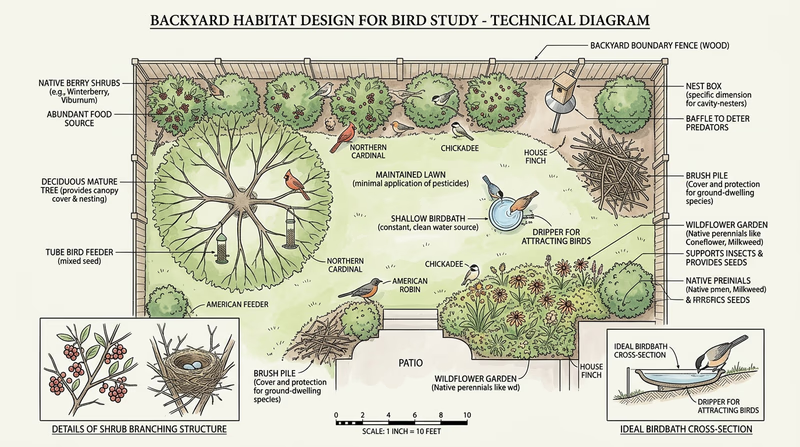
Describe the elements of a backyard bird habitat for a given area and draw a plan, including lists of birds you hope to attract, plantings for food and cover, and nesting features.
What to Consider
This option is about planning rather than building. You will create a detailed design for a bird-friendly habitat — even if you do not plant it right away. This is a great choice if you enjoy design and want to think strategically about bird habitat.
Elements to Include in Your Plan
Habitat Plan Elements
Include all of these in your design
- Food sources: Native berry-producing shrubs, seed-bearing wildflowers, trees that attract insects.
- Water feature: Birdbath, shallow pond, or drip system.
- Cover and shelter: Dense shrubs, evergreen trees, brush piles.
- Nesting sites: Nest boxes, dense hedges, dead snags (if safe to leave standing).
- Open space: A small lawn or clearing for ground-feeding birds.
- Target species list: Which birds you hope to attract, matched to the plants and features you choose.
- Seasonal considerations: Plants that provide food in different seasons (spring flowers, summer berries, fall seeds, winter fruits).
Drawing Your Plan
Create a bird’s-eye-view sketch of the area showing where each feature goes. Label each planting with the species name and note what it provides (food, cover, nesting). Include a legend and a list of target bird species.
You have created something tangible to help birds. Now let’s turn to a more serious topic — the conservation status of bird species and what threatens their survival.