Bugling Merit Badge — Complete Digital Resource Guide
https://merit-badge.university/merit-badges/bugling/guide/
Introduction & Overview
There is something powerful about a single brass instrument cutting through the morning air. No chords, no backup band — just one clear voice calling everyone to attention. That is the bugle, and for hundreds of years it has been the sound of duty, honor, and camp life.
The Bugling merit badge connects you to a tradition that stretches from ancient battlefields to modern Scout camps. You will learn how this simple instrument works, master the calls that have signaled soldiers and Scouts for generations, and serve your troop as its official bugler.
Then and Now
Then — The Voice of the Battlefield
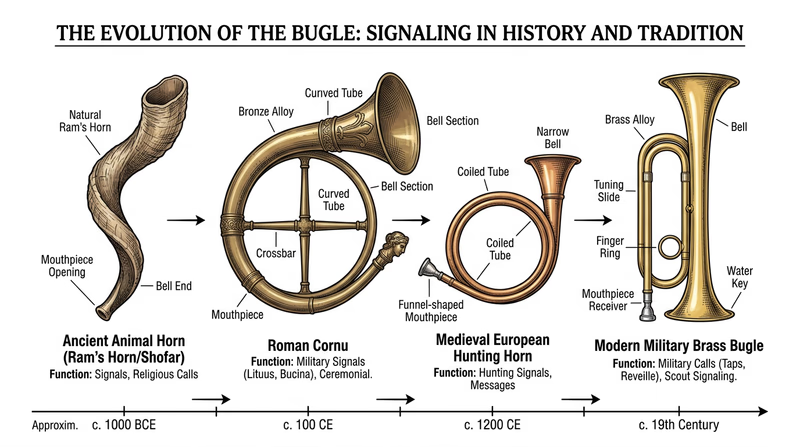
Long before radios or cell phones, commanders needed a way to send orders across a noisy battlefield. Drums worked for marching, but a piercing brass signal could cut through the chaos of combat. Ancient Roman armies used a curved horn called the cornu. Medieval armies carried hunting horns. By the 1700s, the modern bugle had taken shape — a simple, valveless brass tube coiled into a compact loop.
During the American Civil War, buglers were essential. A single teenager with a bugle could communicate orders to thousands of troops spread across miles of terrain. Calls like “Charge,” “Retreat,” and “Taps” were literally a matter of life and death. Every regiment had its own bugler, and many were boys not much older than you.
- Purpose: Battlefield communication, signaling troop movements, regulating daily camp life
- Mindset: The bugler’s call was an order — miss it, and you missed the message
Now — Tradition, Ceremony, and Scout Camp
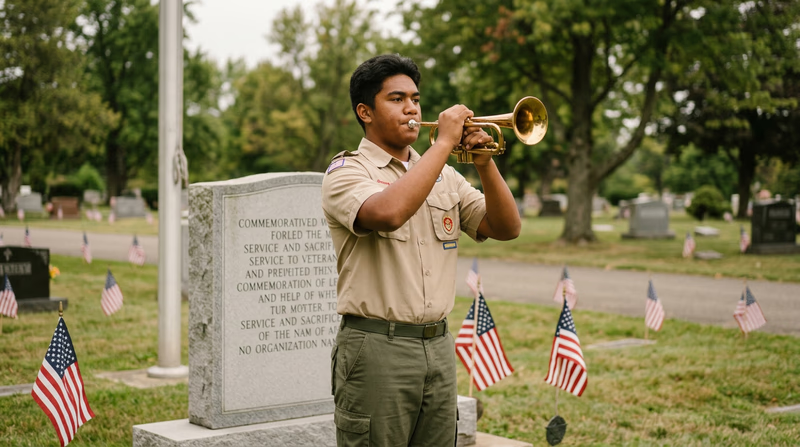
Today, the bugle is no longer needed to relay battlefield commands. But its role has only grown in meaning. “Taps” is played at military funerals and memorial services across the country. “Reveille” still wakes service members at military installations every morning. At Scout camps, the bugle marks the rhythm of the day — from the first notes of “Reveille” at sunrise to the final haunting tones of “Taps” at lights out.
- Purpose: Ceremony, tradition, Scout camp daily routine, memorial services
- Mindset: Honor the tradition — every note carries history
Get Ready! You are about to learn one of the oldest communication instruments in the world. Whether you have never touched a brass instrument or you already play trumpet in the school band, this badge will challenge and reward you.
Kinds of Bugling
The bugle may look simple, but it shows up in many different settings. Here are the main ways bugling is practiced today.
Military Bugling
Military bugling is the original form. Buglers serve at military installations, playing the daily sequence of calls that structure life on post — from “Reveille” at dawn to “Taps” at night. Military buglers also play at ceremonies, funerals, and official events. The U.S. Army even maintains a ceremonial bugle unit at Arlington National Cemetery, where “Taps” is sounded for every burial.
Scout Camp Bugling
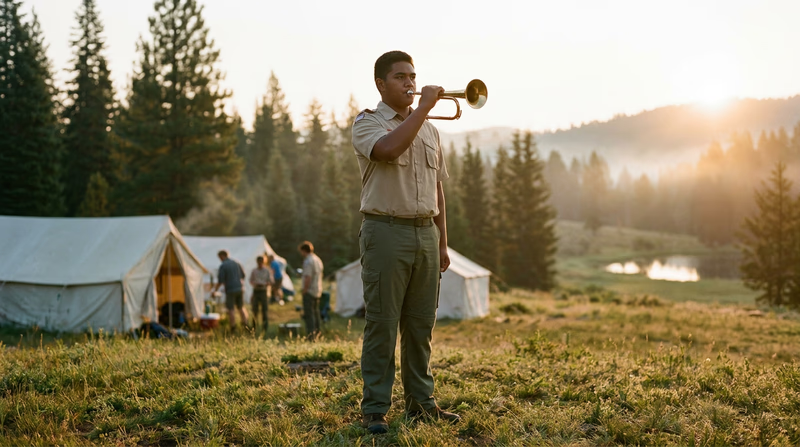
At Scout camp, the bugler is one of the most recognized members of the troop. The camp bugler sounds “Reveille” to start the day, “Mess” to call everyone to meals, “Swimming” to announce free swim, and “Taps” to close the night. Being the camp bugler is a position of responsibility and honor — everyone depends on you to keep the schedule running.
Ceremonial Bugling
Ceremonial bugling happens at memorials, parades, flag ceremonies, and civic events. “Taps” at a Veterans Day service, “To the Colors” during a flag-raising, or “Retreat” at sunset — these moments carry deep emotional weight. A well-played bugle call can bring an entire crowd to silence.
Drum and Bugle Corps
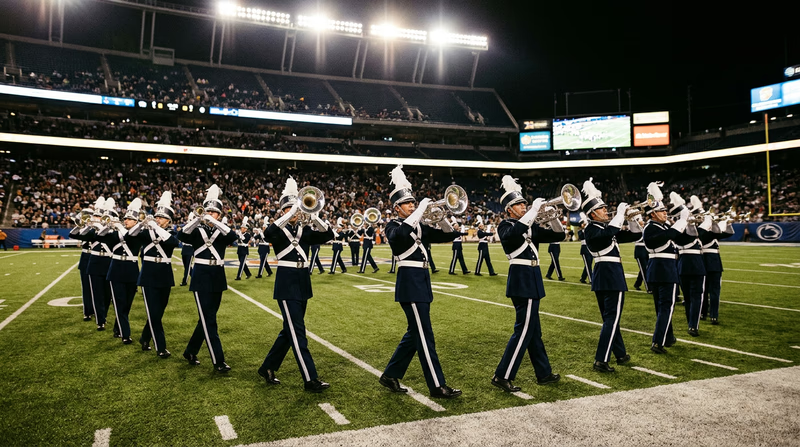
Drum and bugle corps (often called “drum corps”) are competitive marching ensembles that combine brass instruments, percussion, and colorful visual displays. While modern drum corps use a range of brass instruments beyond the traditional bugle, the art form traces its roots directly to military bugling. Groups like the Blue Devils and the Cavaliers perform at stadiums across the country every summer.
Now let’s explore the history of the bugle and begin your journey toward earning this badge.
Req 1 — History of the Bugle
The bugle has one of the longest histories of any instrument still in regular use. Understanding where it came from helps you appreciate every note you play.
Ancient Roots
The earliest “bugles” were not metal at all. Ancient peoples used animal horns — from cattle, rams, and even elephants — to send signals across distances. The shofar, a ram’s horn still blown in Jewish religious services today, dates back over 3,000 years. Roman legions carried the cornu, a large circular bronze horn, and the bucina, a smaller curved horn used for camp signals. These instruments could produce only a few notes, but that was enough to communicate simple commands.
The Bugle Takes Shape
By the Middle Ages, hunters across Europe used brass and copper horns to coordinate during hunts. In Germany, the Flügelhorn (meaning “wing horn”) was carried by a scout who rode on the flank — the “wing” — of an army, signaling troop movements.
The modern bugle emerged in the 1700s when military instrument makers settled on a standard design: a single tube of brass, coiled into a compact shape, with no valves, keys, or slides. This simplicity was the point. A bugle needed to be loud, durable, and easy to carry into battle. A soldier could learn the basic calls in weeks, not years.
The Bugle in American History
The bugle played a critical role in the American military from the Revolutionary War through World War I. During the Civil War, every infantry and cavalry regiment had at least one bugler. These buglers were often teenagers — some as young as 12 or 13. They did not fight, but they were right in the middle of the action, sounding the calls that told thousands of soldiers when to advance, retreat, or hold their ground.
Some of the most famous bugle calls in American history were composed during this era:
- “Taps” was written in 1862 during the Civil War by Union General Daniel Butterfield, who wanted a more dignified call to signal “lights out” than the standard one borrowed from the French. He hummed the melody to his brigade bugler, Oliver Willcox Norton, who played it that night. Within months, both Union and Confederate units had adopted it.
- “Reveille” became the standard wake-up call for American troops, adapted from a French military signal.
- “Assembly” gathered soldiers to form ranks — the equivalent of a modern announcement over a loudspeaker.
🎬 Video: Bugles in Military History — https://www.youtube.com/watch?v=gOxuoJHPCJA
The Bugle in Scouting
When Lord Baden-Powell founded the Scouting movement in 1907, he borrowed heavily from military traditions — including the bugle. Scout troops used bugle calls to organize camp life, and the role of troop bugler became an honored position. In the United States, the Bugling merit badge has been offered by the Boy Scouts of America (now Scouting America) since the earliest days of the program.
At Scout camps, the bugle still serves the same purpose it served on the battlefield: communicating clearly to a large group without electricity, speakers, or technology.
The Bugle Today
The bugle is no longer needed for battlefield communication, but its ceremonial role is stronger than ever. “Taps” is played at every military funeral. “Reveille” still sounds at installations worldwide. And at Scout camps across the country, a bugler marks the rhythm of each day — the same way buglers have done for centuries.
🎬 Video: The Bugler's Cry — A History of Taps — https://www.youtube.com/watch?v=Z13dtuMMFps
Now that you know where the bugle came from, let’s find out how it actually works.
Req 2a — How It Makes Sound
This requirement has two parts: understanding the physics of how a bugle produces sound, and understanding where the bugle fits in the brass instrument family.
How the Bugle Makes Sound
A bugle is one of the simplest instruments you will ever play — and that simplicity makes the physics easy to understand.
Your Lips Are the Engine
The bugle itself does not vibrate to make sound. You do. When you press your lips against the mouthpiece and blow, your lips vibrate rapidly — buzzing like a bee. This buzzing creates a vibrating column of air inside the brass tubing. The tube amplifies that vibration and shapes it into a clear, powerful tone that carries across long distances.
This is how every brass instrument works. The player’s buzzing lips are the sound source. The instrument is the amplifier and shaper.
Changing Notes Without Valves
A trumpet has three valves that open and close different lengths of tubing to change the pitch. A bugle has no valves at all. So how do you play different notes?
The answer is your embouchure (pronounced “AHM-buh-shur”) — the way you shape your lips, jaw, and facial muscles around the mouthpiece. By tightening your lips, you make the air column vibrate faster, producing a higher pitch. By relaxing them, the vibration slows and the pitch drops.
A standard bugle in the key of B-flat can produce five distinct notes, called the harmonic series:
- B-flat (low) — The fundamental tone. Deep and full.
- B-flat (mid) — One octave higher. The most common starting note for calls.
- F — A fifth above the mid B-flat. Bright and strong.
- B-flat (high) — Two octaves above the fundamental. Clear and ringing.
- D (high) — The highest note most buglers reach. Sharp and piercing.
These five notes are all you need to play every standard bugle call. “Taps,” for example, uses just four of them.
The Bell and the Bore
The flared opening at the end of the bugle is called the bell. It projects the sound outward and gives the bugle its characteristic bright, carrying tone. The bore — the internal diameter of the tubing — affects the tone quality. A wider bore produces a warmer, mellower sound. A narrower bore creates a brighter, more focused tone.
The Brass Instrument Family
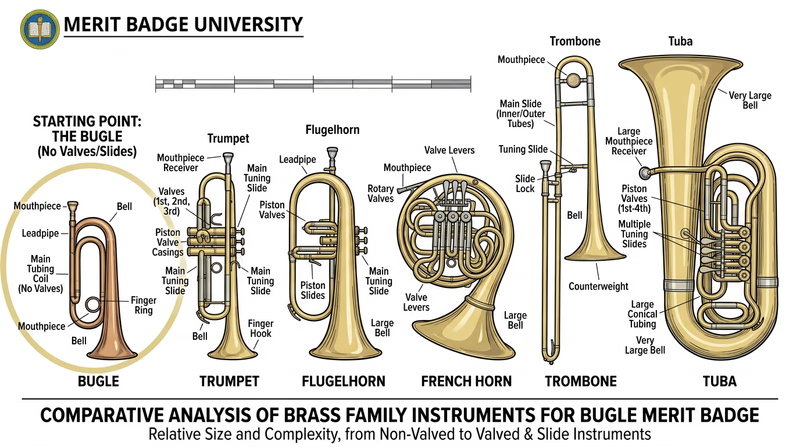
The bugle is the ancestor of the entire brass wind instrument family. All brass instruments share the same basic principle: the player buzzes their lips into a cup-shaped mouthpiece, and the instrument amplifies and shapes the sound. What separates them is how they change pitch.
| Instrument | How It Changes Pitch | Relation to Bugle |
|---|---|---|
| Bugle | Embouchure only (no valves) | The original |
| Trumpet | Three piston valves | A bugle with valves added |
| French Horn | Three rotary valves + hand in bell | Longer tubing, lower pitch |
| Trombone | Slide changes tubing length | Uses a slide instead of valves |
| Tuba | Three to six valves | Largest brass, lowest pitch |
| Flugelhorn | Three valves, wider bore | A bugle with valves and a wider bell |
The trumpet is the bugle’s closest relative. In fact, a trumpet is essentially a bugle with three valves added to give the player access to a full chromatic scale (every note) instead of just the harmonic series. If you can play bugle, you already have the foundation to play trumpet — and vice versa.
🎬 Video: The Physics of Music — Playing Fire, Ice and Jelly Trumpets — https://www.youtube.com/watch?v=o0Gl4tfh3KA
Now that you understand how the bugle works, it is time to get creative.
Req 2b — Compose a Bugle Call
This is your chance to be a composer. You will create an original bugle call and perform it for your troop or patrol. Here is how to approach it.
Pick Your Purpose
Before you write a single note, decide what your call will signal. The requirement suggests common group activities. Think about moments in your troop’s routine that could use a clear signal:
- Mealtime — “Come and eat!”
- Striking camp — “Time to pack up!”
- Patrol meeting — “Patrols, gather up!”
- Campfire — “Head to the fire ring!”
- Flag ceremony — “Form up for colors!”
Choose something your troop actually does regularly. A call that gets used is more meaningful than one that sits on paper.
Understand Your Building Blocks
Remember from Requirement 2a — the bugle can play five notes from the harmonic series. Your composition must use only these notes. Think of them as five colors on your palette:
- Low B-flat — Deep and attention-getting. Good for opening a call.
- Mid B-flat — Steady and strong. The “home base” note.
- F — Bright and energetic. Creates a natural upward lift.
- High B-flat — Clear and ringing. Stands out above everything.
- High D — Sharp and piercing. Use sparingly for dramatic effect.
Most traditional bugle calls stick to three or four of these notes. You do not need to use all five.
Tips for Composing
Keep It Short
The best bugle calls are 8 to 16 notes long. They need to be short enough to remember and recognize instantly. “Taps” is only 24 notes. “Mess Call” is about 28. Your call can be even shorter.
Make It Distinctive
Your call should sound different from the standard calls your troop already uses. If “Mess Call” has a bouncy, rhythmic feel, make your call smoother or more march-like. Listen to several standard calls first so you know what to avoid duplicating.
Use Repetition
Repeat a short musical phrase to make your call memorable. Most bugle calls use an A-B-A pattern — a phrase, a contrasting phrase, then the first phrase again. This gives the call structure and makes it stick in the listener’s ear.
Think About Rhythm
Rhythm matters as much as the notes. A call with all equal-length notes sounds flat and boring. Mix long and short notes. Try starting with a strong, held note to grab attention, then use quicker notes for the body of the call.
Performing Your Call
The requirement says you must play your call before your unit or patrol. Here is how to prepare:
Performance Preparation
Get ready to debut your bugle call- Practice until you can play the call three times in a row without mistakes.
- Choose a good moment — before a meal, at the start of a patrol meeting, or during a troop campout.
- Stand where everyone can hear you. Face the group, not a wall or tent.
- Announce what the call signals before you play it, so everyone knows what it means.
- Play with confidence. Even if you hit a wrong note, keep going.
You have composed your own call — now it is time to master the standard ones.
Req 3 — Sound Ten Calls
This is the heart of the Bugling merit badge. You need to play 10 out of these 15 standard military bugle calls. Below you will find a guide to each call, organized from easiest to most challenging, along with video demonstrations to help you learn.
Choosing Your Ten
You get to pick which 10 calls to learn. Here is a strategy:
The 15 Standard Bugle Calls
Taps
The most famous bugle call in America. “Taps” is slow, solemn, and hauntingly beautiful. It uses only four notes and has a simple, flowing rhythm. Many Scouts learn this call first because of its emotional power and relatively straightforward melody. It is 24 notes long.
🎬 Video: Taps — https://www.youtube.com/watch?v=vml52_HARwU
First Call
“First Call” is a short, energetic signal that warns everyone to prepare for the next formation. Think of it as a “heads up” — the bugler’s way of saying, “Something is about to happen, get ready.” It is quick and punchy.
🎬 Video: First Call — https://www.youtube.com/watch?v=cIuRLWqkAJQ
Mess Call
“Mess Call” signals mealtime — and it is one of the most popular calls at Scout camp for obvious reasons. The melody is bouncy and rhythmic, almost cheerful. It is moderate in length and fun to play.
🎬 Video: Mess Call — https://www.youtube.com/watch?v=av0KwEhfbEE
Assembly
“Assembly” orders troops to gather and form ranks. It is a straightforward call with a clear, march-like rhythm. The melody moves in a predictable pattern, making it one of the easier calls to memorize.
🎬 Video: Assembly — https://www.youtube.com/watch?v=i6fg7Rt8ilM
Recall
“Recall” signals that a current activity is over and everyone should return to their unit area. It has a distinctive melodic shape that is easy to recognize and moderate in difficulty.
🎬 Video: Recall — https://www.youtube.com/watch?v=69HW8f1t0nw
Drill Call
“Drill Call” summons troops for drill practice or instruction. It is short and direct — a no-nonsense call that gets right to the point.
🎬 Video: Drill Call — https://www.youtube.com/watch?v=MnAkgjY66g8
Fatigue Call
“Fatigue Call” signals that it is time for work details — cleaning, maintenance, and other camp chores. The name comes from the military term “fatigue duty,” which means non-combat labor.
🎬 Video: Fatigue Call — https://www.youtube.com/watch?v=1u6Rtk_KO-c
Officers Call
“Officers Call” summons officers (or in a Scout troop, leaders) to a meeting. It has a dignified, measured quality that sets it apart from the more energetic calls.
🎬 Video: Officers Call — https://www.youtube.com/watch?v=X8GlrD1x6Gc
Swimming Call
“Swimming Call” announces free swim — a sound that makes every Scout at summer camp perk up. It is a bright, inviting melody.
🎬 Video: Swimming Call — https://www.youtube.com/watch?v=NgOxHV3lgPA
Church Call
“Church Call” signals the start of religious services. It has a calm, reverent quality — slower and more measured than most other calls.
🎬 Video: Church Call — https://www.youtube.com/watch?v=GVhVfat9t5M
Call to Quarters
“Call to Quarters” tells everyone to return to their quarters (tents, cabins, or barracks) and stay there. It is typically played in the evening before “Taps.”
🎬 Video: Call to Quarters — https://www.youtube.com/watch?v=VMww5IIDHUU
Fire Call
“Fire Call” is an emergency signal — it alerts everyone that there is a fire and action is needed immediately. The melody is urgent and attention-grabbing by design.
🎬 Video: Fire Call — https://www.youtube.com/watch?v=VjFEvxQAQiA
Retreat
“Retreat” signals the end of the official duty day and is played during the evening flag-lowering ceremony. It is a longer call with a stately, dignified feel.
🎬 Video: Retreat — https://www.youtube.com/watch?v=rbWroGllq3k
To the Colors
“To the Colors” is played during the flag-raising ceremony, signaling everyone to face the flag and salute. It is one of the more challenging calls, with a broad range and sweeping melody.
🎬 Video: To the Colors — https://www.youtube.com/watch?v=y-rtnNTFMfY
Reveille
“Reveille” is the wake-up call — the signal that the day has begun. It is the longest and most complex of the standard calls, with a fast tempo and repeated phrases. Many buglers consider it the hardest call to master cleanly.
🎬 Video: Reveille — https://www.youtube.com/watch?v=It7MrzMzMQ8
Practice Strategy
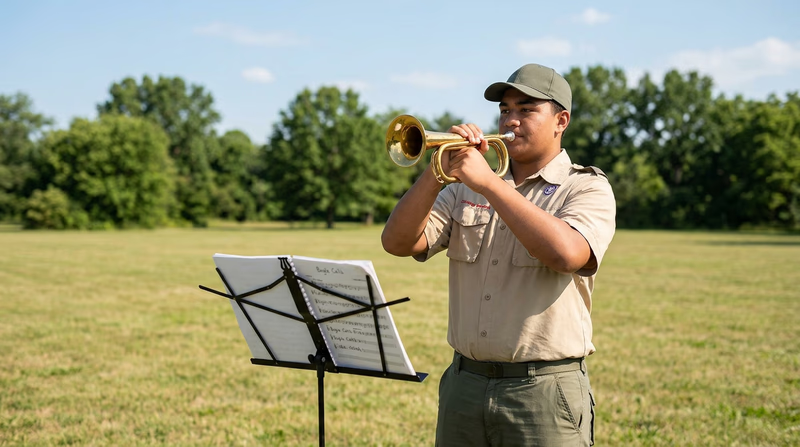
Learning 10 calls is a big task. Here is a plan to make it manageable:
Practice Plan
A structured approach to learning your calls- Start with one call at a time. Do not move on until you can play it cleanly three times in a row.
- Listen to each call’s recording several times before trying to play it. Get the melody in your ear.
- Practice in short sessions (10-15 minutes) rather than long marathons. Your lips will tire quickly.
- Warm up with long tones (holding a single note for as long as you can) before working on calls.
- Practice outdoors when possible — the bugle is loud, and your family will appreciate the distance.
- Record yourself and compare to the reference recordings.
You can play the calls — now learn what each one means.
Req 4 — When Calls Are Used
Knowing how to play a bugle call is one thing. Knowing when and why it is sounded is what separates a musician from a bugler. Every call has a specific purpose, a specific time, and often a specific protocol that goes with it.
The Daily Sequence
On a military installation or at a well-run Scout camp, bugle calls follow a set daily sequence. Think of it as a schedule announced in music. Here is how the calls fit into a typical day:
Morning
First Call — The day’s first warning. It tells everyone to get up and start getting ready. At a military post, it sounds about five minutes before “Reveille.” At Scout camp, it might sound at 6:25 a.m. to give Scouts a few minutes to wake up before the official start of the day.
Reveille — The official start of the day. “Reveille” means “wake up” (from the French word réveiller). When you hear this call, the day has begun. At military installations, “Reveille” is accompanied by the raising of the flag.
Assembly — Gather and form ranks. After everyone is awake and dressed, “Assembly” brings the group together. At camp, this might signal the morning formation before breakfast.
Mess Call — Time to eat. “Mess” is the military term for a meal, and “Mess Call” signals breakfast, lunch, or dinner. At Scout camp, this is the call everyone loves to hear.
Daytime
Drill Call — Report for drill or instruction. This call brings troops together for training exercises. At Scout camp, it might signal the start of a skills session or merit badge class.
Fatigue Call — Report for work duty. “Fatigue” in the military means manual labor — cleaning, building, hauling supplies. At camp, this is the call for chores: KP duty (kitchen patrol), policing the campsite, or gathering firewood.
Officers Call — Leaders, report. This call summons officers to a meeting with the commanding officer. In a Scout troop, it could signal a patrol leaders’ council or adult leader meeting.
Swimming Call — Free swim is open. At Scout camp, this is one of the most anticipated calls of the day. It means the waterfront is open and supervised swimming is available.
Church Call — Religious services are about to begin. This call is sounded on Sunday mornings (or at other designated worship times) to let everyone know that chapel services are starting.
Recall and Emergencies
Recall — Current activity is over, return to your unit area. “Recall” ends whatever activity is in progress and brings everyone back. At camp, it might signal the end of free time or the close of a program period.
Fire Call — Emergency: fire detected. This is not a routine call — it is an alarm. When “Fire Call” sounds, everyone responds immediately according to the emergency plan. At camp, it means assemble at the designated rally point and await instructions.
Evening
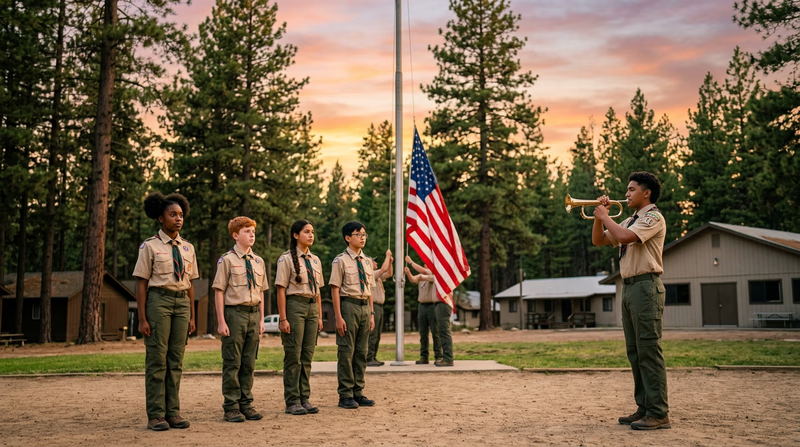
Retreat — The official end of the duty day. “Retreat” is sounded at sunset (or a designated evening time) and accompanies the lowering of the flag. When you hear “Retreat,” stop what you are doing, face the flag, and stand at attention.
To the Colors — Honor the flag. This call is played immediately after “Retreat” while the flag is being lowered. During “To the Colors,” everyone salutes (or places their hand over their heart if not in uniform). It is one of the most solemn moments of the daily routine.
Call to Quarters — Return to your quarters and stay there. This call comes after evening activities are done. It means “Go to your tent, cabin, or barracks. The evening is winding down.”
Taps — Lights out. The final call of the day. “Taps” signals that it is time for silence and sleep. At military installations, lights must be turned off. At Scout camp, talking stops and the day is officially over. “Taps” is also played at military funerals and memorial services to honor the fallen.
A Day in Bugle Calls
Here is what a full day might look like at a Scout camp with a bugler:
| Time | Call | Meaning |
|---|---|---|
| 6:25 AM | First Call | Warning: wake-up in 5 minutes |
| 6:30 AM | Reveille | Day begins, flag is raised |
| 6:45 AM | Assembly | Morning formation |
| 7:00 AM | Mess Call | Breakfast |
| 8:30 AM | Drill Call | Morning program begins |
| 12:00 PM | Recall | Morning activities end |
| 12:15 PM | Mess Call | Lunch |
| 2:00 PM | Swimming Call | Waterfront open |
| 4:30 PM | Recall | Afternoon activities end |
| 5:30 PM | Mess Call | Dinner |
| 7:30 PM | Retreat / To the Colors | Flag lowered, evening begins |
| 9:30 PM | Call to Quarters | Return to tents |
| 10:00 PM | Taps | Lights out |
🎬 Video: US Army Bugle Calls Daily Sequence — https://www.youtube.com/watch?v=M1TeQKsEJNI
You know the calls and when to use them. Next, learn how to keep your instrument in top condition.
Req 5 — Caring for Your Bugle
A well-maintained bugle sounds better, plays easier, and lasts for decades. Taking care of your instrument is part of being a responsible bugler — just like keeping your gear in order is part of being a good Scout.
Daily Care
These are the things you should do every time you play:
After Every Playing Session
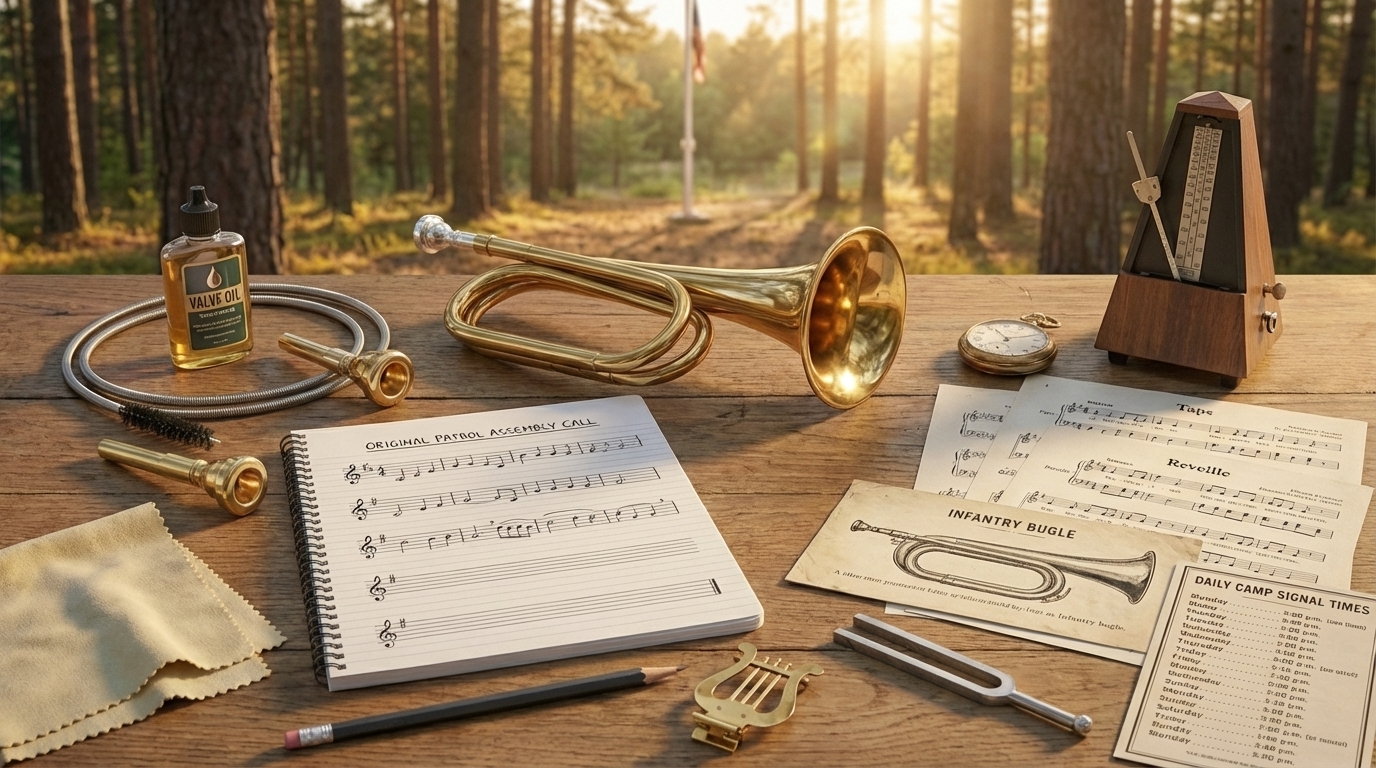
Empty the moisture. When you blow into a bugle, warm, moist air from your lungs condenses inside the cool brass tubing. This moisture (yes, it includes saliva) collects in the lowest point of the tubing. To remove it, turn the bugle upside down and blow a sharp burst of air through the mouthpiece while the bell points toward the ground. Some buglers call this “dumping the spit valve” — even though a bugle does not actually have a valve.
Wipe down the outside. After playing, wipe the entire exterior with a soft, dry cloth. The oils and moisture from your hands will tarnish brass over time if left sitting on the surface. Pay special attention to areas where your hands grip the instrument.
Remove and clean the mouthpiece. Gently twist the mouthpiece out of the receiver (never yank it). Rinse it with warm water and dry it with a clean cloth. This removes any buildup from your lips and keeps the mouthpiece hygienic.
Monthly Cleaning
About once a month (or more often if you play daily), give your bugle a thorough cleaning.
What You Need
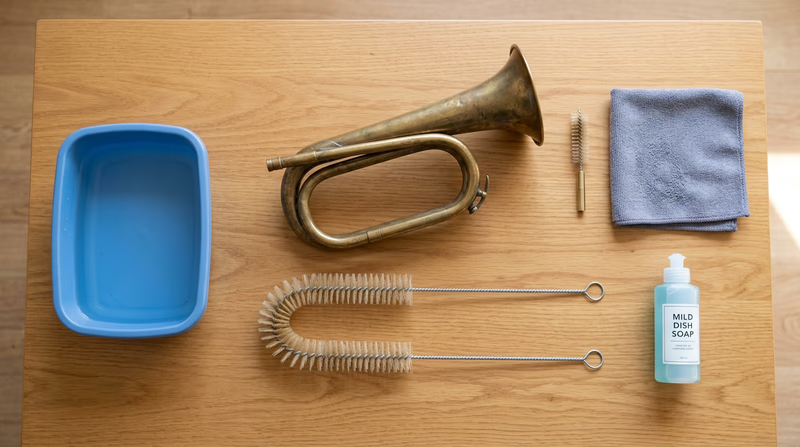
Cleaning Supplies
Everything you need for a thorough bugle cleaning- Lukewarm water (never hot — hot water can damage lacquer)
- Mild dish soap (a few drops)
- A flexible cleaning brush or snake brush
- A soft, lint-free cloth
- Mouthpiece brush (a small cylindrical brush)
- Brass polish (optional, for unlacquered bugles only)
Step-by-Step Deep Clean
- Remove the mouthpiece by gently twisting it out.
- Fill a sink or basin with lukewarm water and add a few drops of mild dish soap.
- Submerge the bugle and let it soak for 5–10 minutes. This loosens any buildup inside the tubing.
- Run the snake brush through the tubing from the mouthpiece receiver through the bell. Push it all the way through — do not force it if it gets stuck. Pull it back and try again at a different angle.
- Clean the mouthpiece separately with the mouthpiece brush, scrubbing inside the cup and through the backbore (the narrow opening at the bottom of the cup).
- Rinse everything thoroughly with clean lukewarm water to remove all soap residue.
- Shake out excess water by turning the bugle upside down and blowing through it.
- Dry completely with a soft cloth, inside and out. Leave the bugle in a warm, dry area for a few minutes to let any remaining moisture evaporate.
Polishing
Whether you should polish your bugle depends on its finish:
Lacquered bugles (most modern bugles) have a clear protective coating that keeps the brass shiny. Do not use brass polish on a lacquered bugle — the polish will damage the lacquer. Just wipe with a soft, dry cloth.
Unlacquered (raw brass) bugles will naturally develop a dark patina over time. If you want to restore the shine, use a quality brass polish like Brasso or a similar product. Apply a small amount to a soft cloth, rub in circular motions, and buff to a shine with a clean cloth. Work in a well-ventilated area.
Storage
Proper storage protects your bugle between uses:
- Use a case or protective bag whenever the bugle is not in use. This prevents dents, scratches, and dust buildup.
- Store in a dry place at room temperature. Avoid attics, garages, or anywhere with extreme heat or humidity.
- Do not leave the mouthpiece in the receiver during long-term storage. It can become stuck (“frozen”) if left in place for weeks or months.
- Keep away from sharp objects and other instruments that could dent the bell or tubing.
Dents and Repairs
Small dents in the bell or tubing can affect the bugle’s tone and response. If your bugle gets dented:
- Do not try to fix dents yourself. Brass is soft, and amateur dent removal often makes things worse.
- Take it to a brass instrument repair technician. Most music stores can either do the repair or recommend someone. Small dent removal is usually inexpensive.
- Prevent dents by always storing the bugle in its case and handling it carefully.
🎬 Video: How to Clean a Bugle and Deal With Spit — https://www.youtube.com/watch?v=KT3UB7BUCNg
Your bugle is clean and ready. Now it is time for the final requirement — putting your skills to use.
Req 6 — Three Months of Service
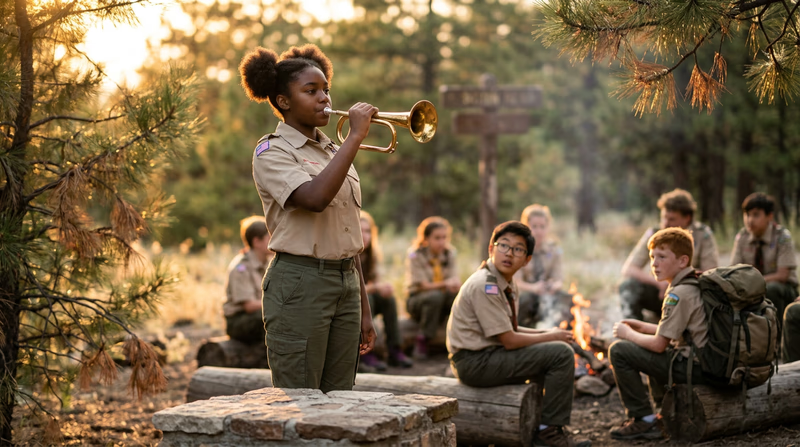
This is where everything comes together. For three months, you will be your troop’s official bugler — the person everyone counts on to mark the rhythm of camp life and ceremonies. This requirement is not about practicing alone in your room. It is about showing up, playing with purpose, and serving your troop through music.
What “Serving as Bugler” Means
Being troop bugler is a position of responsibility, similar to being patrol leader or quartermaster. Your job is to:
- Sound bugle calls at troop meetings, campouts, and ceremonies as directed by your Scoutmaster
- Be reliable — show up on time with your bugle ready to play
- Know which calls to play and when — use what you learned in Requirements 3 and 4
- Maintain your instrument — keep it clean and in good condition (Requirement 5)
You do not need to play at every single troop event for the full three months, but you should be consistently active in the role. Talk to your Scoutmaster at the start to set clear expectations about when and how often you will bugle.
Getting Started
Talk to Your Scoutmaster
Before you start, have a conversation with your Scoutmaster about how bugling fits into your troop’s routine. Some troops use bugle calls regularly; others may not have had a bugler in years. Either way, your Scoutmaster needs to know your plan.
Key questions to discuss:
- Which troop meetings and campouts are coming up in the next three months?
- Which bugle calls would be most useful? (“Mess Call” and “Taps” at campouts are almost always welcome.)
- Are there any ceremonies (Eagle Courts of Honor, flag retirements, memorial services) where a bugler would be appreciated?
- Where should you stand when playing at camp? (You need to be heard by everyone.)
Create a Service Log
Keep a simple log of every time you serve as bugler. Record the date, event, calls played, and any notes. This will help you demonstrate to your merit badge counselor that you fulfilled the three-month requirement.
Service Log Entry
Record these details each time you bugle- Date and location of the event
- Type of event (troop meeting, campout, ceremony, etc.)
- Bugle calls played
- Any notes (how it went, what you learned, anything to improve)
Making the Most of Your Service
At Campouts
Campouts are your best opportunity to serve as bugler. A weekend campout gives you the chance to play “Reveille” in the morning, “Mess Call” at meals, and “Taps” at lights out. If your troop does a flag ceremony, add “Retreat” and “To the Colors.”
At Troop Meetings
Even at an indoor troop meeting, you can serve as bugler. Sound “Assembly” to call the troop to order at the start of the meeting. Play “Recall” to bring patrols back from breakout sessions. If your troop opens or closes meetings with a flag ceremony, this is a natural place for “To the Colors” or “Retreat.”
At Ceremonies
Special ceremonies are where bugling really shines. An Eagle Court of Honor, a flag retirement ceremony, or a memorial service all become more powerful with a live bugler. If you know one of these events is coming up, volunteer early and practice the appropriate calls.
Staying Motivated for Three Months
Three months is a real commitment. Here are some tips for staying engaged:
- Set a weekly practice schedule. Even 10 minutes three times a week keeps your skills sharp.
- Learn new calls. If you started with 10, try adding the remaining five during your service period.
- Teach someone else. Offer to show a younger Scout the basics. Teaching deepens your own understanding.
- Track your progress. Look back at your service log each month. You will be surprised how much you have grown.
Congratulations — you have worked through every requirement for the Bugling merit badge. But the music does not have to stop here.
Extended Learning
A. Congratulations, Bugler
You have earned one of Scouting’s most distinctive merit badges. You can trace the bugle’s history from ancient animal horns to modern ceremony, you understand the physics of how brass produces sound, and you can sound the calls that have organized military and Scout life for generations. More importantly, you have served your troop as its bugler — a tradition that connects you to Scouts and soldiers stretching back centuries. Here is where you can take it next.
B. From Bugle to Trumpet and Beyond
The bugle gave you the foundation of brass playing: embouchure, breath control, and tone production. If you enjoyed the bugle, the trumpet is the natural next step. A trumpet adds three valves to the bugle’s design, opening up the full chromatic scale — every note, not just the five of the harmonic series. Everything you learned on the bugle transfers directly.
Many school band programs welcome students who already have brass experience. If your school has a concert band, jazz band, or marching band, your embouchure strength and ear training give you a real head start. The fingering system for trumpet is straightforward, and most beginners who already play bugle can be playing simple melodies within their first week.
Beyond trumpet, the brass family offers a wide range of instruments. The flugelhorn has a warmer, mellower tone and is popular in jazz. The French horn produces a rich, complex sound used in orchestras and wind ensembles. The trombone uses a slide instead of valves, creating a smooth, gliding tone. And the tuba anchors the low end with deep, powerful notes. Every one of these instruments uses the same buzzing-lips technique you mastered on the bugle.
If you already play trumpet or another brass instrument, consider exploring historical brass. Replica Civil War bugles, natural trumpets (the valveless predecessors to modern trumpets), and baroque horns offer a different playing experience that connects you even more deeply to the music of the past.
C. Drum and Bugle Corps
Drum and bugle corps (DCI — Drum Corps International) is the competitive pinnacle of brass and percussion performance. Corps like the Blue Devils, the Cavaliers, Carolina Crown, and the Bluecoats tour the country every summer, performing elaborate shows that combine brass instruments, percussion, and choreographed movement on football fields.
DCI has divisions for different age groups and experience levels. World Class corps feature performers ages 16–22 who rehearse full-time during the summer. Open Class corps are often smaller and serve as a stepping stone. And many communities have all-age corps that welcome members of any experience level.
The rehearsal demands are intense — corps rehearse 10–14 hours a day during summer tour — but members describe it as a life-changing experience. You learn discipline, teamwork, and musical excellence at a level most people never encounter. If competitive marching performance appeals to you, start by attending a DCI show to see what it is all about.
Even if competitive drum corps is not your goal, many local community drum and bugle corps exist purely for fun. They march in parades, perform at civic events, and welcome beginners. Search for corps in your area through the DCA (Drum Corps Associates) website.
D. The Bugle in Ceremony and Service
Your bugling skills can serve your community in meaningful ways beyond Scout camp. “Taps” is played at military funerals, Veterans Day ceremonies, Memorial Day services, and other commemorative events across the country. The demand for live buglers at these events far exceeds the supply — many ceremonies rely on electronic recordings because no live bugler is available.
The organization Taps for Veterans (formerly Bugles Across America) connects volunteer buglers with families and organizations that need a live performance of “Taps” at funerals and memorial events. Volunteers commit to being available for ceremonies in their area. If you can play “Taps” cleanly and reliably, you meet the requirements. It is one of the most personally rewarding forms of community service a musician can perform — standing at a graveside or memorial, playing the 24 notes that honor a veteran’s service.
Beyond funerals, many communities welcome a bugler at patriotic events: Fourth of July ceremonies, Veterans Day observances, flag retirement ceremonies, and civic gatherings. Contact your local VFW post, American Legion hall, or town government to offer your services. You may be surprised how many invitations follow.