Req 3 — Sound Ten Calls
This is the heart of the Bugling merit badge. You need to play 10 out of these 15 standard military bugle calls. Below you will find a guide to each call, organized from easiest to most challenging, along with video demonstrations to help you learn.
Choosing Your Ten
You get to pick which 10 calls to learn. Here is a strategy:
The 15 Standard Bugle Calls
Taps
The most famous bugle call in America. “Taps” is slow, solemn, and hauntingly beautiful. It uses only four notes and has a simple, flowing rhythm. Many Scouts learn this call first because of its emotional power and relatively straightforward melody. It is 24 notes long.
First Call
“First Call” is a short, energetic signal that warns everyone to prepare for the next formation. Think of it as a “heads up” — the bugler’s way of saying, “Something is about to happen, get ready.” It is quick and punchy.
Mess Call
“Mess Call” signals mealtime — and it is one of the most popular calls at Scout camp for obvious reasons. The melody is bouncy and rhythmic, almost cheerful. It is moderate in length and fun to play.
Assembly
“Assembly” orders troops to gather and form ranks. It is a straightforward call with a clear, march-like rhythm. The melody moves in a predictable pattern, making it one of the easier calls to memorize.
Recall
“Recall” signals that a current activity is over and everyone should return to their unit area. It has a distinctive melodic shape that is easy to recognize and moderate in difficulty.
Drill Call
“Drill Call” summons troops for drill practice or instruction. It is short and direct — a no-nonsense call that gets right to the point.
Fatigue Call
“Fatigue Call” signals that it is time for work details — cleaning, maintenance, and other camp chores. The name comes from the military term “fatigue duty,” which means non-combat labor.
Officers Call
“Officers Call” summons officers (or in a Scout troop, leaders) to a meeting. It has a dignified, measured quality that sets it apart from the more energetic calls.
Swimming Call
“Swimming Call” announces free swim — a sound that makes every Scout at summer camp perk up. It is a bright, inviting melody.
Church Call
“Church Call” signals the start of religious services. It has a calm, reverent quality — slower and more measured than most other calls.
Call to Quarters
“Call to Quarters” tells everyone to return to their quarters (tents, cabins, or barracks) and stay there. It is typically played in the evening before “Taps.”
Fire Call
“Fire Call” is an emergency signal — it alerts everyone that there is a fire and action is needed immediately. The melody is urgent and attention-grabbing by design.
Retreat
“Retreat” signals the end of the official duty day and is played during the evening flag-lowering ceremony. It is a longer call with a stately, dignified feel.
To the Colors
“To the Colors” is played during the flag-raising ceremony, signaling everyone to face the flag and salute. It is one of the more challenging calls, with a broad range and sweeping melody.
Reveille
“Reveille” is the wake-up call — the signal that the day has begun. It is the longest and most complex of the standard calls, with a fast tempo and repeated phrases. Many buglers consider it the hardest call to master cleanly.
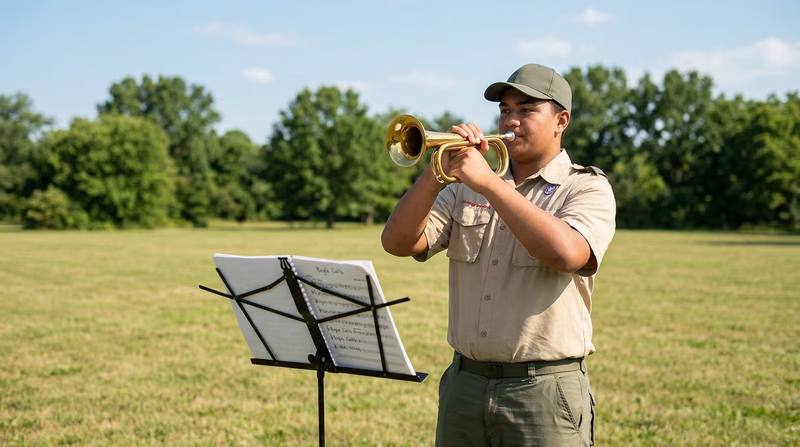
Practice Strategy
Learning 10 calls is a big task. Here is a plan to make it manageable:
Practice Plan
A structured approach to learning your calls
- Start with one call at a time. Do not move on until you can play it cleanly three times in a row.
- Listen to each call’s recording several times before trying to play it. Get the melody in your ear.
- Practice in short sessions (10-15 minutes) rather than long marathons. Your lips will tire quickly.
- Warm up with long tones (holding a single note for as long as you can) before working on calls.
- Practice outdoors when possible — the bugle is loud, and your family will appreciate the distance.
- Record yourself and compare to the reference recordings.
You can play the calls — now learn what each one means.