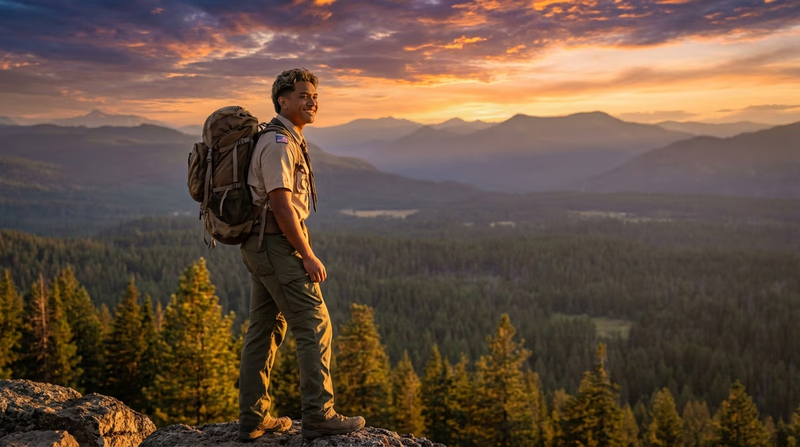
Req 10 — Scout Spirit & Reflection
This final requirement asks you to look back at everything you have accomplished and connect it to the bigger picture. Earning the Camping merit badge is not just about checking boxes — it is about becoming a more capable, responsible, and thoughtful person.
Connecting Your Experience to Bigger Ideas
As you prepare for this discussion with your counselor, think about how your camping experiences relate to these five themes:
Personal Health and Safety
Camping taught you how to take care of yourself in the outdoors. You learned about:
- First aid for conditions like hypothermia, heat reactions, and blisters (Req 1c)
- Dressing properly for weather conditions (Req 5a)
- The physical fitness required for hiking, backpacking, and outdoor activities (Req 9b)
- The importance of hydration, nutrition, and rest
Think about how these skills apply beyond camping. The ability to stay calm in an emergency, assess hazards, and take action to protect yourself and others is valuable in every area of life.
Survival
The outdoor essentials, navigation skills, and weather awareness you developed are survival skills. You learned:
- How to anticipate and respond to hazards (Req 1a)
- How to navigate with a map and compass (Req 3)
- How to find and treat water (Req 6b)
- How to build shelter and stay warm (Req 6a, Req 6e)
These are not abstract concepts — you practiced them in the field over 20 nights of real camping.
Public Health
Camp sanitation, food safety, and water treatment protect not just you, but everyone around you. You learned:
- Proper dishwashing and waste disposal (Req 6b)
- Food protection and safe cooking practices (Req 8c, Req 8d)
- How contamination spreads and how to prevent it
When you keep a clean camp, you protect your patrol’s health. That is public health in action.
Conservation
Through Leave No Trace, the Outdoor Code, and your conservation project, you learned that the outdoors is a shared resource that needs active protection. You practiced:
- The seven Leave No Trace principles (Req 2)
- Responsible campsite selection (Req 6c)
- Hands-on conservation work (Req 9c)
Conservation is not just about following rules — it is about developing a mindset that values and protects the natural world.
Good Citizenship
Camping teaches citizenship in surprising ways. Working with your patrol, following a duty roster, helping younger Scouts, and volunteering for conservation projects all build the habits of a good citizen:
- Taking responsibility for your role on the team (Req 4)
- Putting the group’s needs alongside your own
- Being considerate of other campers and the environment
- Giving back through service
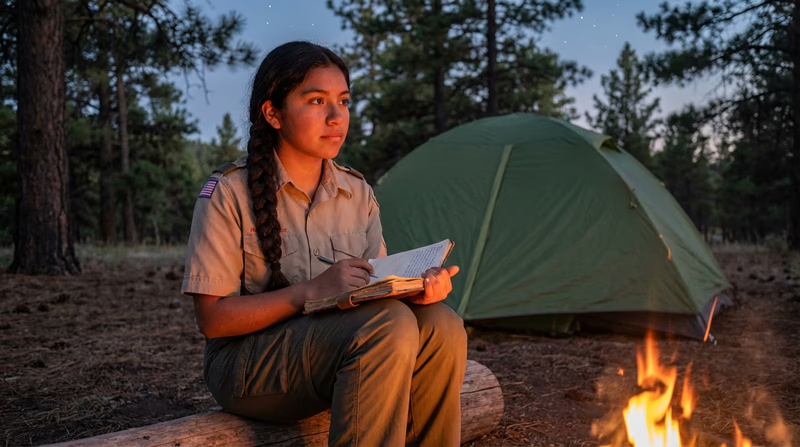
Scout Spirit, the Scout Oath, and the Scout Law
Your counselor will ask how Scout spirit and the Scout Oath and Law connect to camping and outdoor ethics. Here is a framework for thinking about it:
The Scout Oath asks you to do your best to do your duty, help other people, and keep yourself physically strong, mentally awake, and morally straight. Camping embodies all of this — you push your physical limits, make decisions under pressure, help your patrol, and take responsibility for your actions in the outdoors.
The Scout Law describes the character traits of a Scout. Think about how you demonstrated these during your camping experiences:
- Trustworthy — Your patrol trusted you to do your share of the work and keep your commitments.
- Loyal — You supported your patrol and troop, even when conditions were tough.
- Helpful — You assisted younger Scouts, shared your knowledge, and volunteered for tasks.
- Friendly — You built relationships with your patrol members through shared experiences.
- Courteous — You respected other campers and the natural environment.
- Kind — You treated others and the outdoors with compassion and care.
- Obedient — You followed safety rules, fire regulations, and land-use guidelines.
- Cheerful — You maintained a positive attitude, even in rain, cold, or when things did not go as planned.
- Thrifty — You used resources wisely, minimized waste, and cared for your gear.
- Brave — You faced challenges — rappelling, cold weather, unfamiliar situations — with courage.
- Clean — You kept your camp clean, practiced good hygiene, and left no trace.
- Reverent — You appreciated the beauty of creation and treated the natural world with respect.
Your Camping Journey
Take a moment to appreciate what you have accomplished. You have spent 20 nights sleeping under the sky. You have cooked meals, navigated trails, weathered storms, and given back to the land through conservation. You have earned one of the most challenging and rewarding Eagle-required merit badges.
But this is not the end — it is the beginning. The skills and values you built through this badge will serve you for the rest of your life, whether you are leading a backpacking trip, mentoring a new Scout, or simply making good decisions when things get tough.