Req 2 — Leave No Trace & Outdoor Code
Every time you camp, you leave a mark on the land — or at least you could. The Leave No Trace Seven Principles and the Outdoor Code exist to make sure that mark is as small as possible. These are not just rules to memorize; they are a way of thinking about your relationship with the outdoors.
The Leave No Trace Seven Principles
The Leave No Trace Center for Outdoor Ethics developed these seven principles to guide responsible outdoor recreation. They apply everywhere — from your local park to the most remote wilderness.
1. Plan Ahead and Prepare
Good planning prevents problems before they start. Research your destination, know the regulations, prepare for extreme weather, and plan your meals to minimize waste. When you plan well, you make better decisions in the field.
2. Travel on Durable Surfaces
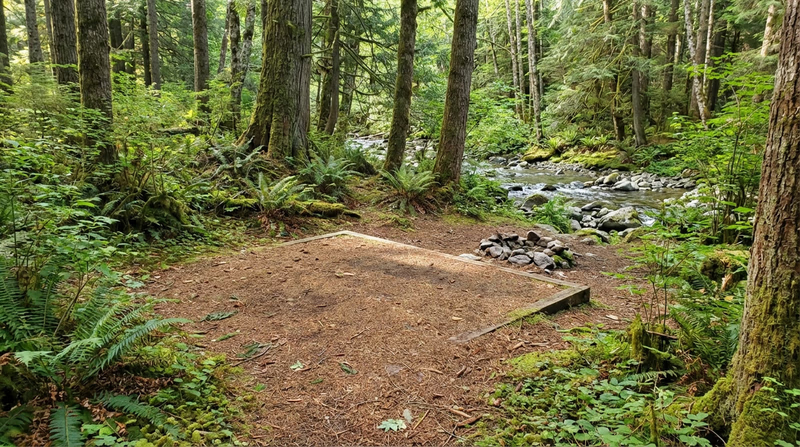
Stick to established trails and campsites. Walking off-trail damages fragile plants and soil that can take years to recover. When hiking, walk single file in the center of the trail, even if it is muddy — stepping around mud widens the trail and causes erosion.
3. Dispose of Waste Properly
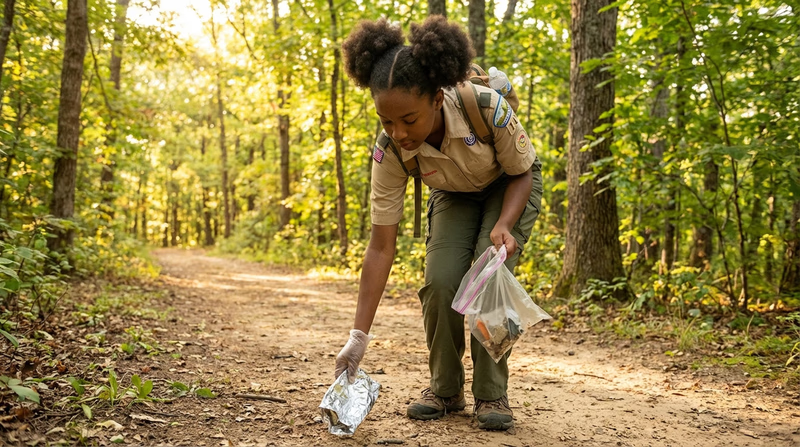
The simple version: pack it in, pack it out. Everything you bring into the outdoors leaves with you — food scraps, wrappers, hygiene products, everything. For human waste, use established latrines when available. In the backcountry, dig a cathole 6–8 inches deep at least 200 feet from water sources, trails, and campsites.
4. Leave What You Find
Resist the urge to take “souvenirs” from nature. Leave rocks, plants, flowers, and artifacts where you find them so the next person can enjoy the same experience. Do not build structures, dig trenches, or alter the campsite.
5. Minimize Campfire Impacts
Campfires can scar the landscape and cause wildfires. Use a camp stove for cooking whenever possible. If you do build a fire, use established fire rings, keep fires small, and burn wood down to ash. Make sure your fire is completely out before leaving.
6. Respect Wildlife
Observe animals from a distance. Never feed wildlife — it harms their health and changes their natural behavior. Store food securely and keep a clean camp to avoid attracting animals. Give nesting birds and animals with young extra space.
7. Be Considerate of Other Visitors
The outdoors belongs to everyone. Keep noise levels down, yield the trail to others, and set up camp out of sight of trails and other campers when possible. Leave your campsite better than you found it.
The Outdoor Code
The Outdoor Code is the Scouting America pledge for outdoor behavior. It is shorter and broader than Leave No Trace, and it applies to your entire approach to the outdoors.
As an American, I will do my best to — Be clean in my outdoor manners, Be careful with fire, Be considerate in the outdoors, and Be conservation-minded.
Let’s break it down:
- Be clean in my outdoor manners — Do not litter. Dispose of waste properly. Leave your campsite cleaner than you found it.
- Be careful with fire — Follow fire regulations. Use established fire rings. Never leave a fire unattended. Make sure it is completely out before you leave.
- Be considerate in the outdoors — Respect other visitors, landowners, and the natural environment. Keep noise down and share the trail.
- Be conservation-minded — Protect the land, water, wildlife, and natural resources. Support conservation efforts and leave nature as you found it.
Writing Your Plan
This requirement asks you to create a personal and group plan for implementing these principles on your next outing. Here is a framework to help you think through it:
Personal LNT Plan
What I will do on my next campout
- Research the area’s regulations and fire restrictions before I leave.
- Pack all my food in reusable containers to minimize trash.
- Bring a trash bag for packing out all waste, including food scraps.
- Stay on the trail and camp only on durable surfaces.
- Use a camp stove for cooking instead of building a fire (when practical).
- Check for ticks and clean up my campsite before leaving.
- Leave natural objects where I find them.
Group LNT Plan
What our patrol will do together
- Assign a Leave No Trace leader to our duty roster.
- Plan meals to minimize waste and packaging before the trip.
- Establish a patrol trash system — someone carries the group trash bag.
- Conduct a campsite sweep before breaking camp to make sure nothing is left behind.
- Agree on noise guidelines to be considerate of other campers.
- Discuss fire safety rules as a patrol before the campout.
- Walk through camp together on departure and pick up any micro-trash (tiny pieces of wrapper, twist ties, etc.).