Req 5d — Outdoor Essentials
5d.
List the outdoor essentials necessary for any campout, and explain why each item is needed.
The outdoor essentials are the items that every Scout should carry on every outdoor outing, regardless of how long or how far you are going. These are not optional extras — they are the gear that keeps you safe when things go wrong. A sunny day hike can turn into a cold, rainy night if you get lost or injured. The essentials are what get you through.
The Scout Outdoor Essentials
Scout Outdoor Essentials
Carry these on every outing
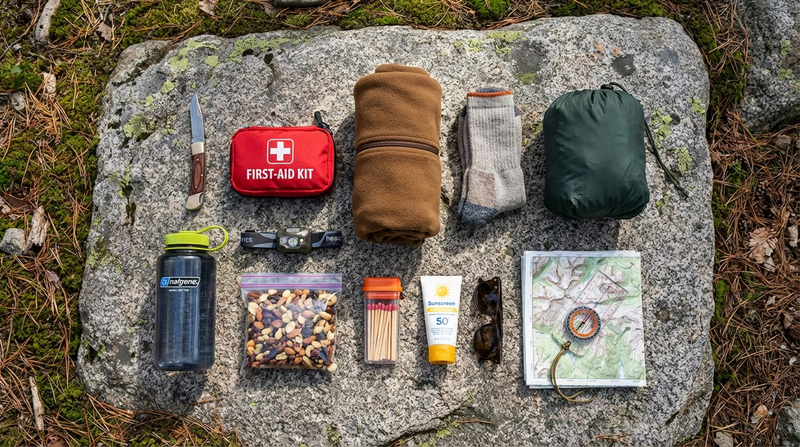
- Pocketknife: A versatile tool for everything from cutting rope to preparing food to making emergency repairs. Remember: you need your Totin’ Chip to carry and use a knife on Scout outings.
- First-aid kit: Contains the supplies to treat cuts, blisters, sprains, insect stings, and other common injuries. Your kit should be personalized — if you need specific medications (like an inhaler or epinephrine), they go in here.
- Extra clothing: At minimum, an extra pair of socks and an insulating layer. Conditions can change rapidly, and wet or cold clothing is a direct path to hypothermia. Having dry layers available can save your life.
- Rain gear: A lightweight waterproof jacket or poncho. Rain can arrive without warning, and staying dry is one of the most important factors in staying warm and safe.
- Water bottle: Dehydration affects your energy, judgment, and physical performance. Carry at least one liter of water, and know where you can refill and treat more along your route.
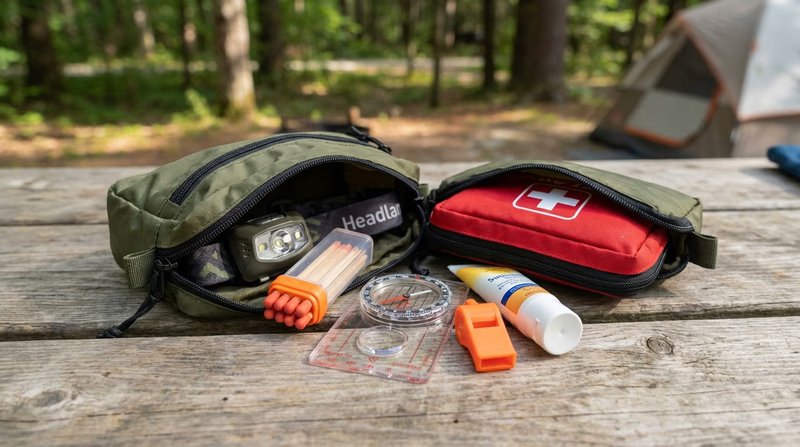
- Flashlight or headlamp: If your trip takes longer than expected and the sun goes down, you need a reliable light source. A headlamp is preferred because it keeps your hands free. Always carry extra batteries.
- Trail food: High-energy snacks like trail mix, granola bars, jerky, or dried fruit. Food is fuel — when your energy drops, so does your ability to think clearly and move safely.
- Matches and fire starters: The ability to start a fire can save your life in an emergency. Carry waterproof matches or a lighter, plus fire-starting material (cotton balls coated in petroleum jelly work well). Store them in a waterproof container.
- Sun protection: Sunscreen (SPF 30 or higher), sunglasses, and a hat. Sunburn and heat illness are preventable hazards that catch unprepared campers every season.
- Map and compass: Your most reliable navigation tools. Electronics can fail — batteries die, screens break, signals disappear. A paper map and a compass always work.
Why Each Essential Matters
Every item on this list addresses a specific survival need. Think of them in terms of what keeps you alive:
- Shelter and warmth: Extra clothing, rain gear, matches/fire starters
- Hydration: Water bottle
- Nutrition: Trail food
- Navigation: Map and compass
- Signaling and visibility: Flashlight/headlamp
- First aid: First-aid kit
- Tools: Pocketknife
Beyond the Basics
Depending on the trip, you may want to add a few more items:
- Whistle — Three blasts is the universal distress signal. A whistle carries much farther than your voice and takes almost no energy to use.
- Emergency shelter — A lightweight bivy sack or emergency space blanket weighs just ounces and can protect you from wind and rain if you are stuck overnight.
- Insect repellent — Essential in many regions during warm months.
- Duct tape — Wrap a few feet around your water bottle or trekking pole. It repairs torn gear, seals blisters, and fixes almost anything in a pinch.
- Notebook and pencil — For recording observations, leaving notes, or writing down directions.