Req 6b — Sanitation & Water Treatment
A clean camp is a healthy camp. Poor sanitation in the outdoors can spread illness through your entire patrol in hours. And untreated water — even from a crystal-clear mountain stream — can contain invisible organisms that will make you seriously sick. Understanding sanitation and water treatment is not glamorous, but it is essential.
Why Camp Sanitation Matters
When you camp, you create a temporary community in the outdoors. Without the plumbing, trash pickup, and water treatment you rely on at home, you and your patrol are responsible for managing all of it yourselves. Poor sanitation leads to:
- Illness — Bacteria, viruses, and parasites spread quickly in camp through contaminated water, unwashed hands, and improperly handled food
- Wildlife problems — Food scraps and waste attract bears, raccoons, rodents, and insects
- Environmental damage — Soap, food waste, and human waste can contaminate water sources and harm aquatic life
Camp Sanitation Practices
Keeping a Clean Camp
Daily sanitation habits
- Wash hands with soap and water (or hand sanitizer) before handling food and after using the latrine.
- Wash dishes promptly after meals using the three-bucket system (see below).
- Strain food scraps from wash water and pack them out — never dump food waste on the ground.
- Dispose of wash water (gray water) at least 200 feet from any water source by scattering it broadly.
- Keep cooking and eating areas clean and free of food scraps.
- Store food and scented items in bear-resistant containers or hang them in a bear bag at least 200 feet from your sleeping area.
- Use designated latrines when available. In the backcountry, dig a cathole 6–8 inches deep, at least 200 feet from water, trails, and campsites.
- Pack out all trash, including food scraps, wrappers, and hygiene products.
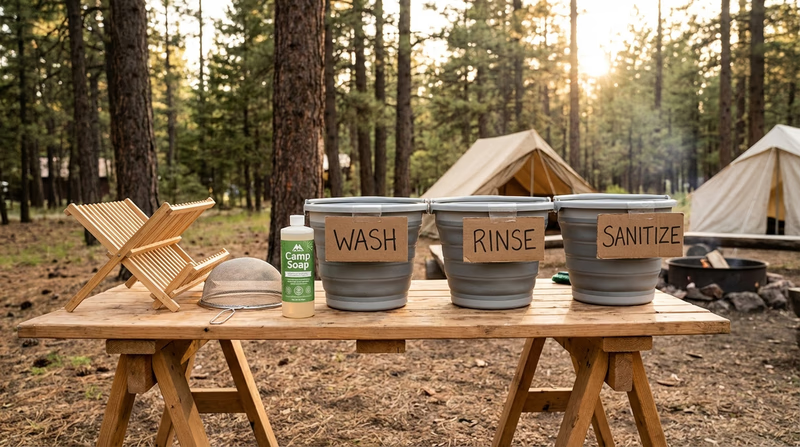
The Three-Bucket Dishwashing System
Proper dishwashing in camp prevents the spread of bacteria from meal to meal.
- Wash bucket — Hot water with a small amount of biodegradable camp soap. Scrub dishes, pots, and utensils.
- Rinse bucket — Clean hot water to rinse off soap residue.
- Sanitize bucket — Hot water with a capful of bleach or a sanitizing tablet. Dip items briefly to kill remaining bacteria.
After washing, let dishes air dry on a clean surface or dry them with a clean towel. Strain all wash water through a fine mesh strainer to catch food particles, and pack those particles out with your trash.
Why Water Treatment Is Essential
Water in the outdoors can look clean and taste fine but still contain dangerous organisms:
- Giardia — A microscopic parasite that causes severe diarrhea, cramps, and nausea. Found in streams, lakes, and springs throughout North America.
- Cryptosporidium — Another parasite that causes gastrointestinal illness. Resistant to some chemical treatments.
- E. coli and other bacteria — Can enter water from animal waste upstream.
- Viruses — Less common in North American backcountry but possible, especially near areas with human activity.
Even water from a clear, fast-flowing mountain stream can carry these organisms. Animals and other humans upstream can contaminate water sources that appear pristine. The rule is simple: treat all water before drinking it, no matter how clean it looks.
Methods of Water Treatment
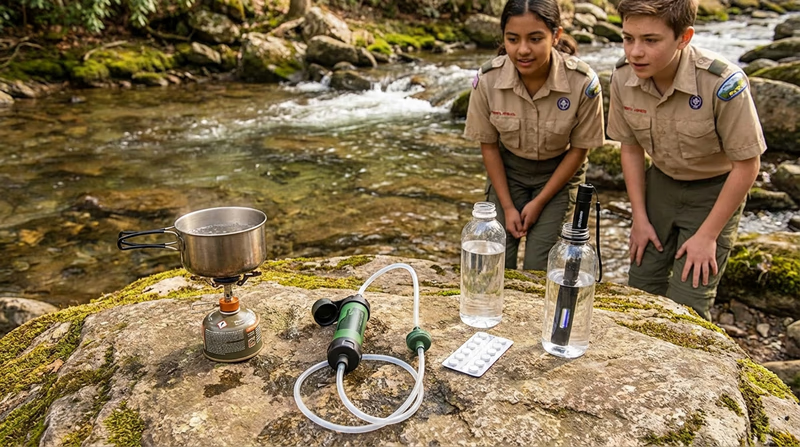
You need to be able to demonstrate two of these methods for your counselor:
1. Boiling
The simplest and most reliable method. Boiling kills all pathogens — bacteria, viruses, and parasites.
- Bring water to a rolling boil for at least one minute (three minutes at elevations above 6,500 feet)
- Let it cool before drinking
- Pros: Kills everything, requires no special equipment beyond a pot and stove
- Cons: Uses fuel, takes time to cool, does not remove sediment or chemical contaminants
2. Water Filter (Pump or Gravity)
Portable water filters push or drip water through a fine membrane that physically blocks bacteria and parasites.
- Follow the manufacturer’s instructions for your specific filter
- Most filters have a pore size of 0.2 microns, which blocks bacteria and protozoa
- Pros: Fast, produces clean-tasting water, no chemicals needed
- Cons: Does not remove viruses (rare concern in North American backcountry), filters can clog with sediment, requires maintenance
3. Chemical Treatment
Chemical tablets or drops (iodine or chlorine dioxide) kill pathogens in water.
- Drop the tablet into your water bottle, shake, and wait the recommended time (usually 30 minutes to 4 hours depending on the product)
- Pros: Lightweight, inexpensive, easy to carry as a backup
- Cons: Takes time to work, can leave a chemical taste, some products are not effective against Cryptosporidium
4. UV Light Treatment
Devices like the SteriPEN use ultraviolet light to destroy the DNA of pathogens.
- Insert the UV device into your water bottle, press the button, and stir for the recommended time (usually 60–90 seconds)
- Pros: Fast, no chemical taste, effective against all pathogens including viruses
- Cons: Requires batteries, does not work in cloudy or sediment-heavy water, mechanical failure is possible