Req 6c — Campsite Selection
6c.
Describe the factors to be considered in deciding where to pitch your tent.
Choosing the right spot for your tent is one of the most important decisions you make when you arrive at camp. A great campsite means a comfortable, safe night. A poor choice can mean a sleepless night in a puddle, a tent flattened by wind, or worse. Here are the factors you need to consider.
Ground Surface
The ground under your tent matters more than most people think.
- Level ground — Look for the flattest spot available. Even a slight slope will have you sliding to one side of your tent all night. If you must camp on a slight incline, position your head uphill.
- Avoid rocks, roots, and bumps — Clear away sticks and small stones. A root under your back will make sleep impossible.
- Firm ground — You need ground that will hold your stakes. Sand is difficult for staking, and soft mud can shift under you. Look for packed soil or grass.
- No depressions — Low spots collect rainwater. What looks like a comfortable hollow on a sunny afternoon becomes a pond in a midnight rainstorm.
Drainage
Water flows downhill, and you do not want it flowing through your tent.
- Avoid low spots and dry creek beds — These fill with water during rain, sometimes rapidly.
- Look at the terrain around your site — Will water flow toward your tent or away from it?
- Never dig drainage trenches — This was an old-school technique that damages the ground. Instead, choose a site where water drains naturally.
Wind Protection
Wind can make camping uncomfortable and even dangerous.
- Use natural windbreaks — Trees, large rocks, and terrain features can block wind. Position your tent behind them, with the narrowest end facing the wind.
- Avoid ridgelines and exposed hilltops — These are the windiest spots. Camp on the leeward (downwind) side of a hill.
- Stake and guy out your tent — Even if it seems calm when you set up, wind can pick up at night. Secure guylines before it gets dark.
Distance from Water
Being near a water source is convenient, but being too close creates problems.
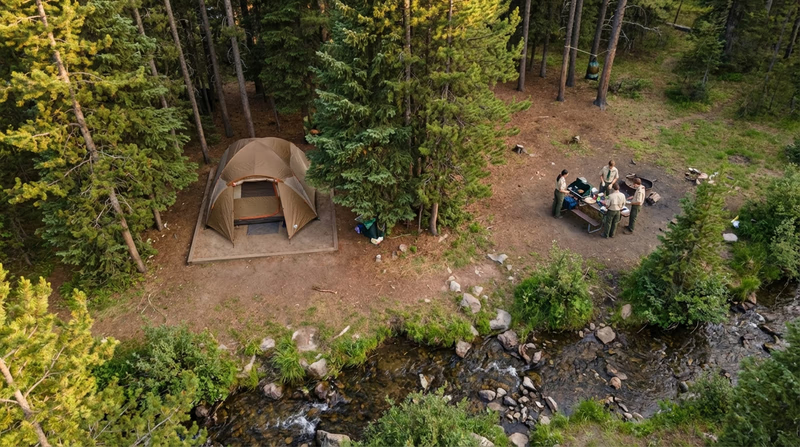
- Camp at least 200 feet from streams, lakes, and rivers — This protects water sources from contamination and keeps you out of flood zones.
- Close enough to access — You need water for cooking and drinking, so do not camp so far away that fetching water is a major expedition.
- Be aware of rising water — Rivers and streams can rise overnight from upstream rain. What looks like a safe distance in the evening can be dangerously close by morning.
Hazards Above and Below
Look up and look down before you pitch.
- Dead trees and branches — “Widowmakers” — dead branches hanging overhead — can fall without warning, especially in wind. Never camp under dead or damaged trees.
- Ant mounds and animal burrows — Check the ground for signs of insect colonies or animal homes. You do not want to discover a fire ant mound at 2 a.m.
- Poisonous plants — Look for poison ivy, poison oak, or poison sumac around your campsite.
Sun and Shade
- Morning sun is welcome — it dries dew from your tent and warms camp after a cold night.
- Afternoon shade keeps your tent from becoming an oven on hot days.
- If possible, position your tent to get morning sun on the east side and afternoon shade from trees on the west side.
Camp Layout
Your tent is just one part of your campsite. Think about the overall camp layout:
- Cooking area — Downwind from your sleeping area, at least 200 feet from tents in bear country.
- Latrine — At least 200 feet from water sources, cooking areas, and tents. Downhill from camp if possible.
- Bear bag / food storage — At least 200 feet from sleeping area, hung 12 feet high and 6 feet from the trunk.
- Fire ring — Use existing fire rings when available. Never build a new fire ring if one already exists nearby.