Req 6e — Sleeping Bags
After a long day of hiking and campcraft, a good night’s sleep restores your energy and keeps your spirits high. Your sleeping bag is the piece of gear most responsible for making that happen — especially in cold weather.
Types of Sleeping Bags
Sleeping bags are categorized by shape, insulation type, and temperature rating.
Shapes
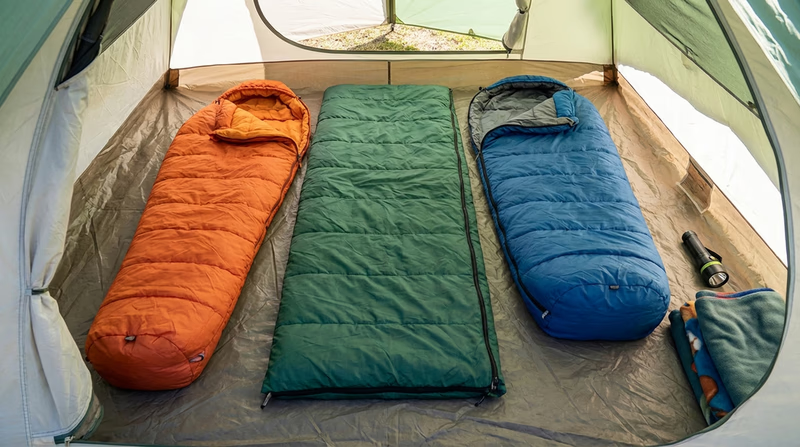
Mummy bags — Tapered from head to foot with a snug fit. The narrow shape reduces the amount of air your body has to warm, making mummy bags the warmest and lightest option. They include a hood that can be cinched around your face.
- Best for: Backpacking, cold weather, weight-conscious campers
Rectangular bags — Roomy and comfortable, with a boxy shape that gives you plenty of room to move around. They can usually be unzipped completely and used as a blanket.
- Best for: Car camping, warm weather, people who feel claustrophobic in mummy bags
Semi-rectangular (barrel) bags — A compromise between mummy and rectangular. Tapered at the feet but wider in the torso than a true mummy bag.
- Best for: Scouts who want warmth without feeling too confined
Insulation Types
Down insulation — Made from goose or duck feathers. Down is the gold standard for warmth-to-weight ratio. It compresses small, lasts for years, and provides exceptional warmth.
- Pros: Lightest and warmest, packs very small, lasts a long time
- Cons: Expensive, loses insulating ability when wet, takes a long time to dry
Synthetic insulation — Made from polyester fibers designed to mimic down’s loft. Synthetic bags are the practical choice for most Scout camping.
- Pros: Insulates even when wet, dries quickly, less expensive than down, easier to care for
- Cons: Heavier and bulkier than down for the same warmth rating, wears out faster
Temperature Ratings
Every sleeping bag has a temperature rating that tells you the lowest temperature at which the bag will keep you warm.
- Summer bags (35°F and above) — Lightweight and packable for warm weather
- Three-season bags (15°F to 35°F) — The most versatile choice for most Scout camping
- Winter bags (15°F and below) — Heavy and bulky but essential for cold weather camping
Keeping Your Sleeping Bag Dry
A wet sleeping bag is a useless sleeping bag — especially a down bag. Keeping it dry is your top priority.
Keeping Your Bag Dry
Protection strategies
- Store your sleeping bag in a waterproof stuff sack or line your stuff sack with a trash bag.
- Keep it packed inside your backpack, not strapped to the outside where it can get rained on.
- Never set your sleeping bag directly on wet ground — always use a sleeping pad and tent floor.
- Change into dry sleepwear before getting into your bag. Damp clothing transfers moisture to the insulation.
- Air out your sleeping bag in the morning before packing up. Drape it over your tent or a branch to let body moisture evaporate.
Sleeping Bag Care
Proper care keeps your sleeping bag warm and functional for years. For detailed care instructions, review Requirement 5c — Gear Care & Storage.
Key points:
- Air out after every trip — Body moisture accumulates in the insulation each night.
- Spot clean small stains with a damp cloth and mild soap.
- Deep wash rarely — Once or twice per season at most. Use a front-loading washer, a gentle cycle with cold water, and a specialized sleeping bag wash.
- Dry thoroughly on the lowest dryer setting with tennis balls to break up insulation clumps. This takes 2–3 hours.
- Store loosely in a large breathable storage sack, never compressed in its stuff sack. Long-term compression ruins insulation.
Making a Comfortable Ground Bed
Your sleeping bag provides insulation from the cold air above you, but the cold ground below you is an even bigger heat thief. A comfortable ground bed insulates you from below and cushions you from rocks and roots.
The Ground Bed System
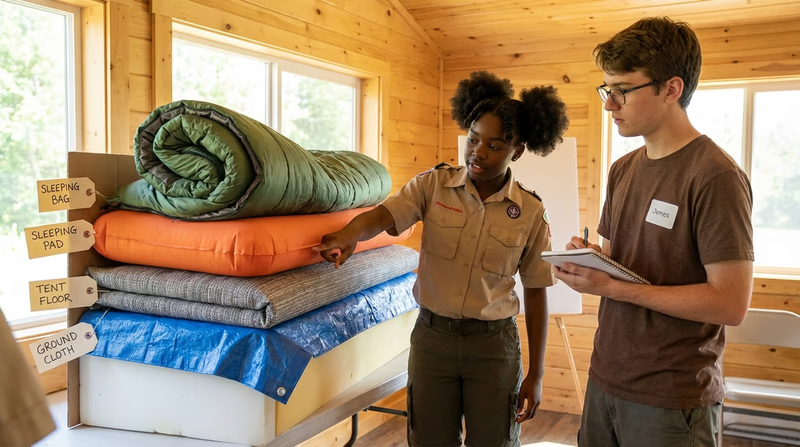
- Ground cloth or footprint — A waterproof layer under your tent that blocks ground moisture.
- Tent floor — Provides a second waterproof barrier.
- Sleeping pad — The most important component. A sleeping pad insulates you from the cold ground and provides cushioning. Types include:
- Closed-cell foam pads — Inexpensive, indestructible, and provide good insulation. They do not puncture like inflatable pads. Lightweight but bulky.
- Self-inflating pads — Foam inside an air-tight shell. Open the valve and the foam expands, sucking in air. Good balance of comfort, insulation, and packability.
- Inflatable air pads — The most comfortable and packable option. Many have insulated cores for cold-weather use. The downside is that they can puncture.
- Sleeping bag — Laid on top of the sleeping pad.