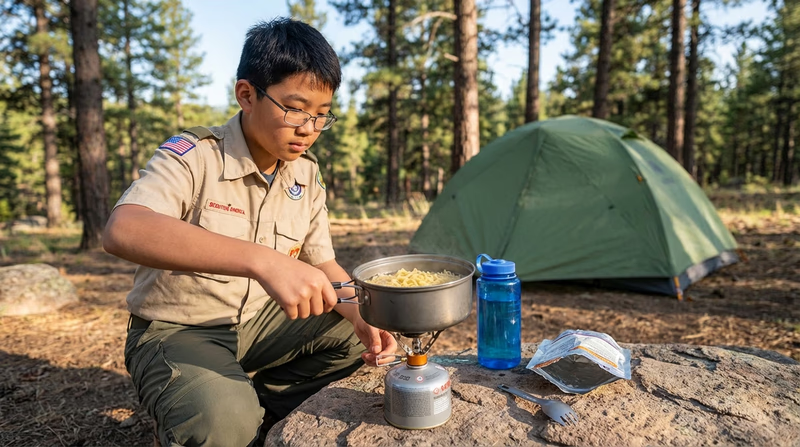
Req 8b — Stove Types
Choosing the right camp stove depends on your trip type, group size, weather conditions, and personal preferences. Each stove type has strengths and trade-offs.
Canister Stoves (Upright)
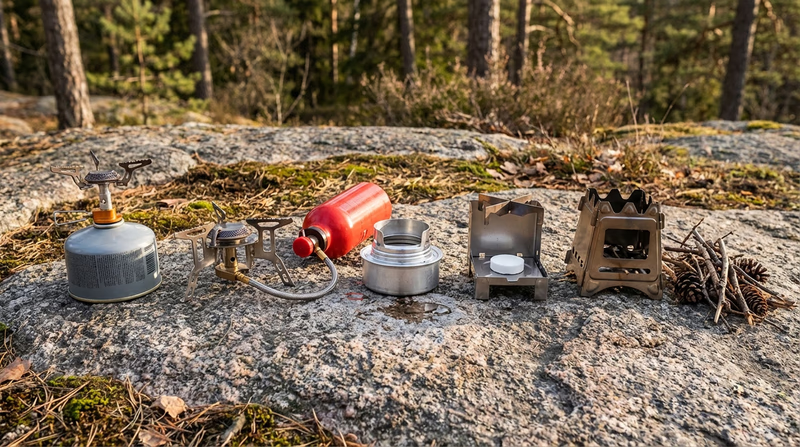
The most popular choice for backpackers and Scout camping. A lightweight burner screws directly onto a pressurized fuel canister.
| Aspect | Detail |
|---|---|
| Fuel | Pre-mixed butane/propane canisters |
| Weight | Very light (3–10 oz for the burner) |
| Boil time | Fast (3–5 minutes for 1 liter) |
Advantages:
- Extremely easy to use — screw on, turn the valve, light
- Precise flame control for simmering
- No priming, no spills, no mess
- Very lightweight and compact
Disadvantages:
- Performance drops in cold weather (below 20°F) as canister pressure decreases
- Cannot tell how much fuel remains in a canister
- Canisters are not refillable and create waste
- Less stable — the stove sits on top of a narrow canister
Liquid Fuel Stoves
Reliable workhorses that burn white gas or multiple fuel types. Used by serious backpackers and winter campers.
| Aspect | Detail |
|---|---|
| Fuel | White gas, unleaded gasoline, kerosene, or diesel (multi-fuel models) |
| Weight | Moderate (10–20 oz) |
| Boil time | Fast (3–5 minutes for 1 liter) |
Advantages:
- Excellent cold-weather performance — liquid fuel is not affected by temperature
- Refillable fuel bottles — you carry only the fuel you need
- Can burn multiple fuel types (multi-fuel models), useful for international travel
- Very powerful heat output
Disadvantages:
- Require priming (pre-heating) before use, which takes practice
- More complex to operate — pumping, priming, and adjusting
- Heavier and bulkier than canister stoves
- Risk of fuel spills and flare-ups during priming
- Require regular maintenance (cleaning the fuel jet, replacing O-rings)
Alcohol Stoves
Ultra-simple stoves that burn denatured alcohol. Popular with ultralight backpackers.
| Aspect | Detail |
|---|---|
| Fuel | Denatured alcohol, methanol |
| Weight | Extremely light (1–3 oz) |
| Boil time | Slow (8–12 minutes for 1 liter) |
Advantages:
- Almost no weight — some are made from a single soda can
- No moving parts — nothing to break or maintain
- Fuel is inexpensive and widely available (hardware stores, gas stations)
- Nearly silent operation
Disadvantages:
- Very slow — significantly longer boil times than other stove types
- Difficult to simmer or control flame
- Flame is nearly invisible in daylight — easy to burn yourself or knock over without realizing it is lit
- Poor performance in wind — requires a windscreen
- Not practical for group cooking
Solid Fuel Stoves
Burn compressed fuel tablets (like Esbit). The simplest stove design possible.
| Aspect | Detail |
|---|---|
| Fuel | Solid fuel tablets (hexamine) |
| Weight | Extremely light (less than 1 oz for the stove) |
| Boil time | Slow (8–15 minutes for 1 liter) |
Advantages:
- Lightest stove option — the “stove” is often just a folding metal stand
- Fuel tablets are lightweight, waterproof, and have a long shelf life
- No spills, no leaks, no priming
Disadvantages:
- Very slow and low heat output
- No flame control — the tablet burns until it is gone
- Leaves a sticky residue on pots
- Not practical for cooking real meals — best for boiling water only
- Strong odor when burning
Wood-Burning Stoves
Small stoves designed to burn twigs, pinecones, and other natural fuel found at camp.
| Aspect | Detail |
|---|---|
| Fuel | Twigs, small sticks, pinecones, bark |
| Weight | Light to moderate (5–20 oz) |
| Boil time | Variable — depends on fuel quality |
Advantages:
- Free fuel — you gather it at your campsite
- No fuel canisters or bottles to carry or dispose of
- Satisfying campfire-like cooking experience
- Some models generate electricity from heat to charge devices
Disadvantages:
- Requires dry wood, which may not be available in wet conditions
- Produces smoke and soot that blackens pots
- Requires constant attention to feed fuel
- Not allowed in many wilderness areas during fire bans
- Slower and less predictable than gas stoves
Which Stove Is Right for Your Trip?
| Trip Type | Best Stove Choice |
|---|---|
| Weekend Scout campout | Canister stove (easy, reliable) |
| Winter camping | Liquid fuel stove (cold-weather performance) |
| Ultralight backpacking | Canister, alcohol, or solid fuel |
| Large group cooking | Liquid fuel or large canister stove |
| Emergency / backup | Solid fuel tablets (lightweight, long shelf life) |