Req 9b — Adventure Activities
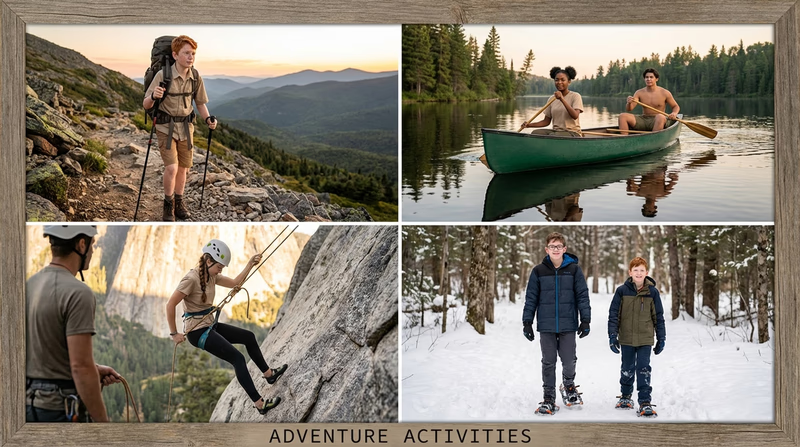
Choose TWO of the following activities:
- (1) Hike up a mountain, gaining at least 1,000 vertical feet.
- (2) Backpack, snowshoe, or cross-country ski for at least 4 miles.
- (3) Take a bike trip of at least 15 miles or at least four hours.
- (4) Take a nonmotorized trip on the water of at least four hours or 5 miles.
- (5) Plan and carry out an overnight snow camping experience.
- (6) Rappel down a rappel route of 30 feet or more.
This requirement pushes you beyond regular camping into adventure territory. Each option challenges you physically and builds new outdoor skills. You need to complete two of these six activities during any of your camping experiences. Choose the ones that excite you and fit your troop’s opportunities.
Option 1: Mountain Hike (1,000+ Feet of Elevation Gain)
Hiking uphill for 1,000 vertical feet is a real physical challenge. That is roughly the height of a 100-story building. The trail does not need to be 1,000 feet long — it is about elevation gain, which measures how much you climb upward regardless of horizontal distance.
How to prepare:
- Build your endurance with regular cardio exercise (running, cycling, stair climbing)
- Practice hiking with a loaded pack before the big day
- Study the trail map for elevation profile, water sources, and turnaround points
- Check the weather forecast carefully — mountain weather changes fast
Option 2: Backpack, Snowshoe, or Cross-Country Ski (4+ Miles)
A four-mile trek with a loaded pack (or on snowshoes or skis) tests your endurance and your ability to travel through the wilderness under your own power.
Backpacking tips:
- Keep your pack weight to 20–25% of your body weight for comfort
- Plan your route with rest stops every 1–2 miles
- Set a reasonable pace — 2 miles per hour with a pack is typical for most Scouts
Snowshoeing tips:
- Rent snowshoes from an outdoor shop before investing in a pair
- Practice walking on flat ground before hitting the trail
- Dress in layers — you will warm up quickly once you start moving
Option 3: Bike Trip (15+ Miles or 4+ Hours)
A 15-mile bike ride is a different kind of adventure. You cover more ground than hiking and see the landscape from a different perspective.
Preparation:
- Make sure your bike is in good working order — check brakes, tires, and chain
- Wear a helmet (required) and bright, visible clothing
- Carry water, snacks, a basic repair kit, and a spare tube
- Plan your route on bike-friendly roads or trails
Option 4: Nonmotorized Water Trip (4+ Hours or 5+ Miles)
Canoeing, kayaking, or rowing for four hours or five miles gives you a water-based adventure that combines physical effort with the peacefulness of being on a lake or river.
Preparation:
- Ensure everyone has proper swim skills and wears a PFD at all times
- Check water levels, flow rates, and weather conditions before launching
- Pack all gear in waterproof bags
- File a float plan with a responsible adult
Option 5: Overnight Snow Camping
Snow camping is the ultimate test of your camping skills. Everything you have learned — shelter, clothing layers, stove operation, food protection — is put to the test in cold and snowy conditions.
Key preparation:
- Cold-rated sleeping bag (0°F or lower recommended)
- Four-season tent or snow shelter (quinzhee or snow trench)
- Insulated sleeping pad with a high R-value
- Extra fuel — stoves consume more fuel in cold weather
- Calorie-dense food — your body burns more energy staying warm
- Practice setting up your shelter and stove in cold conditions before the trip
Option 6: Rappelling (30+ Feet)
Rappelling is a controlled descent down a rock face or cliff using ropes and specialized equipment. It is an exhilarating experience that builds confidence and trust in your gear and training.
Key requirements:
- Qualified supervision is mandatory — this must be done under the guidance of a certified climbing instructor
- Proper equipment: climbing harness, helmet, rappel device, rope
- Complete a ground-level practice before going to the full route
- Follow all safety checks before descending
Choosing Your Two Activities
Think about what excites you and what your troop offers. Talk to your Scoutmaster about upcoming opportunities. Many troops plan special trips around these activities — a canoe trip in the fall, a winter campout, or a visit to a climbing facility.