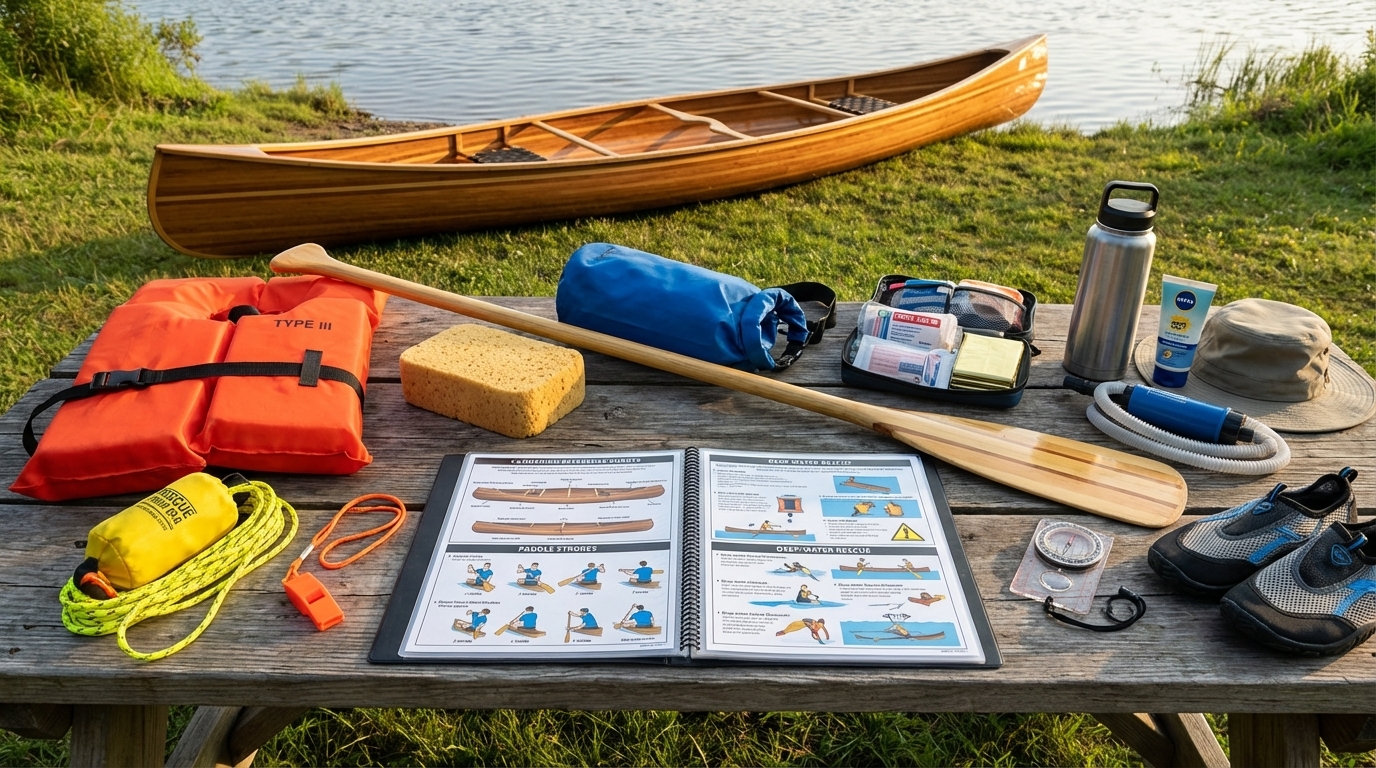
 Getting Started
Introduction & Overview
Few things beat the feeling of gliding across still water in a canoe — just you, your paddle, and the world stretching out ahead. The Canoeing merit badge teaches you how to handle a canoe safely and skillfully, from launching at a dock to rescuing a capsized paddler. Whether you dream of exploring a quiet lake, running a river, or paddling deep into the backcountry on a wilderness trip, this badge gives you the foundation to do it right.
Canoeing is one of the most versatile outdoor skills you can learn. It connects you to centuries of exploration, builds teamwork with your paddling partner, and opens up places you simply cannot reach on foot.
Then and Now
Then — The Canoe That Built a Continent
Long before roads and railroads, the canoe was North America’s highway. Indigenous peoples designed birchbark canoes that were light enough for one person to carry over a portage trail yet strong enough to haul hundreds of pounds of cargo across open water. The Algonquin, Ojibwe, and many other nations built canoes perfectly suited to their local waters — wide and stable for big lakes, narrow and nimble for rivers.
When European fur traders arrived, they adopted Indigenous canoe designs because nothing else worked as well. French-Canadian voyageurs paddled massive freight canoes — some over 36 feet long — across thousands of miles of lakes and rivers, carrying beaver pelts from the interior to trading posts on the coast. These paddlers covered up to 100 miles a day, singing songs to keep their stroke rhythm steady.
- Purpose: Transportation, trade, fishing, exploration, warfare
- Mindset: The canoe was essential — without it, the interior of North America was unreachable
Now — The Canoe That Takes You Anywhere
Today’s canoes are built from aluminum, fiberglass, Kevlar, polyethylene, and other modern materials. They are tougher, lighter, and more specialized than ever. Recreational paddlers enjoy calm lakes on weekend afternoons. Wilderness trippers load gear for week-long adventures through places like the Boundary Waters Canoe Area Wilderness in Minnesota or Algonquin Provincial Park in Ontario. Whitewater paddlers push through rapids. Racers compete in sprint and marathon events around the world.
The canoe has gone from survival tool to one of the most popular ways to enjoy the outdoors — but the basic skill of reading the water, choosing the right stroke, and working in harmony with your partner has not changed.
- Purpose: Recreation, fitness, wilderness travel, competition, conservation
- Mindset: Enjoy the journey, sharpen your skills, and respect the water
Get Ready! You are about to learn skills that people have relied on for thousands of years. By the time you finish this badge, you will know how to handle a canoe with confidence — launching, paddling, maneuvering, and even rescuing a capsized boat. Let’s get on the water.
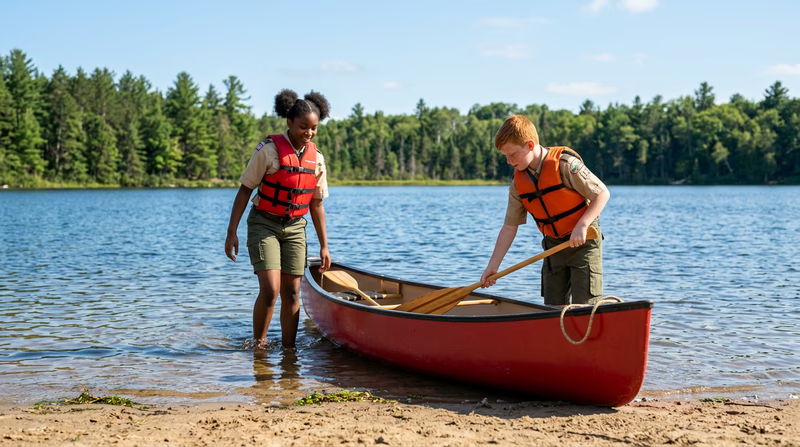
Kinds of Canoeing
Canoeing is not just one activity — it is a whole family of adventures. Here are the main styles you might explore.
Flatwater & Recreational Canoeing
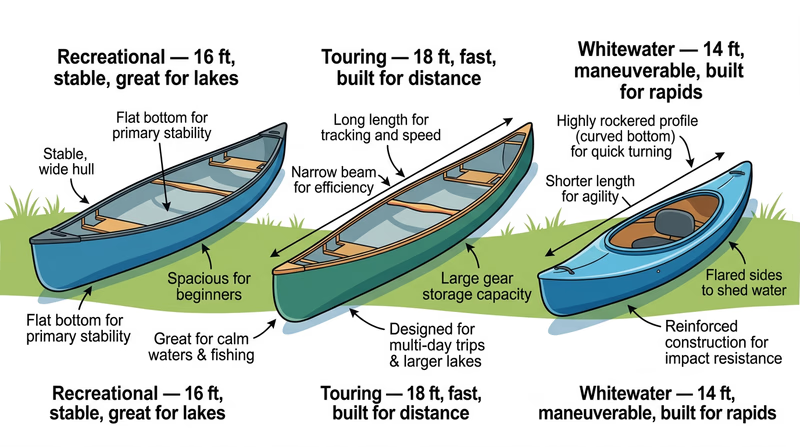
This is where most paddlers start. Flatwater canoeing takes place on calm lakes, ponds, and slow-moving rivers. The water is predictable, and you can focus on learning your strokes and building confidence. It is perfect for fishing, bird-watching, or just enjoying a quiet afternoon on the water.
Canoe Camping & Tripping
Canoe tripping combines paddling with backcountry camping. You load your tent, food, and gear into the canoe and travel from campsite to campsite — sometimes for days or even weeks. Classic canoe trip destinations include the Boundary Waters in Minnesota, Algonquin Park in Ontario, and the Everglades in Florida. Portaging — carrying your canoe and gear overland between waterways — is a big part of the experience.
Whitewater Canoeing
Whitewater canoeing takes you into moving water — rapids, eddies, and currents that demand quick decisions and precise strokes. Whitewater canoes are shorter, more maneuverable, and often have extra flotation built in. This style requires serious training and experience beyond what this merit badge covers, but the flat water skills you learn here are the foundation for everything in whitewater.
Racing & Sprint Canoeing
Competitive canoeing has been an Olympic sport since 1936. Sprint canoe races take place on flat water over distances from 200 to 1,000 meters. Marathon races cover much longer distances — sometimes 50 miles or more. Racing canoes are extremely narrow, lightweight, and tippy. Paddlers kneel on one knee and use a single-blade paddle, driving through the water with remarkable speed and efficiency.
Freestyle Canoeing
Sometimes called “canoe dancing,” freestyle canoeing is the art of maneuvering a canoe through intricate patterns on flat water — heeling the boat, carving turns, and linking strokes into fluid sequences, often set to music. It looks effortless, but it takes deep understanding of how the canoe responds to every shift in weight and every paddle angle. Freestyle demonstrates that a canoe is one of the most responsive watercraft ever designed.
Now let’s dive into the safety knowledge you need before you ever touch the water.