Req 1b — Injuries & First Aid
Canoeing puts you outdoors for hours at a time, often on or near water in varying weather conditions. Knowing how to prevent common injuries — and how to treat them if they happen — is a critical part of being a prepared paddler.
Blisters
Prevention: Blisters form when skin is rubbed repeatedly — and the paddle grip is the most common culprit. Paddling gloves or athletic tape on your hands can reduce friction. Make sure your grip is relaxed; squeezing the paddle too tightly causes more friction and fatigues your hands faster. Allow calluses to build up gradually over multiple paddling sessions.
Symptoms: Hot spot (redness and tenderness), then a raised, fluid-filled bubble on the skin — usually on the palm, thumb web, or fingers.
First aid: Do not pop small blisters — the skin underneath is not ready. Cover with a bandage or moleskin. If a blister pops on its own, clean the area, apply antibiotic ointment, and cover it. For large, painful blisters that interfere with paddling, a counselor or first aider can drain them using a sterilized needle at the blister’s edge.
Cold-Water Shock and Hypothermia
These are two related but different dangers, and both can be life-threatening.
Cold-water shock happens the instant you fall into cold water (below about 60°F / 15°C). Your body gasps involuntarily, your heart rate spikes, and your blood pressure jumps. This reflex can cause you to inhale water. The shock phase lasts 1–3 minutes.
Hypothermia develops more slowly as your core body temperature drops below 95°F (35°C). It can happen in water that feels only mildly cool if you are in it long enough.
Prevention: Always wear a properly fitted life jacket — if cold-water shock makes you gasp, the life jacket keeps your head above water. Dress for the water temperature, not the air temperature. In spring and fall, consider a wetsuit or dry top even if the air feels warm. Check water temperature before paddling.
Symptoms of hypothermia: Shivering, confusion, slurred speech, clumsiness, drowsiness. As it progresses, shivering stops — that is a danger sign.
First aid: Get the person out of the water and out of wet clothes. Wrap them in dry blankets or sleeping bags. Give warm (not hot) drinks if they are conscious and alert. Do not rub their skin or apply direct heat. Call for emergency help if shivering stops, the person is confused, or they lose consciousness.
Dehydration
Prevention: Paddling is hard work, and you lose water through sweat even when you are surrounded by it. Bring plenty of drinking water — at least one liter per hour in warm conditions. Take regular water breaks. Do not wait until you feel thirsty; by then, you are already mildly dehydrated.
Symptoms: Thirst, dry mouth, dark yellow urine, headache, dizziness, fatigue. Severe dehydration causes confusion, rapid heartbeat, and fainting.
First aid: Move to shade if possible. Drink water in small, steady sips. Sports drinks with electrolytes help if the person has been sweating heavily. If symptoms are severe (confusion, inability to keep fluids down), seek medical help immediately.
Heat-Related Illnesses
Paddling in direct sun with limited shade exposure puts you at risk for heat exhaustion and heat stroke.
Prevention: Wear a wide-brimmed hat and lightweight, light-colored clothing. Take breaks in the shade. Drink water consistently. Avoid paddling during the hottest part of the day (noon to 3 PM) when possible. Splash water on your hat and neck to cool down.
Symptoms of heat exhaustion: Heavy sweating, weakness, nausea, dizziness, cool and clammy skin, fast but weak pulse.
Symptoms of heat stroke: High body temperature (above 103°F / 39°C), hot and dry skin (sweating may stop), confusion, rapid and strong pulse, possible unconsciousness. Heat stroke is a medical emergency.
First aid for heat exhaustion: Move to shade, loosen clothing, apply cool wet cloths, and sip water slowly. Rest until symptoms pass.
First aid for heat stroke: Call 911 immediately. Move the person to shade, cool them as rapidly as possible with water, wet towels, or fanning. Do not give fluids if they are confused or unconscious.
Sunburn
Prevention: Apply broad-spectrum sunscreen (SPF 30 or higher) to all exposed skin 15–20 minutes before launching. Reapply every two hours and after swimming. Water reflects UV rays, increasing your exposure. Wear sun-protective clothing, sunglasses with UV protection, and a hat.
Symptoms: Red, warm, tender skin. Severe sunburn causes blisters, swelling, and in extreme cases fever and chills.
First aid: Get out of the sun. Apply cool compresses and aloe vera gel. Take over-the-counter pain relief if needed. Drink extra water. Do not pop blisters. Severe sunburn with blistering or fever requires medical attention.
Sprains and Strains
Prevention: Sprains (ligament injuries) and strains (muscle or tendon injuries) in canoeing most often occur during portaging, loading/unloading gear, and launching from uneven terrain. Use proper lifting technique — bend your knees, keep the load close to your body, and lift with your legs. Warm up before paddling. Stretch your shoulders, back, and wrists.
Symptoms: Pain, swelling, bruising, limited range of motion. A sprain often has a “popping” sensation at the time of injury.
First aid: Use the RICE method:
- Rest — Stop the activity
- Ice — Apply cold (a cold wet towel or water bottle from the lake works in a pinch) for 20 minutes at a time
- Compression — Wrap with an elastic bandage to reduce swelling
- Elevation — Raise the injured area above heart level
Seek medical attention if the person cannot bear weight, the joint looks deformed, or pain is severe.
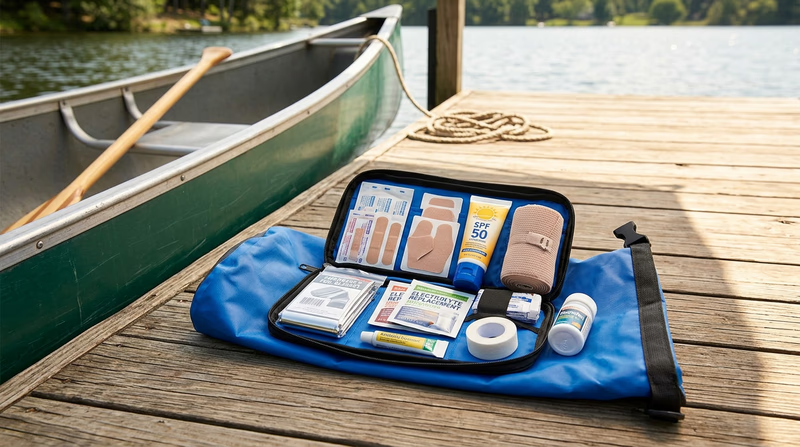
Paddler's First Aid Kit Essentials
Items to pack for every canoeing outing
- Adhesive bandages and moleskin: For blisters and small cuts.
- Elastic bandage: For sprains and strains (ACE wrap).
- Sunscreen (SPF 30+): Broad-spectrum, water-resistant.
- Insect repellent: For shoreline breaks and portages.
- Emergency blanket: Compact and critical for hypothermia treatment.
- Electrolyte packets: Mix with water for dehydration.
- Antibiotic ointment: For open blisters and minor wounds.
- Medical tape: Multipurpose — securing bandages, preventing blisters.
- Pain reliever: Ibuprofen or acetaminophen.
Now that you know how to prevent and treat common canoeing injuries, let’s look at the safety policy that governs all Scouting watercraft activities.