Req 1c — Safety Afloat
Safety Afloat is the Scouting America policy that governs every activity involving watercraft — from canoes and kayaks to sailboats and motorboats. It is not a suggestion. It is a requirement for every Scout water activity, and your counselor will expect you to know it and explain how each point applies to canoeing.
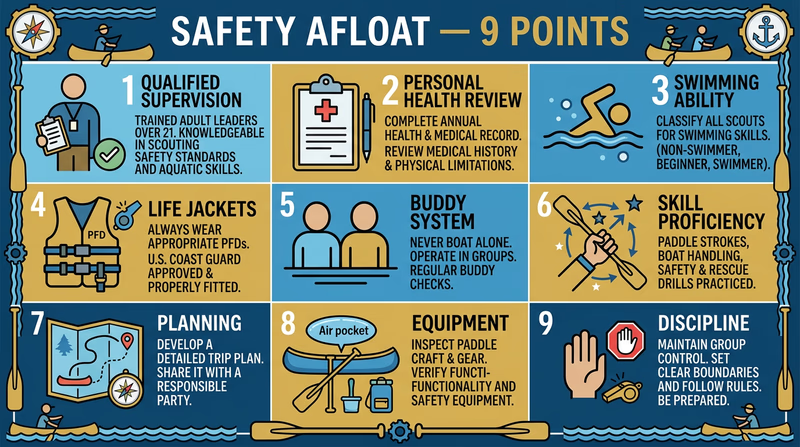
The Nine Points of Safety Afloat
1. Qualified Supervision
Every canoeing activity must have a qualified adult supervisor who is at least 21 years old. This person must have completed Safety Afloat training (valid for two years). For canoeing, the supervisor should understand canoe handling, rescue techniques, and the specific conditions of the waterway being used.
Canoeing application: Your counselor or the adult leading the outing must have current Safety Afloat certification. They must be present at the waterfront at all times during the activity.
2. Personal Health Review
Every participant must have a current health history on file. Parents or guardians review medical conditions that could create problems on the water — things like seizure disorders, heart conditions, or medications that cause drowsiness.
Canoeing application: Before your first paddle, make sure your health form is up to date. Tell your counselor about any conditions that could affect you on the water.
3. Swimming Ability
Participants are classified by swimming ability: swimmer, beginner, or nonswimmer. For canoeing, participants must meet the requirements for “swimmer” — which is why Requirement 2 of this merit badge requires you to pass the BSA swimmer test.
Canoeing application: Everyone in a canoe must be a classified swimmer. No exceptions.
4. Life Jackets
Properly fitted, US Coast Guard-approved life jackets must be worn by all participants whenever they are on the water. Life jackets must be the correct type and size for the user and the activity.
Canoeing application: Your life jacket must be on and fastened from the moment you step into the canoe until you are back on the dock or shore. You will learn more about selecting and fitting life jackets in Requirement 5.
5. Buddy System
Every paddler has a buddy. Buddies stay together and monitor each other. Buddy checks are conducted at regular intervals by the supervisor.
Canoeing application: In tandem canoeing, your paddling partner is your buddy. If paddling solo canoes, pair up with another canoe that stays within communication distance. Regular buddy checks mean counting heads and confirming everyone is accounted for.
6. Skill Proficiency
All participants must demonstrate that they have the skills needed for the activity before heading out. No one is thrown into conditions beyond their training.
Canoeing application: Before paddling on open water, you need to demonstrate basic strokes, launching, landing, and capsize recovery in a controlled setting. This merit badge builds those skills step by step.
7. Planning
A written plan covers the route, timeline, emergency procedures, and communication methods. The plan is shared with someone who is not on the trip.
Canoeing application: Know your route, check the weather, identify access points and potential shelter, and file a float plan. A float plan tells someone on shore where you are going, when you expect to return, and what to do if you do not check in on time.
8. Equipment
All equipment must be in good condition and appropriate for the activity and conditions. This includes the canoe, paddles, life jackets, rescue equipment, and communication devices.
Canoeing application: Before every paddle, inspect your canoe for damage, check that you have an extra paddle, verify that your life jacket is in good condition, and make sure you have the required safety gear (sound signal, bailer, throw bag). You will cover equipment in detail in Requirements 5 and 6.
9. Discipline
Everyone follows the rules. The supervisor has authority to stop the activity if conditions become unsafe or if participants are not following safety protocols.
Canoeing application: When the supervisor says “get off the water,” you get off the water — no debate. Horseplay in canoes is dangerous. Standing up, rocking the canoe, or paddling away from the group puts everyone at risk.
How Safety Afloat Connects to This Badge
Almost every requirement in the Canoeing merit badge ties back to Safety Afloat. The swimmer test (Requirement 2) covers Point 3. Life jacket selection (Requirement 5) covers Point 4. Equipment care (Requirement 6) covers Point 8. Rescue skills (Requirement 8) support Points 1 and 6. When your counselor asks you to discuss Safety Afloat, show that you understand not just the rules, but why each rule matters.
Scouting America Safety Afloat The full text of the Safety Afloat policy directly from Scouting America.With safety covered, it is time to make sure you are water-ready. Next up: the swimming prerequisite.