Req 2 — Swimmer Test
This requirement is a gate — you must pass the BSA swimmer test before you can work on any of the remaining requirements. The test ensures that if you end up in the water (and at some point during this badge, you will), you can handle yourself.
What the Swimmer Test Involves
The BSA swimmer test has two parts, performed without a life jacket:
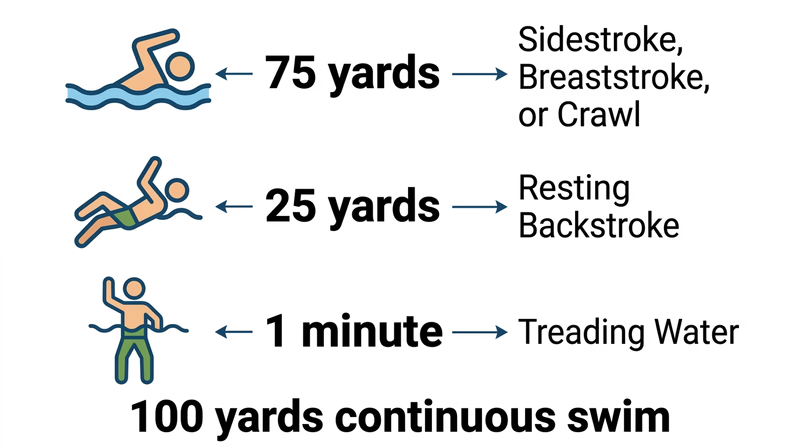
Jump into deep water (over your head), swim 75 yards using at least one of these strokes: sidestroke, breaststroke, or crawl (freestyle). Then swim 25 yards using a resting backstroke. The total distance is 100 yards of continuous swimming without stopping or touching the bottom.
Float or tread water for one minute after completing the swim.
You must complete both parts without resting or using the side of the pool. The test is administered by a certified lifeguard, aquatics instructor, or BSA swim test counselor.
Why Swimming Ability Matters for Canoeing
Canoeing puts you on the water — and sometimes in it. Capsizing, swamping, and falling out of a canoe are all normal parts of learning. In Requirement 8, you will deliberately capsize your canoe and practice rescue techniques. You need to be a confident swimmer to handle these situations safely.
Swimming ability also connects directly to Safety Afloat Point 3: every person in a canoe must be a classified swimmer. There are no shortcuts on this one.
Getting Ready for the Test
If you are not a strong swimmer yet, here are some ways to build up:
- Practice consistently. Swimming two or three times a week builds endurance faster than one long session.
- Work on your strokes. The sidestroke and breaststroke are efficient resting strokes — learn them well and they will save your energy.
- Build your treading endurance. Practice treading water for increasing intervals — start with 30 seconds and work up to two minutes.
- Stay relaxed. Tension wastes energy. Breathe rhythmically, keep your body streamlined, and let the water support you.
Once you have passed the swimmer test, you are cleared to get into a canoe. Let’s start by learning about the boat itself.