Req 5a — Life Jacket Selection
A life jacket — officially called a personal flotation device (PFD) — is the single most important piece of safety equipment in canoeing. It is not optional. It is not something you put on “when things get rough.” You wear it from the moment you step into the canoe until you are back on solid ground.
Why You Must Always Wear a Life Jacket
The reason is simple: you cannot predict when you will end up in the water. Capsizing happens without warning — a sudden gust of wind, an unexpected wake from a motorboat, a shift in weight, or a submerged rock. When it happens, you do not have time to reach for a life jacket stowed under the seat.
Cold-water shock (discussed in Requirement 1b) can cause involuntary gasping within seconds of immersion. A life jacket keeps your head above water during those critical moments. Even strong swimmers can be incapacitated by cold water, exhaustion, or a blow to the head during a capsize.
US Coast Guard PFD Types
Life jackets are classified by the US Coast Guard into types based on the conditions they are designed for:
Type I — Offshore Life Jacket
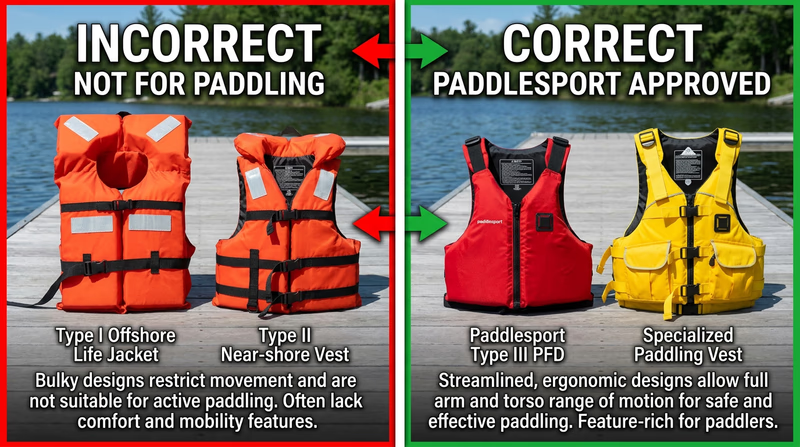
Designed for open, rough water far from shore. Provides the most buoyancy and is designed to turn an unconscious person face-up. Bulky and uncomfortable for paddling — not ideal for canoeing.
Type II — Near-Shore Buoyant Vest
Designed for calm, inland water where rescue is expected quickly. Less bulky than Type I but still somewhat restrictive. May turn some unconscious wearers face-up. Common in rental fleets and camp programs.
Type III — Flotation Aid
Designed for calm water where quick rescue is likely. Comfortable and allows good freedom of movement. This is the most common type for canoeing. It does not turn you face-up automatically, so you need to be conscious and able to position yourself — which is another reason to be a strong swimmer.
Type V — Special Use
Designed for specific activities. Some Type V PFDs are approved for paddlesports and combine comfort with good flotation. They must be worn to count as a legal PFD (unlike other types, which technically just need to be aboard — though in Scouting, all PFDs must be worn).
Key Characteristics for Canoeing PFDs
When selecting a life jacket for canoeing, look for these features:
- Freedom of movement — You need full range of motion in your arms and shoulders for paddling. Test the PFD by mimicking paddle strokes before getting on the water.
- Proper buoyancy — Adults need at least 15.5 pounds of buoyancy. Youth PFDs are sized by weight range and provide appropriate buoyancy for smaller bodies.
- Snug fit — The PFD should not ride up past your chin when you are in the water. Buckles, straps, and zippers should be secure.
- High visibility color — Bright yellow, orange, or red makes you easier to spot in the water. Avoid dark colors that blend into waves.
- US Coast Guard approval — Look for the USCG approval label inside. Non-approved flotation vests (pool toys, water ski vests without approval) are not acceptable.
- Pockets — A nice bonus for carrying a whistle, sunscreen, or snack bar within easy reach.
Now that you know what to look for in a life jacket, let’s make sure it fits properly.