Req 7 — On the Water Basics
This requirement covers four essential on-the-water skills:
- Req 7a — Safely carry and launch the canoe from a dock or shore
- Req 7b — Safely land the canoe and return it to storage
- Req 7c — Demonstrate kneeling and sitting positions and their proper use
- Req 7d — Change places while afloat
These are the fundamentals — the skills you use every single time you go canoeing. Get them right, and everything else in this badge builds on a solid foundation.
Carrying the Canoe
Two-Person Carry
The most common carry for getting a canoe from the rack to the water:
- Position yourselves — One person at the bow, one at the stern, both facing the same direction (toward the water).
- Lift together on a count of three. Grab the gunwales or the end decks.
- Carry at your sides with the canoe right-side up, or carry inverted (upside down) resting on your shoulders at the thwarts.
- Communicate constantly — “Step up,” “turning right,” “set it down.” The person in front cannot see behind them.
- Watch your footing. Uneven ground, slippery rocks, and muddy banks are hazards during the carry.
Launching from Shore
- Set the canoe at the water’s edge parallel to the shoreline, with the bow pointing in the direction you want to go.
- Slide the canoe into the water so it is floating freely with the stern still touching shore.
- The stern paddler holds the canoe steady by gripping the gunwales and bracing from shore.
- The bow paddler boards first — stepping into the center of the canoe (on the keel line), keeping their weight low, and moving forward to the bow seat.
- Once the bow paddler is seated, the stern paddler pushes off gently, steps into the center, and moves to the stern seat.
Launching from a Dock
- Position the canoe alongside the dock with bow and stern lines loosely secured.
- Hold the canoe steady by gripping the near gunwale and the dock edge. The canoe should be pulled in tight to the dock.
- The bow paddler boards first — facing the bow, they step down into the center of the canoe, keeping their weight low and hands on both gunwales.
- The stern paddler boards after the bow paddler is settled.
- Push off gently from the dock.
Landing on Shore
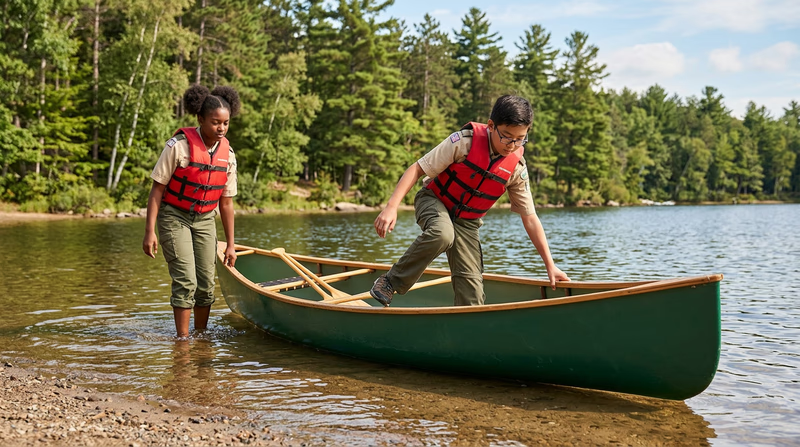
- Approach the shore at a gentle angle — not straight on (which can damage the bow) and not broadside (which makes it hard to exit).
- The bow paddler stops paddling and prepares to step out as the canoe touches bottom or the bow reaches shore.
- The bow paddler exits first — stepping out onto stable ground while holding the gunwale, then pulling the canoe in.
- The stern paddler exits once the canoe is stabilized.
- Pull the canoe up far enough that it will not float away. In tidal areas, pull it well above the high-water line.
Landing at a Dock
- Approach parallel to the dock at slow speed.
- The bow paddler grabs the dock and holds the canoe alongside.
- The stern paddler exits first (they are closer to the dock edge), stepping up onto the dock while keeping weight low.
- The bow paddler exits once the stern paddler is holding the canoe from the dock.
- Secure the canoe with painters if you are leaving it at the dock.
Kneeling vs. Sitting Positions
Your position in the canoe affects stability, power, and control.
Sitting Position
You sit on the canoe seat with your feet flat on the hull bottom in front of you. This is the most comfortable position for long paddles and is fine for calm conditions.
- Pros: Comfortable for extended paddling, easier on the knees
- Cons: Higher center of gravity, less stable in rough water or during maneuvers
Kneeling Position
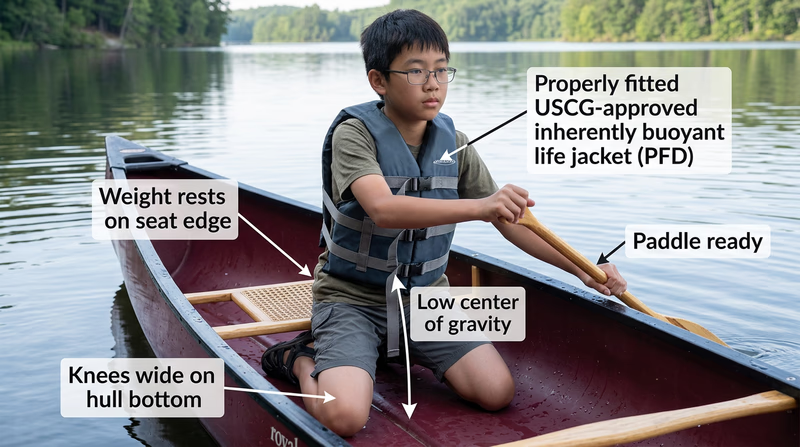
You kneel on the hull bottom with your knees spread for stability, resting your backside against the front edge of the seat. This lowers your center of gravity significantly.
- Pros: Much more stable, better control during maneuvers and rough water, more powerful strokes
- Cons: Harder on the knees over long distances
When to kneel:
- Whenever conditions get rough (wind, waves, wakes)
- During technical maneuvers (pivots, draws, rescue operations)
- When you need maximum stability (loading gear, switching places)
- In moving water
Changing Places While Afloat
Switching positions with your partner while the canoe is on the water is a skill you will need to demonstrate. It feels awkward at first, but it is manageable if you follow the right steps:
- Move to calm, sheltered water — do not attempt this in current or waves.
- Both paddlers kneel to lower the center of gravity.
- Stow paddles along the bottom of the canoe or across the gunwales so they do not get in the way.
- One paddler moves at a time while the other stays still and stabilizes the canoe.
- The moving paddler stays low — hands on the gunwales, moving along the centerline of the canoe. Do not stand up.
- Move past each other at the center of the canoe, keeping weight as low and centered as possible.
- Settle into the new position before the other paddler begins moving.
- Retrieve paddles and resume paddling.
You can now carry, launch, paddle, land, and switch positions in your canoe. Next comes a critical set of skills — what to do when things go sideways (literally).