Req 8a — Deep Water Exit & Reentry
There are situations where you may need to get out of a canoe in deep water — to help another paddler, to retrieve something, or during a rescue operation. The key is doing it without flipping the boat and without losing contact with the canoe.
Exiting the Canoe in Deep Water
- Communicate with your partner. Tell them what you are doing and make sure they are ready to stabilize the canoe.
- Move to the center of the canoe and lower yourself to a kneeling position if you are not already kneeling.
- Your partner shifts to the opposite side of the canoe to counterbalance your exit.
- Grip the gunwale on the side you are exiting from. Roll your body over the gunwale feet-first, lowering yourself into the water slowly.
- Keep one hand on the gunwale at all times. Never let go of the canoe. In deep water, the canoe is your flotation platform, your reference point, and your ride home.
- Once in the water, hold the gunwale and position yourself along the side of the canoe. Let your life jacket support you — do not try to pull yourself up immediately.
Reentering the Canoe from Deep Water
Getting back in is harder than getting out. The main challenge is climbing over the gunwale without capsizing the canoe on top of yourself and your partner.
With Assistance from Your Partner
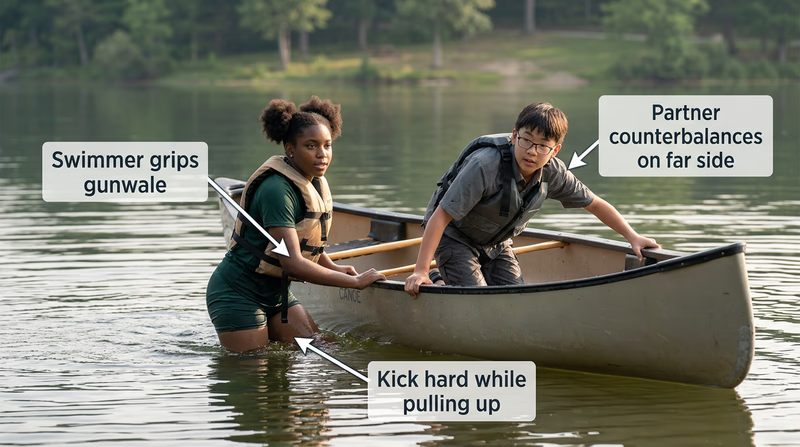
- Your partner moves to the opposite side of the canoe and leans their weight out over that gunwale, acting as a counterbalance. They may grip the far gunwale with both hands and lean over it.
- Position yourself alongside the canoe near the center (not at the ends), facing the canoe.
- Kick hard with your legs while pulling yourself up and over the near gunwale. Think of it like getting out of a swimming pool — a strong kick combined with an arm pull.
- Roll into the canoe belly-first, keeping your weight low. Do not try to swing a leg over — this raises your center of gravity and invites a capsize.
- Once your torso is over the gunwale, rotate and lower yourself to a kneeling or sitting position as quickly as possible.
- Stabilize the canoe before your partner shifts back to their normal position.
Using a Rescue Sling
If the canoe is equipped with a rescue sling (a loop of webbing hung over the side), the swimmer can step into it and use it as a foothold to boost themselves up and over the gunwale. This is especially helpful for smaller paddlers or when fatigue is a factor.
Practice Makes Perfect
This is a skill that feels awkward and difficult the first few times. Practice in calm, warm water with your counselor present. The more times you do it, the smoother and more confident it becomes. When you need this skill in a real situation, muscle memory will take over.
You can get out of and back into a canoe in deep water. Next, you will learn what happens when the canoe tips over completely — and why that is not as scary as it sounds.