Req 8b — Controlled Capsize
Capsizing — intentionally tipping your canoe over — is one of the most valuable exercises in this merit badge. It teaches you that a capsize is not a disaster. When you know what to expect, you can stay calm, stay with the boat, and take care of yourself and your partner.
Why Practice Capsizing?
Because it will happen eventually. Wind, waves, a clumsy move, or an unexpected obstacle can flip a canoe. Paddlers who have never capsized tend to panic. Paddlers who have practiced it stay calm — because they have been there before and they know what to do.
A capsized canoe still floats. Even swamped and upside down, a canoe provides significant flotation. Two paddlers can hold onto a capsized canoe and float indefinitely with their life jackets. It is almost always safer to stay with the boat than to try to swim to shore.
How to Perform a Controlled Capsize
- Choose calm, deep water — deep enough that you will not hit the bottom, calm enough that you can focus on technique.
- Secure or remove any loose gear so it does not become a hazard in the water.
- Both paddlers confirm they are ready. Life jackets must be properly fitted and secured.
- On a count of three, both paddlers lean to the same side. Shift your weight toward one gunwale until the canoe rolls over.
- As the canoe tips, tuck your chin and roll with it. Do not fight it — go with the motion.
- Surface and grab the canoe. Reach for the hull, gunwale, or any part of the canoe you can hold.
- Account for your partner immediately. Make eye contact and confirm they are okay.
Staying with the Capsized Canoe
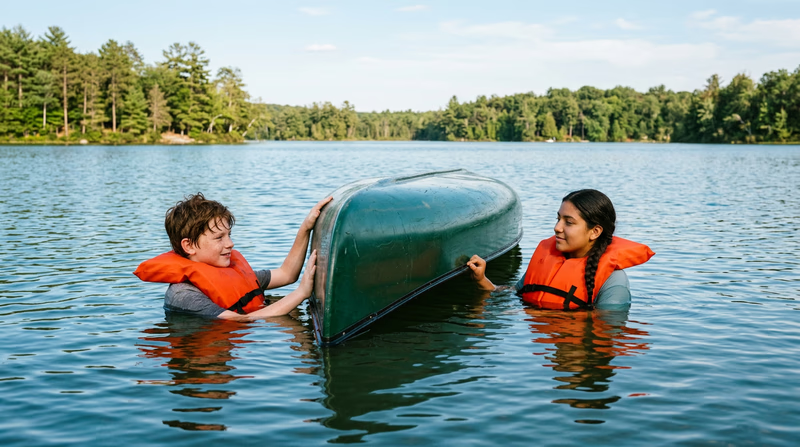
Once both paddlers are in the water with the canoe, the priority is simple: do not leave the boat.
Why Stay with the Canoe?
- Flotation — A capsized canoe supports the weight of two paddlers easily. Even swamped, canoes made of aluminum, plastic, or fiberglass have enough buoyancy to keep you floating.
- Visibility — A canoe is much easier for rescuers to spot than a swimmer’s head in the water. Bright-colored hulls are visible from a distance.
- Rest — Holding the canoe and letting your life jacket support you conserves energy. Swimming to shore — especially in cold water, current, or waves — burns energy fast and can lead to exhaustion.
- Decision-making — Staying with the canoe gives you time to think, assess the situation, and wait for help or plan your next move.
How to Float with a Capsized Canoe
- Position yourselves on opposite ends of the overturned canoe — one at the bow, one at the stern.
- Hold the canoe by the gunwale, keel, or end grab. Relax your body and let the life jacket do the work.
- Kick gently if you need to move the canoe toward shore, but do not exhaust yourself.
- Communicate with your partner. Stay positive and talk through your plan.
You have capsized and stayed with your canoe. Next, you will learn how to get a swamped canoe to shore and empty it out.