Req 8c — Swamped Canoe Recovery
A swamped canoe — one that is full of water but still floating — is heavy and awkward, but it is not hopeless. You can move it to shallow water, drain it, and get back to paddling. This is a fundamental self-rescue skill that every canoeist needs.
Moving a Swamped Canoe
A canoe full of water weighs hundreds of pounds more than an empty one, but it still floats because the hull material itself is buoyant. Moving it requires patience and teamwork — brute force will just exhaust you.
Swimming and Pushing
- Position yourself at the stern of the swamped canoe.
- Hold the stern deck or gunwale with one or both hands.
- Kick with your legs using a flutter kick or scissor kick to propel yourself and the canoe forward.
- Your partner can help by pushing from the side or pulling from the bow using a painter.
- Aim for the nearest shallow area — a gently sloping beach or sandbar is ideal.
Towing
If you have a painter (bow line), your partner can swim ahead with the rope and tow while you push from behind. This distributes the effort and keeps the canoe moving in a straight line.
Emptying a Swamped Canoe in Shallow Water
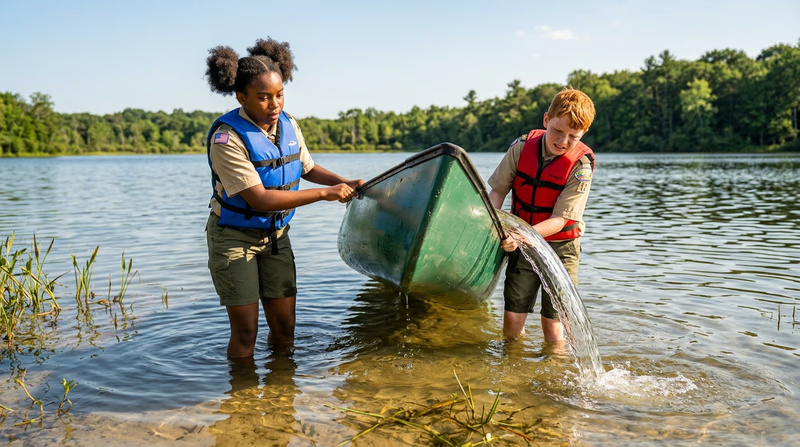
Once you reach water that is about knee- to waist-deep, you can drain the canoe.
The Roll-Out Method
- Position the canoe broadside to you in shallow water (perpendicular to the shore is fine).
- Roll the canoe onto its side by lifting the near gunwale up and pushing the far gunwale down. Most of the water will pour out over the far side.
- Continue rolling the canoe completely upside down to drain the rest.
- Flip the canoe back upright. It should now be mostly empty — use a bailer or sponge to remove any remaining water.
The Lift-and-Drain Method
For lighter canoes, two people can lift one end high while the other end stays in the water. Water flows to the low end and pours out over the gunwale. Then set it down and repeat from the other end if needed.
Reentering in Shallow Water
Once the canoe is emptied and floating in shallow water, reentry is straightforward:
- Stabilize the canoe — one person holds the gunwale while the other boards.
- Step in at the center of the canoe, keeping your weight low over the keel line.
- Move to your seat while maintaining three points of contact (two hands on gunwales, feet on hull).
- Once the first paddler is settled, the second paddler boards.
- Use the bailer or sponge to remove any last water before paddling out.
You can recover your own swamped canoe. But what if another canoe capsizes near you? Next, you will learn the canoe-over-canoe rescue — how to help others from your own boat.