Req 8e — Swimmer Rescue from Canoe
8e.
Perform a canoe rescue of a conscious swimmer.
A swimmer in the water — whether they fell out of their own boat, jumped in to cool off and got into trouble, or capsized a watercraft — needs to be rescued efficiently without capsizing your canoe in the process. This skill bridges canoe handling with water rescue.
Approach the Swimmer
- Assess the situation before you paddle over. Is the swimmer calm or panicking? Are they injured? Are there hazards (current, other boats, obstacles) between you and them?
- Approach from downwind or downstream if possible. This gives you more control as you get close — you can slow down naturally rather than fighting to hold position.
- Approach the swimmer from the side, not head-on. You do not want to hit them with the bow.
- Communicate clearly. Call out: “We are coming to get you. Stay calm. We are going to bring you alongside.”
Position the Canoe
- Bring the canoe alongside the swimmer so the swimmer is at the center of the canoe (near the widest, most stable point).
- Both paddlers shift their weight to the far side of the canoe to counterbalance the swimmer’s weight as they come aboard.
- If using a rescue sling, lower it over the near side so the swimmer can step into it.
Get the Swimmer Aboard
Method 1: Stern Pickup
This is the most stable approach:
- Position the swimmer at the stern of the canoe, facing the transom.
- The swimmer grabs the stern gunwales with both hands.
- On a count, the swimmer kicks hard and pulls themselves up and over the stern, belly-first.
- The bow paddler leans forward to counterbalance the weight at the stern.
- The swimmer rolls into the canoe and moves to a stable position.
Method 2: Side Pickup
Use when the swimmer is alongside the canoe:
- The counterbalancing paddler leans hard to the far side, lowering that gunwale toward the water and raising the near gunwale slightly.
- The swimmer grabs the near gunwale at the center of the canoe.
- On a count, the swimmer kicks and pulls over the near gunwale while the paddler counterbalances.
- The swimmer rolls in belly-first, keeping low, and immediately moves to the center of the canoe.
Method 3: Paddle Bridge
If the swimmer cannot pull themselves in:
- Extend a paddle across the canoe with the blade resting on the far gunwale and the grip extending over the near gunwale toward the swimmer.
- The swimmer grabs the paddle shaft and uses it as a rail to pull themselves up and over the gunwale.
- Counterbalance from the opposite side throughout.
After the Rescue
- Check the swimmer for signs of cold-water shock, hypothermia, or injury. Wrap them in a dry layer if available.
- Position the rescued swimmer low in the center of the canoe for maximum stability.
- Paddle to shore as directly as possible. A three-person canoe is less stable and harder to maneuver.
- If the swimmer’s canoe is still in the water, decide whether to tow it or return for it after reaching shore.
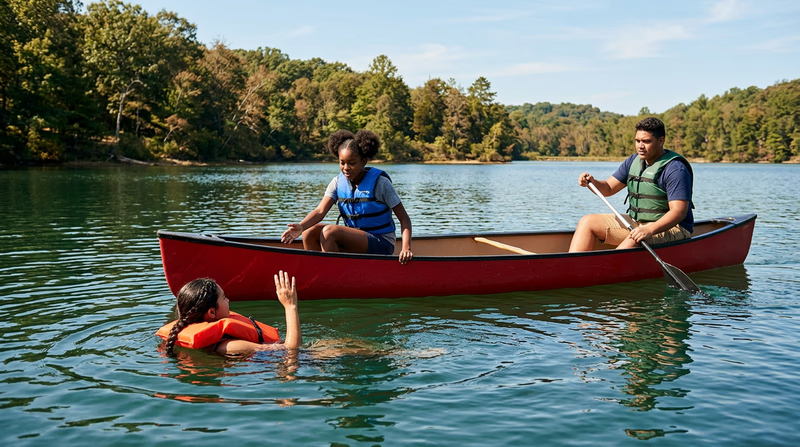
You can rescue a swimmer from the water using your canoe. For the final rescue skill, you will learn how to use a throw bag from shore — one of the most effective tools in water rescue.