Req 1a — Safety Data Sheets
Before you pick up a single beaker or light a single burner, you need to know how to handle chemicals safely. That starts with one of the most important documents in all of chemistry: the Safety Data Sheet, or SDS.
What Is a Safety Data Sheet?
An SDS is a detailed document that tells you everything you need to know about a chemical substance — what it is, what dangers it poses, how to handle it safely, and what to do if something goes wrong. Every chemical sold for commercial or industrial use is required to have one. You can usually find an SDS by searching the product name plus “SDS” online.
The 16 Sections of an SDS
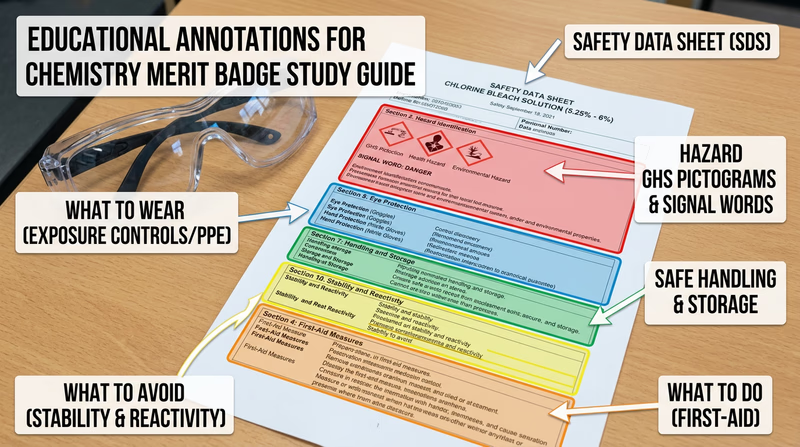
Every SDS is organized into exactly 16 sections. You do not need to memorize all of them, but knowing the key ones will help you work with any chemical confidently:
- Identification — Product name and manufacturer
- Hazard(s) identification — Danger level, pictograms, and signal words
- Composition/ingredients — What the chemical is made of
- First-aid measures — What to do if someone is exposed
- Fire-fighting measures — How to handle fires involving this chemical
- Accidental release measures — How to clean up spills
- Handling and storage — Safe practices for use and storage
- Exposure controls/PPE — What protective equipment to wear
- Physical and chemical properties — Appearance, odor, boiling point, etc.
- Stability and reactivity — What conditions could make it dangerous
- Toxicological information — Health effects of exposure
- Ecological information — Environmental impact
- Disposal considerations — How to dispose of it safely
- Transport information — Shipping rules
- Regulatory information — Laws and regulations
- Other information — Anything else you should know
Comparing Three Common Chemicals
For this requirement, you need to obtain and compare the SDS for three substances: sucrose (table sugar), isopropyl alcohol (rubbing alcohol), and a waterproofing spray. Here is what to look for as you compare them:
Sucrose (Table Sugar)
Sugar is about as safe as chemicals get. Its SDS will show:
- Hazards: Very low. Sugar is not toxic, not flammable under normal conditions, and not corrosive. The main hazard is dust — fine sugar dust in the air can irritate eyes and lungs.
- Handling: No special precautions beyond basic hygiene (wash hands after handling).
- Disposal: Can be disposed of as regular waste or dissolved in water.
Isopropyl Alcohol (Rubbing Alcohol)
Rubbing alcohol is much more hazardous than sugar:
- Hazards: Flammable liquid and vapor. Can cause eye irritation and drowsiness if inhaled in large amounts. Harmful if swallowed.
- Handling: Keep away from heat, sparks, and open flames. Use in well-ventilated areas.
- Disposal: Cannot be poured down the drain in large quantities. Follow local hazardous waste guidelines.
Waterproofing Spray
Waterproofing sprays are typically the most hazardous of the three:
- Hazards: Often extremely flammable (pressurized aerosol). May contain chemicals harmful to lungs if inhaled. Some contain compounds toxic to aquatic life.
- Handling: Use only outdoors or in very well-ventilated areas. Keep away from heat and flames. Do not breathe spray mist.
- Disposal: Do not puncture or incinerate the can. Follow local hazardous waste collection guidelines.
How to Find an SDS
Finding an SDS is easy:
- Search online for the product name followed by “SDS” (for example, “Kiwi Camp Dry waterproofing spray SDS”).
- The manufacturer’s website usually has SDS documents available for download.
- Your school’s chemistry teacher or your merit badge counselor may have printed copies.