Req 1b — Personal Protective Equipment
Now that you know how to read a Safety Data Sheet, let’s talk about the gear that stands between you and chemical hazards: personal protective equipment, or PPE. This is the clothing and equipment designed to protect your body from chemical splashes, fumes, dust, and heat.
The Big Four: Types of PPE
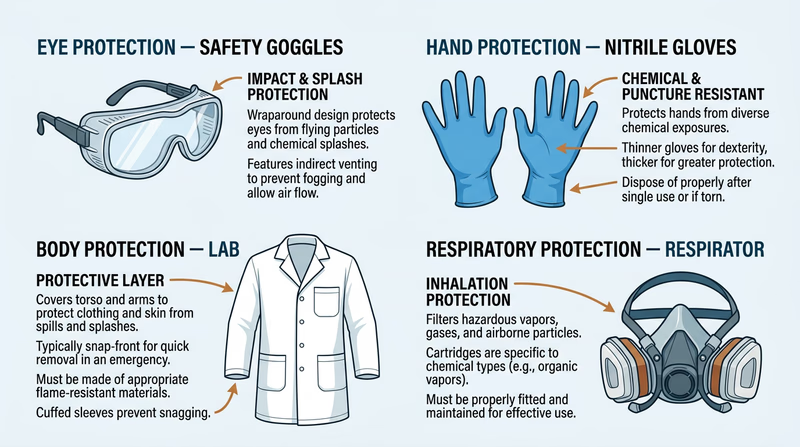
There are four main categories of PPE used in chemistry, each protecting a different part of your body:
1. Eye Protection
Your eyes are one of the most vulnerable parts of your body. Chemical splashes, flying particles, or fumes can cause serious and sometimes permanent damage.
- Safety goggles — Seal around your eyes to protect against splashes, fumes, and dust. These are the standard for most chemistry work.
- Safety glasses — Protect against flying particles but do not seal around your eyes. Good for low-hazard work but not enough for chemical splashes.
- Face shields — Cover your entire face. Used when working with highly corrosive chemicals that could splash.
2. Hand Protection
Your hands touch chemicals more than any other body part. Gloves are your first line of defense.
- Nitrile gloves — Resist many chemicals and are the most common lab glove. Good for rubbing alcohol, dilute acids, and most general chemistry work.
- Latex gloves — Similar to nitrile but some people are allergic to latex. Not as chemically resistant.
- Butyl rubber gloves — Thick gloves for handling highly toxic or corrosive chemicals. Used in industrial settings.
3. Respiratory Protection
Breathing in chemical fumes, dust, or mist can damage your lungs. The type of respiratory protection depends on what is in the air.
- Dust mask — Filters large particles like sugar dust. Not effective against chemical vapors.
- Half-face respirator with cartridges — Filters specific chemical vapors. The cartridge type must match the chemical (organic vapor, acid gas, etc.).
- Fume hood — Not worn, but used in labs to pull chemical vapors away from you while you work.
4. Body Protection
Protecting your skin and clothing from splashes and spills.
- Lab coat — Shields your clothes and skin from small splashes. Standard in any chemistry lab.
- Chemical-resistant apron — Heavier protection for working with larger volumes of chemicals.
- Closed-toe shoes — Always required in a lab to protect your feet from spills and dropped glassware.
PPE Changes with Toxicity and Exposure Route
Here is the key concept for this requirement: the more dangerous the chemical, the more PPE you need. And the type of PPE depends on how the chemical can enter your body.
There are four routes of exposure:
| Route | How It Happens | PPE Protection |
|---|---|---|
| Inhalation | Breathing in fumes, dust, or mist | Respirator, fume hood, ventilation |
| Skin contact | Chemical touches your skin | Gloves, lab coat, apron |
| Eye contact | Splash or vapor reaches your eyes | Safety goggles, face shield |
| Ingestion | Accidentally swallowing a chemical | Good hygiene — never eat or drink in a lab |
Comparing PPE for Your Three Chemicals
Let’s revisit sucrose, isopropyl alcohol, and waterproofing spray from Requirement 1a:
| Chemical | Eye | Hands | Respiratory | Body |
|---|---|---|---|---|
| Sucrose | Safety glasses (dust) | Optional gloves | Dust mask if grinding | Lab coat optional |
| Isopropyl alcohol | Safety goggles | Nitrile gloves | Ventilation or fume hood | Lab coat |
| Waterproofing spray | Safety goggles | Chemical-resistant gloves | Respirator with organic vapor cartridge | Use outdoors; full coverage clothing |
Notice how the PPE requirements escalate as the hazard level increases. Sugar barely needs any protection. Rubbing alcohol needs goggles and gloves. Waterproofing spray — the most hazardous of the three — needs respiratory protection and should only be used outdoors.