Req 7 — Government Agencies
Chemicals are everywhere — in your food, medicine, cleaning products, and the air you breathe. Without oversight, companies and individuals could use chemicals in ways that harm people and the environment. That is why the United States has several government agencies dedicated to chemical safety. Here are the three most important ones.
1. Environmental Protection Agency (EPA)
Founded: 1970, by President Richard Nixon
History: In the 1960s, Americans began noticing that pollution was devastating the environment. Rivers were catching fire (the Cuyahoga River in Cleveland literally burned), smog choked cities, and pesticides like DDT were killing wildlife. Rachel Carson’s 1962 book Silent Spring helped spark a national environmental movement. In response, President Nixon created the EPA to consolidate all federal pollution-control activities under one agency.
Responsibilities:
- Regulates the manufacture, use, and disposal of chemicals under laws like the Toxic Substances Control Act (TSCA)
- Sets and enforces limits on pollutants in air and water
- Manages the cleanup of contaminated sites (Superfund program)
- Registers and regulates pesticides
- Oversees hazardous waste management
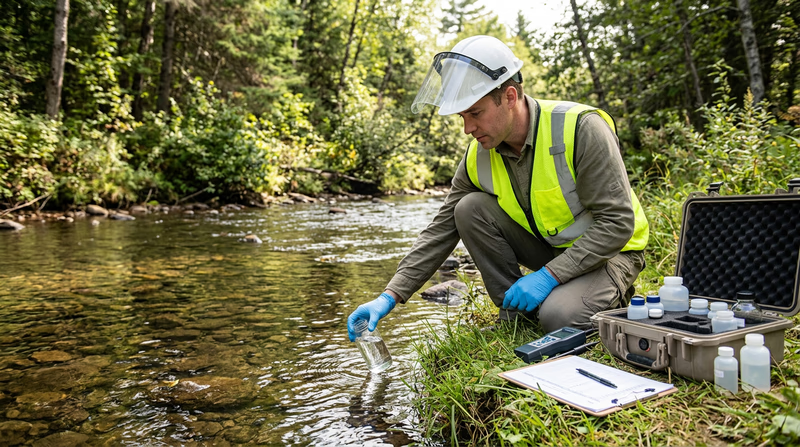
How it affects you: The EPA ensures your drinking water is safe, the air in your community meets quality standards, and hazardous chemicals are properly disposed of. When you learned about chemical storage and disposal in Requirement 1d, those guidelines exist because of EPA regulations.
2. Food and Drug Administration (FDA)
Founded: 1906 (as the Bureau of Chemistry), reorganized as the FDA in 1930
History: In the early 1900s, there were no rules about what could go into food or medicine. Companies sold “patent medicines” containing alcohol, cocaine, and heroin — marketed as cures for everything from headaches to cancer. Upton Sinclair’s novel The Jungle (1906) exposed horrific conditions in the meatpacking industry. Public outrage led to the Pure Food and Drug Act of 1906, which created the agency that would become the FDA.
Responsibilities:
- Ensures the safety of food, drugs, medical devices, cosmetics, and dietary supplements
- Reviews and approves new medications before they can be sold
- Monitors food additives and packaging materials for safety
- Regulates the labeling of food and pharmaceutical products
- Oversees blood supply safety and vaccine development
How it affects you: Every medicine you have ever taken was reviewed by the FDA for safety and effectiveness. The ingredient list and nutrition facts on food labels exist because of FDA requirements. When you read about PPE and SDS documents in Requirements 1a–1b, you saw how chemicals are classified — the FDA does similar classification work for drugs and food additives.
3. Occupational Safety and Health Administration (OSHA)
Founded: 1971, under the Occupational Safety and Health Act signed by President Nixon
History: Before OSHA, workplace safety was largely left to individual companies. Workers in factories, mines, and chemical plants were routinely exposed to toxic substances, dangerous machinery, and hazardous conditions with little legal protection. An estimated 14,000 workers died on the job each year in the late 1960s. OSHA was created to ensure every worker has a safe and healthy workplace.
Responsibilities:
- Sets and enforces workplace safety standards, including chemical exposure limits
- Requires employers to provide Safety Data Sheets (SDS) for all hazardous chemicals in the workplace
- Mandates proper PPE for workers handling chemicals
- Conducts workplace inspections and investigates accidents
- Provides training and education on chemical safety
How it affects you: The Safety Data Sheets you studied in Requirement 1a exist because OSHA’s Hazard Communication Standard requires them. The GHS pictograms you learned about in Requirement 1c are part of OSHA’s labeling requirements. Every time you see a “hard hat area” sign or a chemical warning label at a job site, that is OSHA’s work.
Other Agencies Worth Mentioning
While you only need three, here are additional agencies involved in chemical regulation:
- Department of Transportation (DOT) — Regulates the safe transport of hazardous materials on roads, rails, and waterways. Those diamond-shaped placards on tanker trucks? DOT requires them.
- Consumer Product Safety Commission (CPSC) — Protects the public from unreasonable risks of injury from consumer products, including those containing chemicals.
- Drug Enforcement Administration (DEA) — Controls the manufacture, distribution, and dispensing of legally produced controlled substances.
- National Institute for Occupational Safety and Health (NIOSH) — Conducts research on workplace safety (part of the CDC, not a regulatory agency).
How These Agencies Work Together
These agencies often collaborate:
- When a new pesticide is developed, the EPA evaluates its environmental impact, the FDA may assess residues on food, and OSHA sets rules for workers who manufacture or apply it.
- When a chemical spill occurs during transport, the DOT investigates the shipping violation, the EPA manages the environmental cleanup, and OSHA ensures the cleanup workers are protected.