
Citizenship in Society Merit Badge — Complete Digital Resource Guide
https://merit-badge.university/merit-badges/citizenship-in-society/guide/
Introduction & Overview
Being a good citizen is about more than following rules or paying taxes. It is about how you treat the people around you every single day — in your school hallways, on your sports teams, in your Scout troop, and in your community. The Citizenship in Society merit badge challenges you to look at the world through other people’s eyes and to become the kind of leader who makes everyone feel like they belong.
Note: The Citizenship in Society merit badge was discontinued effective February 27, 2026. Scouts who began working on this badge before that date have until December 31, 2026 to complete it. This guide remains available as a resource for those Scouts.
This badge was introduced as one of the Eagle-required merit badges because Scouting believes that true leadership means understanding and respecting the people you lead — all of them, including those whose backgrounds, experiences, and identities are different from your own.
Then and Now
Then — A Nation Still Learning
The United States was founded on the idea that “all men are created equal,” but for most of American history, that promise did not apply to everyone. Entire groups of people were denied the right to vote, attend the same schools, eat at the same restaurants, or even drink from the same water fountains. The civil rights movement of the 1950s and 1960s — led by people like Rosa Parks, Dr. Martin Luther King Jr., Cesar Chavez, and countless others — pushed the country to begin living up to its founding ideals.
- Key moments: The Civil Rights Act of 1964, the Voting Rights Act of 1965, the Americans with Disabilities Act of 1990
- Mindset: Fighting for legal rights and equal protection under the law
Scouting itself has evolved. For decades, participation was limited in ways that excluded many young people. Over time, Scouting has worked to open its doors wider and welcome all youth who want to learn, grow, and serve.
Now — Beyond the Law, Into Daily Life
Today, laws guarantee equal rights, but citizenship in society goes further. It is about the choices you make every day: who you sit with at lunch, how you react when someone is left out, whether you speak up when you hear something hurtful. Modern citizenship means building a culture of belonging — not just tolerance, but genuine inclusion.
- Key focus: Everyday actions, digital citizenship, welcoming environments
- Mindset: Everyone belongs, and everyone has a role in making that real
Get Ready! This badge will ask you to think deeply, listen carefully, and have honest conversations. That takes courage — and courage is something Scouts know a lot about.
Ways You Practice Citizenship in Society
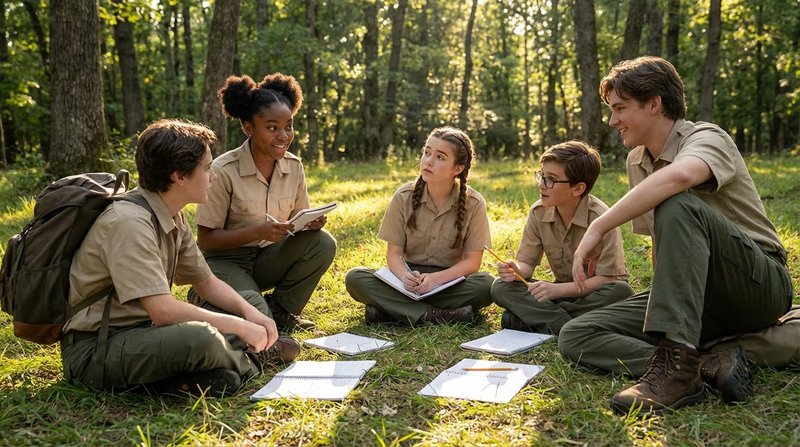
Citizenship in society is not a single skill you learn once. It is something you practice in every part of your life. Here are some of the places where it matters most.
In Your Family
Your family is often where you first learn about respect, fairness, and empathy. Every family is different — different traditions, different beliefs, different ways of showing love. Understanding and appreciating those differences within your own home is the starting point for understanding them in the wider world.

At School
School is where you interact with people from many different backgrounds every day. It is where you learn to work with classmates who think differently, speak differently, or come from different places. How you treat others in the classroom, in the cafeteria, and on the playground shapes the kind of citizen you are becoming.
In Your Community
Your community includes your neighborhood, your town, your place of worship, and the organizations you belong to. Being a good citizen in your community means volunteering, showing up for your neighbors, and making sure that community events and spaces are welcoming to everyone — not just people who look or sound like you.
In Scouting
Scouting is built on a promise to help other people at all times. That means every Scout has a responsibility to make their troop, crew, or ship a place where all members feel safe, respected, and valued. When a new Scout joins your unit, how you welcome them says everything about the kind of leader you are.
Online and in Digital Spaces
The internet is a community too — and it is one where words can spread faster and hit harder than anywhere else. Cyberbullying, misinformation, and exclusion happen online every day. Being a good digital citizen means thinking before you post, standing up against online harassment, and remembering that there is a real person behind every screen name.

This merit badge is a journey of understanding — of yourself and of the people around you. It starts with learning some important terms and ends with a plan for how you will lead with inclusion in every part of your life. Let’s get started.
Req 1 — Key Terms
This requirement is your foundation. Before you dive into the rest of the badge, you need to understand the language — the key terms that will come up again and again. These are not just vocabulary words for a test. They are ideas that shape how people treat each other every single day.
Take your time with each term. Think about what it means in your own life, and especially think about how it connects to the Scout Oath and Scout Law. Your counselor wants to hear your understanding, not a dictionary definition.
Identities
Your identity is the collection of traits, beliefs, and characteristics that make you you. Some parts of your identity you were born with — your race, your ethnicity, where you grew up. Other parts you choose — your hobbies, your values, your goals. And some parts, like your religious beliefs or cultural traditions, may be shaped by your family.
Everyone has multiple identities at the same time. You might be a Scout, a soccer player, a big sister, a person of faith, and a math whiz — all at once. Understanding that every person carries this kind of complexity helps you see them as a full human being, not just one label.
Diversity
Diversity means variety. A diverse group includes people with different backgrounds, experiences, perspectives, abilities, and identities. Think of your Scout troop, your school, or your neighborhood — the more different kinds of people who are part of it, the more diverse it is.
Diversity is not just about what people look like. It also includes differences in how people think, what they believe, where they come from, what languages they speak, and what challenges they have faced.
Scout Law connection: A Scout is Friendly — a friend to all, regardless of differences.
Equality
Equality means giving everyone the same thing. Same rules, same opportunities, same treatment. It sounds simple, and in many cases it is the right approach. Everyone deserves the same basic rights and protections.
But equality alone does not always create fairness — which is where the next term comes in.
Equity
Equity means giving people what they need to have a fair chance. Because people start from different places and face different challenges, treating everyone exactly the same can sometimes leave some people behind.
Here is a simple example: imagine three Scouts trying to see over a fence. One is tall, one is average height, and one uses a wheelchair. Giving them each the same stepstool (equality) helps the first two but not the third. Equity means providing a ramp so all three can see the game.
Inclusion
Inclusion means making sure everyone feels welcome, respected, and valued — not just present. You can invite someone to the table (that is diversity), but inclusion means making sure they feel comfortable speaking up and that their voice actually matters.
Scout Law connection: A Scout is Kind and Courteous — you treat others with respect and make them feel like they belong.
Discrimination
Discrimination means treating someone unfairly because of who they are — their race, gender, religion, disability, or any other part of their identity. It can be obvious (like refusing to let someone join a team) or subtle (like always ignoring someone’s ideas in a group project).
Discrimination is the opposite of the Scout Law. A Scout is Fair, Friendly, and Kind.
Ethical Leadership
Ethical leadership means doing the right thing even when it is hard, unpopular, or costly. An ethical leader makes decisions based on values — honesty, fairness, compassion — not just on what is easy or what benefits them personally.
The Scout Oath says “On my honor I will do my best to do my duty.” That word honor is at the heart of ethical leadership. It means your word matters and your actions match your values.
Upstander
An upstander is someone who speaks up or takes action when they see something wrong. The opposite of an upstander is a bystander — someone who sees a problem but does nothing. Choosing to be an upstander takes courage, but it is one of the most powerful things you can do.
You do not have to confront a bully head-on to be an upstander. Sometimes being an upstander means comforting the person who was hurt, reporting the situation to an adult, or simply refusing to laugh along.
Connecting the Terms to the Scout Oath and Scout Law
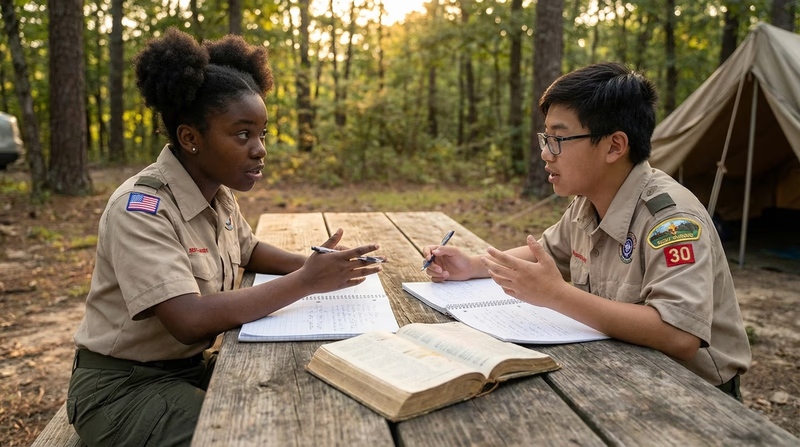
Your counselor will want to hear how you connect these terms to Scouting. There is no single right answer, but here are some connections to think about:
Terms & the Scout Law
Think about which points of the Scout Law each term connects to- Identities: A Scout is Friendly — to all kinds of people, not just those who are similar.
- Diversity: A Scout is Courteous — treating everyone with respect regardless of background.
- Equality: A Scout is Fair — giving everyone the same basic rights and dignity.
- Equity: A Scout is Helpful — recognizing when someone needs extra support.
- Inclusion: A Scout is Kind — making people feel they truly belong.
- Discrimination: A Scout is Brave — standing against unfair treatment.
- Ethical Leadership: A Scout is Trustworthy — doing the right thing even when it is hard.
- Upstander: A Scout is Brave — taking action when you see injustice.
These eight terms are the building blocks for everything that follows in this badge. You will see them again and again as you work through the requirements. Make sure you are comfortable with each one before moving on.
Req 2 — Ethical Leadership
Leadership is a word that gets used a lot, but what does it actually mean to you? This requirement asks you to think carefully about that question — and then to find a real example of someone who led with integrity when it really counted.
What Is Leadership?
At its simplest, leadership is the ability to guide, inspire, or influence others. But notice — the requirement does not just ask about leadership. It asks about ethical leadership. That means leading in a way that is honest, fair, and guided by strong values.
A leader does not have to be the loudest person in the room or the one with the fanciest title. Some of the best leaders you will ever meet are quiet people who simply do the right thing, day after day, even when nobody is watching.
What Makes a Decision “Ethical”?
An ethical decision is one where you choose based on what is right, not just what is easy, popular, or personally beneficial. Ethical decisions often involve a trade-off — doing the right thing might cost you something. It might be uncomfortable. It might make you unpopular. That is exactly what makes it ethical: you choose your values over your convenience.
Here are some questions that can help you recognize an ethical decision:
- Did the person have more than one option?
- Was there pressure to take the easier or more popular path?
- Did the person’s choice reflect values like honesty, fairness, or compassion?
- Was there a personal risk or cost to doing the right thing?
If you answered “yes” to most of those, you are probably looking at an ethical decision.
Finding Your Leader
The requirement gives you a wide range of options for who to research: a historical figure, a family member, a teacher, a coach, a counselor, a clergy member, or a Scoutmaster. This is intentional — ethical leaders are everywhere, not just in history books.
Where to Look for Ethical Leaders
Consider these categories as you choose someone to research- Historical figures: Civil rights leaders, reformers, scientists who stood up for truth, wartime leaders who chose mercy.
- Family members: A grandparent who made a sacrifice for the family, a parent who stood up for a neighbor.
- Teachers or coaches: Someone who treated every student fairly, even when it was easier not to.
- Community leaders: A local volunteer, a clergy member, someone who started a program to help others.
- Scouting leaders: A Scoutmaster who modeled the Scout Law in a difficult moment.
How to Research and Present Your Leader
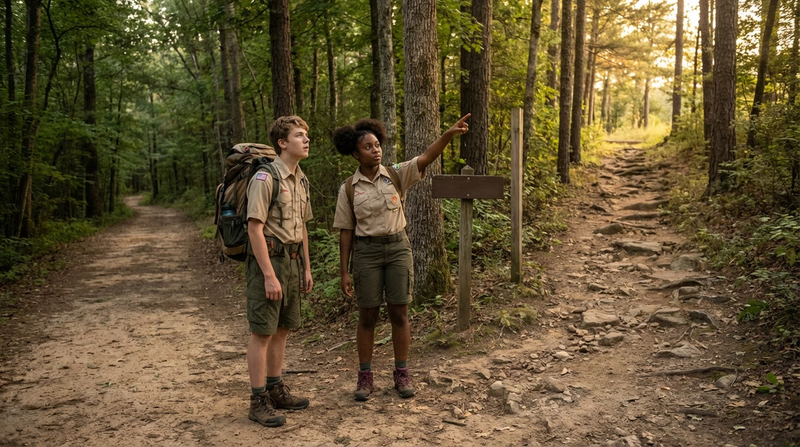
Once you have chosen someone, dig into their story. You are not just looking for someone who did something nice — you are looking for a moment where they faced a hard choice and chose the ethical path.
Use this framework to organize your research for Requirement 2b:
The Situation: What was happening? What problem or challenge did this person face?
The Options: What choices did they have? There should be at least two possible paths — the ethical one and the easier or more popular alternative.
The Decision: What did they choose, and why? What values guided their choice?
The Outcome: What happened as a result? Did their decision make things better? Were there consequences?
Teaching Tolerance — Profiles of Ethical Leaders Learning for Justice (formerly Teaching Tolerance) offers stories and resources about individuals who stood up for equity and inclusion. Link: Teaching Tolerance — Profiles of Ethical Leaders — https://www.learningforjustice.org/You have explored what ethical leadership means and found a real example of it in action. Keep that leader’s story in mind — you will need that same kind of courage as you work through the rest of this badge.
Req 3 — Ethical Decisions
In Requirement 2, you studied ethical leadership in someone else. Now it is time to turn the lens on yourself. This requirement asks you to reflect on your own ethical decisions — one you have already made and several you might face in the future.
This is one of the most personal requirements in the entire badge. There are no textbook answers here. Your counselor wants to hear your honest reflections about real moments in your life.
Part A: Your Past Ethical Decision
Think back to a time when you had to choose between doing the right thing and doing the easy thing. It does not have to be a dramatic, life-changing moment. Ethical decisions happen every day, and the small ones matter just as much as the big ones.
Here are some examples to jog your memory:
- A friend asked you to help them cheat on a test.
- You saw someone being teased and had to decide whether to speak up.
- You found something valuable that did not belong to you.
- A group of friends wanted to exclude someone, and you had to decide whether to go along.
- You made a mistake and had to decide whether to tell the truth about it.
Once you have your moment, walk through these questions:
What happened? Set the scene. Who was involved? What were the stakes?
What did you do? Describe your actual choice — not what you wish you had done, but what really happened.
How did it feel? Were you proud? Nervous? Relieved? Guilty? Ethical decisions almost always come with complicated feelings.
Would you do anything differently? This is the most important question. Looking back with fresh eyes, would you make the same choice? If not, what would you change and why?

Part B: Future Ethical Decisions
Now think forward. The requirement asks you to list three ethical decisions you might face in the future and explain what you would do in each case. Think about the different areas of your life:
At School: Ethical decisions at school might involve academic honesty, standing up to bullying, including someone who is left out, or navigating peer pressure.
At Home: At home, ethical decisions could involve being honest with your parents, treating siblings fairly, or taking responsibility for a mistake.
In the Workplace: As you get older and start working, you might face decisions about honesty with a boss, treating coworkers fairly, or refusing to cut corners on safety.
In Your Community: Community decisions might involve volunteering your time, standing up for someone at a public event, or choosing to help a neighbor in need.
Planning Your Three Examples
For each example, think through these questions- What is the situation? Describe it clearly.
- What are your options? Identify at least two choices.
- What would you do? Explain your decision.
- Why? Connect your choice to the Scout Oath or Scout Law.
Part C: Your Upstander Plan
The final part of this requirement ties everything together. Your counselor wants to hear your plan for being an upstander — someone who takes action when they see something wrong.
Being an upstander does not mean you have to be fearless. It means you are willing to act, even when it is uncomfortable. Here are some practical strategies:
Speak up directly. If you feel safe, calmly tell the person that their behavior is not okay. “Hey, that’s not cool” can be surprisingly effective.
Support the target. Sometimes the most powerful thing you can do is stand next to the person being hurt. Walk with them, sit with them, or simply say, “Are you okay?”
Report it. If the situation is too big for you to handle alone, tell a trusted adult — a teacher, parent, Scoutmaster, or counselor. This is not snitching; it is leadership.
Refuse to participate. Even if you cannot stop what is happening, you can choose not to join in. Do not laugh, do not share the post, do not pile on.
StopBullying.gov — How to Be an Upstander Government resource with practical advice on recognizing bullying and taking effective action. Link: StopBullying.gov — How to Be an Upstander — https://www.stopbullying.gov/You have looked backward at your own past, forward into your future, and mapped out how you will show up as an upstander. That kind of self-reflection is exactly what ethical leadership looks like.
Req 4 — Responding to Scenarios
This is where your understanding of ethical leadership and being an upstander gets put to the test. The requirement gives you three real-world scenarios — situations that could actually happen in your life. You will choose two of the three to discuss with your counselor.
Before you dive into the scenarios, make sure you can recite the Scout Oath and Scout Law from memory. Your counselor will ask you to repeat them, because these words are the foundation for how you should respond.
How to Approach These Scenarios
There are no “trick answers” here. Your counselor is not looking for a single perfect response. They want to see that you can think through a situation, consider how the people involved might feel, and describe actions you could take as a leader.
For each scenario you choose, think through this framework:
- What happened? Identify the specific harmful behavior.
- Who is affected? Think about all the people involved — the person being hurt, the person doing the hurting, and the bystanders.
- What are your options? List several things you could do.
- What would you do, and why? Pick the action that best aligns with the Scout Oath and Scout Law.
- What might happen next? Think about the possible outcomes of your action.
Scenario 1: Offensive Language at Camp
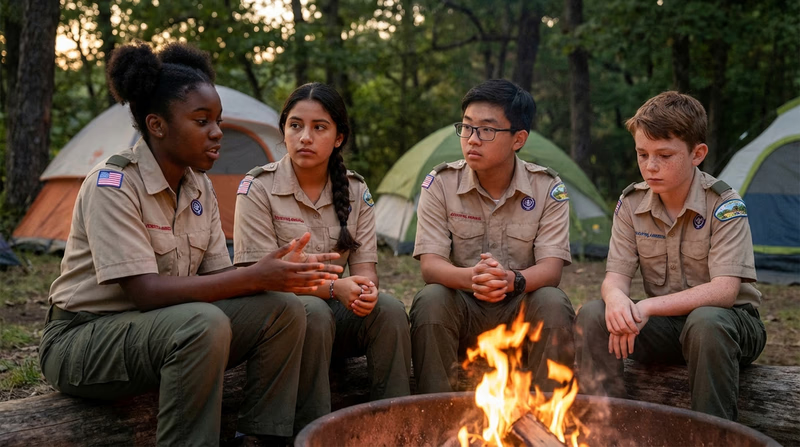
In this scenario, an accident (spilled food) triggers an angry, hurtful response — language that is offensive to people with disabilities. The bystanders laugh, which reinforces the behavior.
Think about what is really happening here: one person is embarrassed, another is angry, and the group is making things worse by laughing.
Things to consider:
- How does using disability-related language as an insult affect people with disabilities — even if none are present?
- What is the role of the bystanders who laughed? Are they part of the problem?
- What could you say in the moment? What could you do after the moment?
- Who at camp (adult leaders, camp staff) should be made aware?
Scenario 2: Cyberbullying and Impersonation
This scenario involves two layers of harm: insulting comments about someone’s identity and creating a fake social media account to impersonate them. This is cyberbullying, and in many places it is also illegal.
Things to consider:
- Your friend trusted you with this information. How do you honor that trust while also making sure they get help?
- What is the difference between handling this yourself and getting an adult involved?
- What steps can be taken to get the fake account removed?
- How can you support your friend emotionally while the situation is being resolved?
Scenario 3: Xenophobia and Exclusion
In this scenario, a new student is being targeted because of their national origin. The comments about their speech, clothes, and the phrase “go back home where you came from” are examples of xenophobia — fear or hostility toward people from other countries.
Things to consider:
- These are your friends saying these things. That makes it harder to speak up — but also more important.
- How could you make the new student feel welcome, both in the moment and going forward?
- What does the Scout Law say about how we treat people who are different from us?
- Is there a way to help your friends understand why their comments are harmful, without destroying the friendship?
Connecting to the Scout Oath and Scout Law
As you prepare your responses, look for specific connections to the Scout Oath and Scout Law. Here are some examples:
- Trustworthy: You can be trusted to do the right thing even when no one is watching.
- Helpful: You help others, especially those who are being targeted.
- Friendly: You are a friend to all people, not just those who are like you.
- Kind: You treat others with kindness and refuse to participate in cruelty.
- Brave: You have the courage to speak up when it would be easier to stay silent.
- Scout Oath — “To help other people at all times”: This is the core of every response to these scenarios.
You have now thought through real situations where leadership and inclusion matter. These are not hypothetical — they happen every day in schools, camps, and communities across the country.
Req 5 — Welcoming Environments
So far in this badge, you have studied big ideas — ethical leadership, decision-making, standing up for others. Now it is time to bring those ideas home to the place where you practice Scouting every week: your unit.
A welcoming environment does not happen by accident. It takes intentional effort from everyone, especially those in leadership positions. And as a Scout working on this badge, you are a leader — whether or not you have a patch on your sleeve.
Part A: Creating a Welcoming Unit
Think about what it feels like to walk into a room where you already know everyone and feel comfortable. Now imagine walking into that same room for the very first time, knowing nobody. That is what it feels like for a new Scout joining your unit.
A welcoming environment is one where every Scout — new or experienced, quiet or outgoing, confident or nervous — feels like they belong.
Here are some areas to think about:
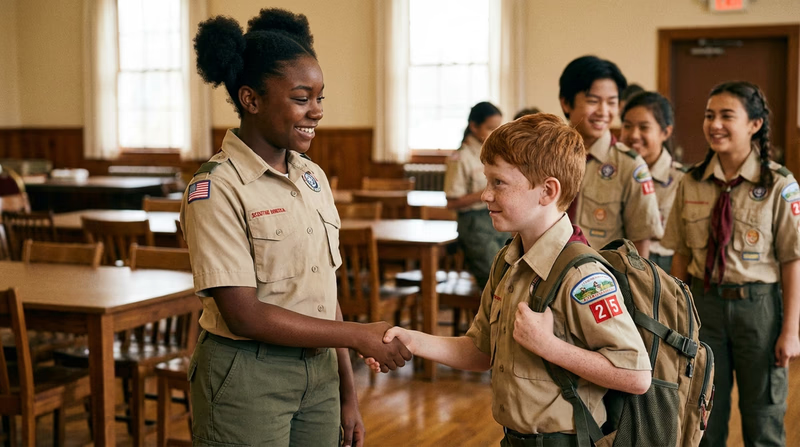
First impressions matter. How does your unit welcome new Scouts? Is there a buddy system? Does someone introduce them to the group, or do they stand alone in the corner while everyone else talks to their friends?
Language and tone. Are inside jokes explained to new members, or do they just feel left out? Do leaders and Scouts use respectful language? Is teasing kept in check?
Activities and participation. Are activities designed so that Scouts of all skill levels can participate? Does everyone get a chance to lead, or is it always the same few people?
Physical and emotional safety. Does every Scout feel physically safe at meetings and events? Do they feel emotionally safe sharing their ideas without being mocked?
Welcoming Environment Ideas
Actions you can take in your unit starting this week- Greet every Scout by name when they arrive at meetings.
- Pair new Scouts with an experienced buddy for their first month.
- Rotate leadership roles so everyone gets a chance to lead.
- Ask quieter Scouts for their input during planning — do not wait for them to volunteer.
- Explain inside jokes and traditions to new members.
- Shut down teasing immediately — even when it seems like “just joking.”
Part B: A Time You Included Someone
Think about a specific moment when you went out of your way to include another Scout. This does not have to be a grand gesture — small actions count. Maybe you:
- Sat next to someone who was alone at a campfire
- Invited a newer Scout to join your patrol’s activity
- Partnered with someone who did not have a buddy for an exercise
- Stood up for a Scout who was being left out
- Helped a Scout who was struggling with a skill instead of moving on without them
When you share this experience with your counselor, describe:
- The situation: What was happening? Why was this person at risk of being excluded?
- Your action: What specifically did you do?
- The result: How did the other Scout respond? How did it make you feel?
Part C: Ensuring Every Voice Is Heard
This part asks you to think systemically — not just about individual acts of kindness, but about how your unit makes decisions and plans activities. Do all Scouts have an equal voice, or do a few loud personalities dominate every conversation?
Active listening is one of the most powerful tools for inclusion. It means truly paying attention to what someone is saying — not just waiting for your turn to talk.
Here are strategies for making sure all voices are heard:
Go around the circle. During planning discussions, go around the room and give every Scout a chance to share their idea before the group decides. This prevents the loudest voices from drowning out quieter ones.
Small group discussions. Some Scouts are more comfortable sharing ideas in a small group of three or four than in front of the whole troop. Break into smaller groups first, then bring ideas back to the larger group.
Anonymous input. For sensitive topics, allow Scouts to write their ideas on cards without putting their names on them. This can surface perspectives that some Scouts would be too nervous to share out loud.
Follow up privately. After a meeting, check in with Scouts who did not speak up. “I noticed you didn’t say much during planning — is there anything you wanted to add?” This shows you value their perspective.
Scouting America — Diversity, Equity & Inclusion Scouting America's official resources on building welcoming and inclusive Scouting environments. Link: Scouting America — Diversity, Equity & Inclusion — https://www.scouting.org/about/diversity-equity-inclusion/Building a welcoming environment is not a one-time project — it is a daily practice. The ideas you develop here will serve you well beyond Scouting, in every team, classroom, and community you will ever be part of.
Req 6 — Connecting Across Differences
This is one of the most meaningful requirements in the entire badge. Instead of reading about diversity and inclusion, you are going to experience it — by having a real conversation with someone whose identity is different from yours.
Getting Started: Finding Your Partner
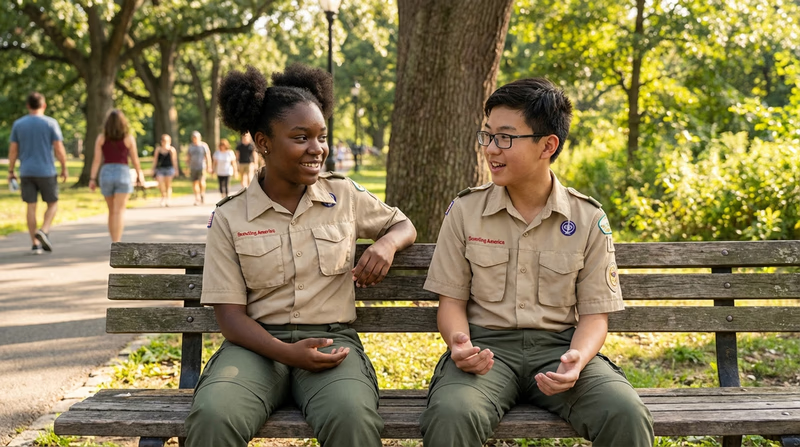
First, get your parent or guardian’s approval. Then, find another Scout or youth your own age who has an identity that is different from yours. “Identity” is broad on purpose — it could mean:
- A different racial or ethnic background
- A different religion or belief system
- A different family structure
- A different cultural heritage or nationality
- A different physical ability
- A different socioeconomic background
The goal is not to find the most different person you can — it is to have a genuine conversation with someone whose experience of the world is shaped by something different from what shapes yours.
Part A: What Makes Your Identity Special
Start by sharing something about the part of your identity that makes you different from each other. This is not about explaining your entire life story — it is about sharing one piece of who you are and why it matters to you.
Some guiding questions:
- What is this part of your identity? How would you describe it?
- Why is it important or meaningful to you?
- How does it shape your daily life, your values, or your traditions?
- Is there something about it that you wish more people understood?
Listen carefully. Ask follow-up questions. The point is not to compare or debate — it is to understand.
Part B: Choose One Option
You and your partner will choose one of the two options below to discuss together.
Option 1: A Time You Felt Excluded
This option asks you both to share a personal experience of exclusion. Being vulnerable about a time you were left out takes courage, and hearing the other person’s story builds empathy.
Walk through these questions together:
- What was the situation? Describe what happened.
- How did it make you feel? Be honest — exclusion can be painful, confusing, or frustrating.
- What did you do? How did you handle the situation at the time?
- Did anyone stand up for you? If so, what did they do? If not, what do you wish someone had done?
- What did you learn? How did the experience shape how you treat others?
- Would you do anything differently today? With what you know now, how might you respond?
Option 2: The New School Scenario
This option uses an imaginary situation to explore feelings of exclusion. Even though it is made up, the feelings are very real — most people have experienced something similar at some point.
Picture this: You arrive at a new school. You do not know anyone. People dress differently than you do. At lunch, you try to sit with two different groups, but both tell you the seat is taken. You eat alone.
Discuss together:
- How would that make you feel? Put yourself in that situation — really imagine it.
- What could the students have done? What actions would have changed the outcome?
- If that happened at your school, what would you do? If you saw a new student eating alone, how would you respond?
Part C: Reflecting with Your Counselor
After your conversation, you will discuss what you learned with your merit badge counselor. Think about:
- What surprised you about the other person’s perspective?
- What did you have in common that you did not expect?
- How did the conversation change the way you think about your own identity or theirs?
- What will you do differently because of this experience?
Having a real, honest conversation with someone whose experience is different from yours is one of the most valuable things you can do. It builds empathy, breaks down assumptions, and reminds you that every person has a story worth hearing.
Req 7 — Community Impact Interview
In Requirement 2, you studied a leader who made an ethical decision. Now you are going deeper — finding someone whose life’s work has been promoting diversity, equity, and inclusion, and learning from them directly.
Finding Your Interview Subject
The best choice is someone in your own community — a person you can actually sit down with and talk to. Hearing someone’s story in their own words is far more powerful than reading about them online.
Think about people in these categories:
In your community:
- A teacher who started a diversity program at school
- A religious leader who works to bridge differences between faith communities
- A community organizer who advocates for underrepresented groups
- A local business owner who has championed inclusive hiring practices
- A neighborhood volunteer who works with immigrant families, seniors, or people with disabilities
In Scouting:
- A Scout leader who has worked to make Scouting more welcoming to all families
- A council or district volunteer who leads diversity and inclusion initiatives
- A Scout who organized a service project focused on equity
Historical figure (alternative): If you genuinely feel that no one in your community fits this description, you may research a historical figure instead. Some examples to consider: Dolores Huerta, Fred Korematsu, Ida B. Wells, Roberto Clemente, or Sylvia Rivera.
Preparing for the Interview
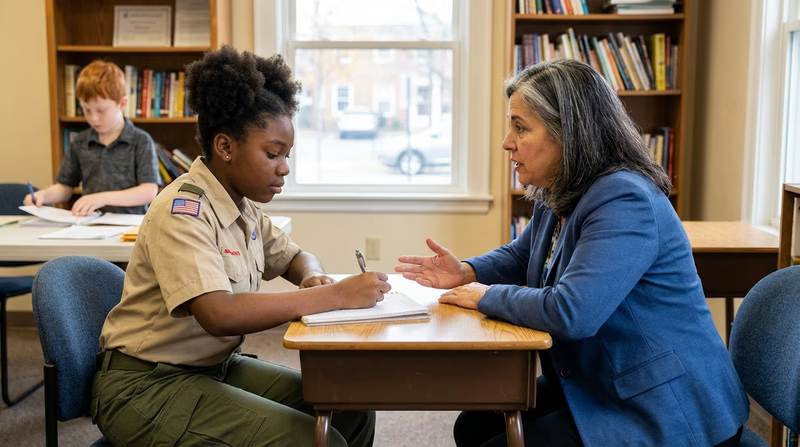
A good interview does not happen by accident. Prepare your questions in advance so you can make the most of the person’s time and learn as much as possible.
Interview Preparation
Steps to take before you sit down- Reach out to the person and explain why you want to talk to them (for the Citizenship in Society merit badge).
- Ask when and where they would like to meet (or if a phone/video call works better).
- Research them briefly — look up their organization, their work, or their background so you can ask informed questions.
- Prepare 8–10 questions in advance (more than you think you will need).
- Bring a notebook and pen, or ask if you may record the conversation.
What to Ask
The requirement specifically asks you to discover three things: what inspired them, what challenges they faced, and what contributed to their success. Build your questions around those themes.
Inspiration:
- What inspired you to get involved in this work?
- Was there a specific moment or experience that motivated you?
- Who were your role models growing up?
Challenges:
- What is the hardest part of this work?
- Have you ever faced resistance or pushback? How did you handle it?
- Was there a time you wanted to give up? What kept you going?
Success:
- What do you consider your biggest achievement in promoting inclusion?
- What skills or qualities do you think are most important for this kind of work?
- What advice would you give a young person who wants to make a difference?
Applying What You Learned
After the interview, Requirement 7b asks you to discuss what you learned and how you can apply it in your own life. Think about:
- What surprised you about this person’s story?
- What qualities do they have that you admire and want to develop?
- What specific actions can you take — this week, this month, this year — to promote inclusion in your own circles?
- How does their story connect to the Scout Oath and Scout Law?
Learning from someone who has dedicated their time to promoting inclusion is one of the most impactful parts of this badge. Their story can inspire your own.
Req 8 — A Positive Turning Point
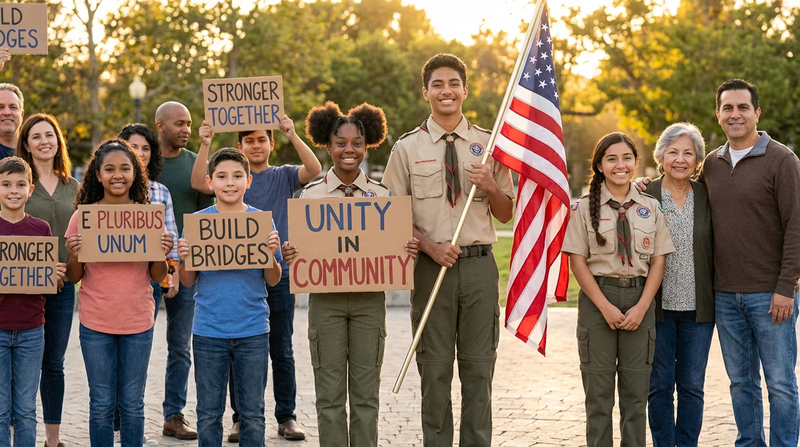
This requirement asks you to look at history through a specific lens: find a moment when society’s attitude toward a group of people changed for the better. Not all progress happens overnight — sometimes it takes years, decades, or even centuries — but there are defining events that mark turning points.
What to Look For
You are searching for an event that meets two criteria:
- It changed how society viewed a group of people. Public perception shifted.
- It made that group feel more welcome. The change was positive and meaningful.
This could be a law, a court ruling, a social movement, a cultural moment, a speech, or even a single act of courage that captured the nation’s attention.
Categories of Events to Explore
Here are some categories to help you brainstorm. This is not an exhaustive list — it is a starting point for your research with your parent or guardian.
Civil Rights and Racial Equality
- The desegregation of public schools following Brown v. Board of Education (1954)
- The passage of the Civil Rights Act (1964) and Voting Rights Act (1965)
- The election of the first Black president of the United States (2008)
Disability Rights
- The passage of the Americans with Disabilities Act (1990), which guaranteed equal access to jobs, schools, and public spaces for people with disabilities
- The Special Olympics movement, which changed public perception of people with intellectual disabilities
Women’s Rights
- The 19th Amendment granting women the right to vote (1920)
- Title IX (1972), which opened the door for women and girls in school sports and education programs
Immigration and Refugee Inclusion
- The arrival of refugee families from conflict zones and the community organizations that helped them build new lives
- Local events where communities came together to welcome newcomers
Indigenous Peoples’ Rights
- Formal apologies and recognition of the historical treatment of Native Americans
- The establishment of the National Museum of the American Indian (2004)
Cultural Moments
- Jackie Robinson breaking the color barrier in Major League Baseball (1947)
- The publication of books, films, or art that changed how people understood a marginalized group
How to Research Your Event
Work with your parent or guardian to choose an event and learn more about it. Here is a framework for your research:
Research Framework
Use these questions to guide your study- What was the event? Describe it clearly — what happened, when, and where.
- What group of people was affected? How were they viewed before this event?
- What changed? How did society’s attitude shift as a result?
- Who were the key people involved? What motivated them?
- What resistance or opposition did they face?
- What is the lasting impact? How does this event still affect life today?
What to Share with Your Counselor
When you discuss your event with your counselor, go beyond just the facts. Share what you learned — what the event taught you about citizenship, courage, and the power of change.
Think about:
- Why does this event matter today, not just when it happened?
- How does the story connect to the key terms you learned in Requirement 1 (equity, inclusion, upstander, etc.)?
- Did the event inspire you personally? How?
- What does the event teach you about the kind of citizen you want to be?
History is full of moments when ordinary people pushed society to be better. By studying one of those moments, you join a long tradition of citizens who believe in progress.
Req 9 — Leadership Beyond Scouting
Everything you have learned so far in this badge — the terms, the ethical decisions, the scenarios, the conversations — leads to this question: Where will you lead?
This requirement asks you to look beyond your Scout uniform and into the rest of your life. School, home, sports, clubs, work, your neighborhood — these are all places where you can practice the same leadership skills you have been developing throughout this badge.
The Five Leadership Skills
The requirement lists five specific skills. Let’s look at each one and what it looks like in practice outside of Scouting.
Making Others Feel Included
Inclusion is an action, not a feeling. It means deliberately reaching out to people who might otherwise be left on the outside.
At school: Invite someone who is eating alone to sit with you. Include a classmate who is new or quiet in a group project. Notice who is missing from activities and find out why.
On your sports team or club: Make sure new members are introduced to everyone. Rotate partners or groups so people are not stuck in the same cliques.
At home: Include younger siblings in activities when they want to participate. Make room at the table for guests.
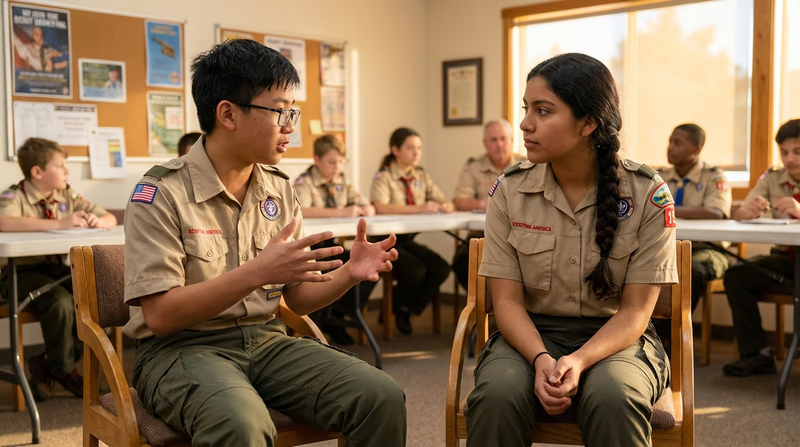
Practicing Active Listening
Active listening means giving someone your full attention when they speak — not just hearing words, but understanding what the person is really saying.
What active listening looks like:
- Put your phone down and make eye contact
- Let the person finish their thought before you respond
- Ask follow-up questions: “What happened next?” or “How did that make you feel?”
- Repeat back what you heard to make sure you understood: “So what you’re saying is…”
- Resist the urge to jump in with your own story or advice
Creating a Comfortable Environment for Sharing
This is about psychological safety — making it clear that people’s ideas will be respected, not ridiculed. When people feel safe sharing, you get better ideas, stronger teams, and deeper friendships.
Practical actions:
- When someone shares an idea, respond with curiosity, not judgment: “That’s interesting — tell me more” instead of “That won’t work.”
- If someone’s idea gets shut down unfairly, bring it back: “Wait, I want to hear more about what Alex was saying.”
- Set ground rules in group settings: no interrupting, no laughing at ideas, every suggestion gets heard.
Helping Others Feel Valued
People need to know that their contributions matter. When someone takes a risk and shares a thought, how you respond determines whether they will ever speak up again.
Ways to show value:
- Say thank you. “Thanks for bringing that up — I hadn’t thought of that.”
- Give credit. When an idea works, make sure the person who suggested it gets recognized.
- Follow through. If someone gives you a suggestion, act on it — or explain why you went a different direction.
Standing Up for Others
You have explored being an upstander throughout this badge. Now, identify specific places in your life where you can commit to standing up — and what that might look like.
At school: Speak up when you hear someone being teased, excluded, or talked about behind their back.
Online: Report cyberbullying, refuse to share hurtful posts, and support people who are being targeted.
At work: If you see a coworker being treated unfairly, say something to a supervisor or support the person directly.
Documenting Your Three Areas
The requirement asks you to choose three or more areas of your life outside Scouting where you can strengthen your leadership. For each area, write down:
- The setting: Where is it? (school, home, team, job, community)
- The skills you will focus on: Which of the five skills above apply most?
- Specific actions you will take: What will you actually do differently?
- How you will measure progress: How will you know if you are making a difference?
Leadership is not a title — it is a daily practice. The five skills in this requirement are tools you can use in every part of your life, starting today.
Req 10 — Stereotypes & Individuality
Stereotypes are everywhere — in movies, in jokes, in the assumptions people make about each other before they even say hello. This requirement asks you to understand how stereotypes work, why they are harmful, and what you can do to push back against them.
What Is a Stereotype?
A stereotype is an oversimplified belief about an entire group of people. Stereotypes reduce complex, unique individuals to a single label based on their race, gender, religion, nationality, age, or any other group identity.
Some examples:
- “All teenagers are lazy.”
- “Boys don’t cry.”
- “People who wear glasses are nerdy.”
- Assumptions about someone’s abilities based on their race or where they are from.
Notice that stereotypes can seem “positive” on the surface (“All Asians are good at math”) but are still harmful because they erase individuality. A person is never just their group — they are a full, complex human being with their own strengths, struggles, and story.
How Stereotypes Lead to Prejudice and Discrimination
Stereotypes do not stay harmless. They follow a chain:
Stereotype → Prejudice → Discrimination
- Stereotype (belief): “That group of people is like this.” A generalization that replaces individual knowledge.
- Prejudice (feeling): The stereotype shapes how you feel about someone before you even know them. You might feel distrust, fear, or superiority without any real reason.
- Discrimination (action): Prejudice turns into behavior — treating someone unfairly because of the group they belong to. Not hiring someone, excluding them from a group, or targeting them with harassment.
This chain can be subtle. You might not even realize you are doing it. That is why awareness is the first step to breaking the cycle.
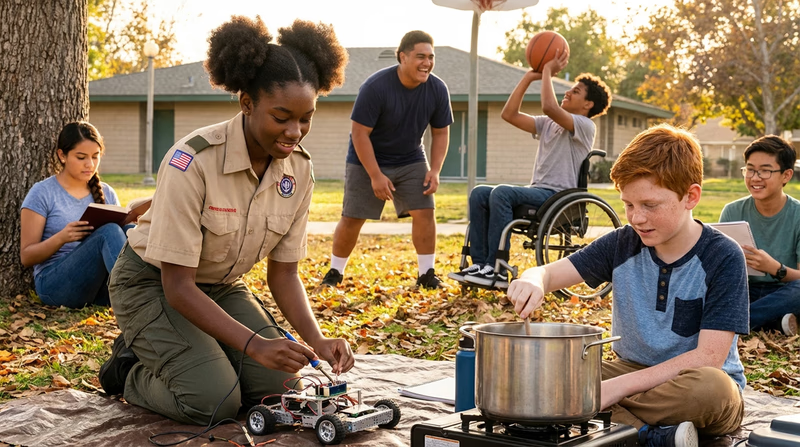
Why Stereotypes Are Harmful
Even when people do not intend to be hurtful, stereotypes cause real damage:
They limit people. When someone is stereotyped, they may feel pressured to conform to the expectation — or they may give up trying to prove it wrong. Psychologists call this stereotype threat: when people are aware of a negative stereotype about their group, they may perform worse because of the anxiety it creates.
They erase individuality. Every person is more than their group identity. Stereotypes prevent you from seeing the real, complicated, interesting person standing in front of you.
They justify unfair treatment. When you believe a stereotype, it becomes easier to justify treating people differently — denying opportunities, excluding them, or ignoring their needs.
They create division. Stereotypes build walls between people who might otherwise be allies, friends, or teammates.
Challenging Assumptions
Your counselor will want to hear your ideas for challenging stereotypes and celebrating individuality. Here are some strategies to consider:
Get curious, not judgmental. When you catch yourself making an assumption about someone, pause and ask yourself: “Is this based on who they actually are, or on a stereotype?” Then get to know the real person.
Diversify your inputs. Read books, watch movies, and follow social media accounts from people with different backgrounds and experiences. The more perspectives you are exposed to, the harder it is for stereotypes to survive.
Speak up. When you hear a stereotype used as a joke or a casual comment, say something. You do not have to lecture — a simple “That’s not really fair” or “People are more complicated than that” makes a difference.
Celebrate what makes people unique. Instead of lumping people into categories, look for what makes each person distinctive. Ask about their hobbies, their goals, their story.
Celebrating Individuality
Challenging stereotypes is only half the equation. The other half is actively celebrating what makes each person unique. A few ways to do that:
- Ask questions. “What are you passionate about?” is a much better conversation starter than assumptions.
- Highlight diverse strengths. In group settings, point out what each person brings to the table — their unique skills, perspectives, and ideas.
- Share your own story. When you open up about what makes you unique — even the parts that do not fit neatly into expectations — you give others permission to do the same.
Stereotypes are powerful, but they are not permanent. Every time you choose to see a person instead of a label, you weaken the stereotype’s grip — on yourself and on the world around you.
Req 11 — Your DEI Action Plan
This is the capstone requirement — the one that pulls everything together. You have studied the terms, reflected on your own decisions, responded to scenarios, connected across differences, and learned from leaders in your community. Now, build a plan for how you will lead.
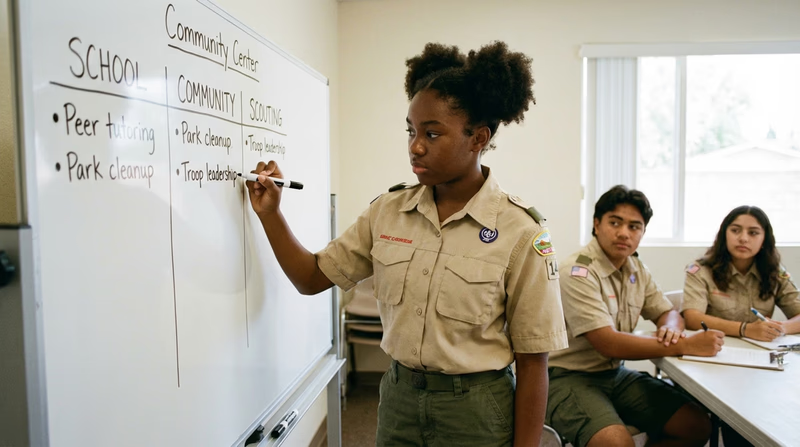
Part A: Your Inclusion Action Plan
Think about the specific places in your life — school, work, community, social settings — and describe what you will do to support people with different identities. This is not about vague intentions; it is about concrete actions.
For each setting, consider:
- Who might feel excluded? Think about who is currently on the outside looking in.
- What barriers exist? Are there language barriers, social cliques, accessibility issues, or cultural misunderstandings?
- What will you do? Name specific actions — not “I’ll be nice to everyone” but “I’ll introduce myself to new students in the first week of school” or “I’ll suggest our team use a round-robin format for sharing ideas.”
Action Plan Starter
Pick at least one action for each area of your life- School: Sit with someone new at lunch once a week. Speak up when you hear exclusive language.
- Work/Volunteering: Suggest team meetings include time for everyone to share their perspective.
- Community: Attend a cultural event or festival that celebrates a community different from your own.
- Social settings: When planning group activities, ask “Who are we missing?” before finalizing plans.
- Online: Share content that celebrates diverse voices and accomplishments.
Part B: Why Diverse Perspectives Make Things Better
This part asks you to explain the practical value of including diverse thoughts and opinions. It is not just about fairness — diversity of thought actually leads to better outcomes.
More positive interactions: When everyone in a group feels heard and respected, people are more willing to collaborate, take risks, and support each other. Trust goes up. Conflict goes down. The group becomes stronger.
Better decisions through different opinions: When everyone in a room thinks the same way, you only get one perspective. When people with different backgrounds, experiences, and viewpoints contribute, the group sees problems from multiple angles and finds solutions that a homogeneous group would miss.
Part C: The Cost of Limiting Diverse Input
Your counselor will ask for three examples of how limiting diverse input can cause harm. Think about situations where only one perspective was considered and things went wrong.
Here are some areas to draw from:
Product design failures: When products are designed without diverse input, they often fail entire groups of people. Early automotive crash test dummies were based only on average male bodies, which meant safety features did not adequately protect women and children. This oversight caused preventable injuries for decades.
Groupthink in decision-making: When everyone in a leadership group thinks the same way, they often make overconfident decisions without considering risks. This phenomenon — called “groupthink” — has been blamed for everything from corporate scandals to failed government policies.
Community exclusion: When community planning does not include input from all residents — including people with disabilities, non-English speakers, and underrepresented groups — the resulting policies and spaces may not serve everyone’s needs.
Part D: How Diversity Drives Innovation and Success
Now flip the script — give three examples of how including diverse opinions leads to innovation and success.
Team problem-solving: Teams that include members with different backgrounds and thinking styles consistently outperform homogeneous teams on complex problems. Each person brings a different lens, catching blind spots that others miss.
Creative breakthroughs: Many of the world’s greatest innovations came from people who brought an outsider’s perspective to a field. Fresh eyes see possibilities that insiders overlook.
Community strength: Communities that welcome and integrate people from different backgrounds tend to be more resilient, more creative, and more economically vibrant. Diversity of people brings diversity of skills, ideas, and entrepreneurial energy.
Scouting America — Citizenship in Society Resources Official Scouting America resources for the Citizenship in Society merit badge, including workbook and counselor guides. Link: Scouting America — Citizenship in Society Resources — https://www.scouting.org/merit-badges/citizenship-in-society/You have reached the final requirement. By building your personal action plan and understanding why diverse perspectives matter, you have equipped yourself to be a leader who makes everyone feel welcome — in Scouting and far beyond it.
Extended Learning
A. Introduction
Congratulations — you have completed the Citizenship in Society merit badge. That is a serious accomplishment. You have explored big ideas, reflected on your own experiences, had honest conversations, and built a personal plan for inclusive leadership. But this badge is not the finish line — it is the starting point. The skills and awareness you have developed will serve you for the rest of your life. Here are some ways to keep growing.
B. Deep Dive: Understanding Unconscious Bias
Throughout this badge, you learned about stereotypes and prejudice. But some of the most powerful biases are the ones you do not even know you have. Psychologists call these unconscious biases (also called “implicit biases”) — automatic mental shortcuts your brain makes based on patterns it has absorbed from the world around you.
Everyone has unconscious biases. They are not a sign that you are a bad person — they are a sign that you are a human being with a brain that tries to categorize information quickly. The problem is that these shortcuts can lead you to make unfair assumptions about people without realizing it.
Here are some common types of unconscious bias:
- Affinity bias: You naturally gravitate toward people who are similar to you — same background, same interests, same appearance. This can cause you to overlook people who are different but equally valuable.
- Confirmation bias: Once you believe something about a person or group, you tend to notice evidence that supports your belief and ignore evidence that contradicts it.
- The halo effect: If you admire one thing about a person (they are athletic, for example), you may assume they are great at everything else too.
- Attribution bias: When someone from your group makes a mistake, you attribute it to circumstances. When someone from a different group makes the same mistake, you attribute it to their character.
The first step to overcoming unconscious bias is simply becoming aware of it. When you catch yourself making a quick judgment about someone, pause and ask: “Is this based on who this person actually is, or on a pattern my brain is running automatically?”
Harvard’s Project Implicit offers free online tests that can help you explore your own unconscious biases. Taking one of these tests is a powerful experience — and it is available to anyone with internet access.
C. Deep Dive: The Power of Allyship
Being an upstander in a single moment is important — but allyship is the long game. An ally is someone who consistently uses their position, privilege, and voice to support people from marginalized or underrepresented groups, not just in moments of crisis, but in everyday life.
Allyship is not a label you give yourself; it is something that others recognize in you based on your sustained actions. Here is what effective allyship looks like in practice:
- Educate yourself. Do not expect people from marginalized groups to teach you everything. Read books, watch documentaries, and seek out firsthand accounts. The work of learning is yours to do.
- Listen more than you speak. When people share their experiences with discrimination or exclusion, your job is to listen, believe them, and ask how you can help — not to explain, compare, or minimize.
- Use your voice. If you are in a position where your voice is heard more easily, use it to amplify perspectives that are being overlooked. In a meeting, say “I’d like to hear what Priya thinks about this.” In a conversation, say “That’s not okay” when you hear something harmful.
- Accept feedback gracefully. You will make mistakes. When someone tells you that something you said or did was hurtful, do not get defensive. Thank them, reflect, and do better next time.
- Show up consistently. Allyship is not a one-time act or a social media post. It is a pattern of behavior over weeks, months, and years.
D. Deep Dive: Restorative Justice and Conflict Resolution
When harm happens — whether it is bullying, exclusion, or discrimination — punishment is one response. But there is another approach that many schools, communities, and even courts are using: restorative justice.
Restorative justice focuses on repairing the harm that was done rather than simply punishing the person who caused it. It brings together the person who was harmed, the person who caused the harm, and the community affected, and asks three questions:
- What happened? Everyone shares their perspective.
- Who was affected, and how? The impact is made visible and real.
- What needs to happen to make things right? The group works together on a plan for repair.
This approach does not mean that harmful behavior is excused. It means that the response focuses on healing, accountability, and preventing the harm from happening again — rather than on punishment alone.
Many schools now use restorative circles — structured conversations where students sit in a circle, pass a talking piece, and share openly. These circles build trust, strengthen relationships, and give students tools to resolve conflicts without escalation.
If your school or Scouting unit does not yet use restorative practices, you could be the one to suggest it. Talk to a teacher, school counselor, or Scoutmaster about how restorative circles might help build a stronger community.
E. Real-World Experiences
Take your learning beyond the book and into the world. These experiences will deepen your understanding and connect you with others who share your commitment to inclusion.
Visit a Cultural Heritage Museum
Attend a Community Cultural Festival
Volunteer with a Refugee or Immigrant Services Organization
Participate in a Dialogue or Discussion Group
Organize a Service Project Focused on Inclusion
F. Organizations
These organizations work to promote diversity, equity, and inclusion in communities across the country. Connecting with them can provide resources, volunteer opportunities, and ongoing learning.
Provides free resources to educators and families for building inclusive school communities and teaching tolerance. Formerly known as Teaching Tolerance.
Organization: Learning for Justice — https://www.learningforjustice.org/
Works to fight hate and bigotry of all kinds through education, advocacy, and community partnerships.
Organization: Anti-Defamation League (ADL) — https://www.adl.org/
Advocates for economic empowerment, educational opportunities, and civil rights for underserved communities.
Organization: National Urban League — https://nul.org/
Provides resources, toolkits, and community-building programs to prevent bullying and promote kindness in schools.
Organization: PACER's National Bullying Prevention Center — https://www.pacer.org/bullying/
Connects Americans to the work of the United Nations, promoting human rights, sustainability, and global citizenship.
Organization: United Nations Association — USA — https://unausa.org/
The world’s largest organization dedicated to volunteer service, connecting people with causes that matter in their communities.
Organization: Points of Light — https://www.pointsoflight.org/