Req 5 — Welcoming Environments
So far in this badge, you have studied big ideas — ethical leadership, decision-making, standing up for others. Now it is time to bring those ideas home to the place where you practice Scouting every week: your unit.
A welcoming environment does not happen by accident. It takes intentional effort from everyone, especially those in leadership positions. And as a Scout working on this badge, you are a leader — whether or not you have a patch on your sleeve.
Part A: Creating a Welcoming Unit
Think about what it feels like to walk into a room where you already know everyone and feel comfortable. Now imagine walking into that same room for the very first time, knowing nobody. That is what it feels like for a new Scout joining your unit.
A welcoming environment is one where every Scout — new or experienced, quiet or outgoing, confident or nervous — feels like they belong.
Here are some areas to think about:
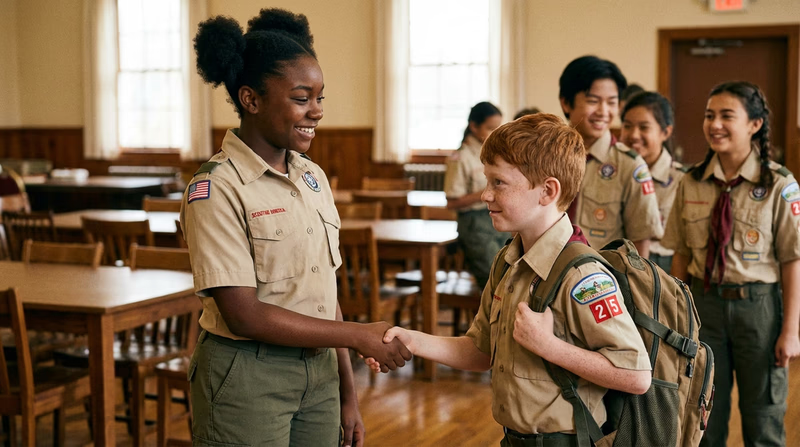
First impressions matter. How does your unit welcome new Scouts? Is there a buddy system? Does someone introduce them to the group, or do they stand alone in the corner while everyone else talks to their friends?
Language and tone. Are inside jokes explained to new members, or do they just feel left out? Do leaders and Scouts use respectful language? Is teasing kept in check?
Activities and participation. Are activities designed so that Scouts of all skill levels can participate? Does everyone get a chance to lead, or is it always the same few people?
Physical and emotional safety. Does every Scout feel physically safe at meetings and events? Do they feel emotionally safe sharing their ideas without being mocked?
Welcoming Environment Ideas
Actions you can take in your unit starting this week
- Greet every Scout by name when they arrive at meetings.
- Pair new Scouts with an experienced buddy for their first month.
- Rotate leadership roles so everyone gets a chance to lead.
- Ask quieter Scouts for their input during planning — do not wait for them to volunteer.
- Explain inside jokes and traditions to new members.
- Shut down teasing immediately — even when it seems like “just joking.”
Part B: A Time You Included Someone
Think about a specific moment when you went out of your way to include another Scout. This does not have to be a grand gesture — small actions count. Maybe you:
- Sat next to someone who was alone at a campfire
- Invited a newer Scout to join your patrol’s activity
- Partnered with someone who did not have a buddy for an exercise
- Stood up for a Scout who was being left out
- Helped a Scout who was struggling with a skill instead of moving on without them
When you share this experience with your counselor, describe:
- The situation: What was happening? Why was this person at risk of being excluded?
- Your action: What specifically did you do?
- The result: How did the other Scout respond? How did it make you feel?
Part C: Ensuring Every Voice Is Heard
This part asks you to think systemically — not just about individual acts of kindness, but about how your unit makes decisions and plans activities. Do all Scouts have an equal voice, or do a few loud personalities dominate every conversation?
Active listening is one of the most powerful tools for inclusion. It means truly paying attention to what someone is saying — not just waiting for your turn to talk.
Here are strategies for making sure all voices are heard:
Go around the circle. During planning discussions, go around the room and give every Scout a chance to share their idea before the group decides. This prevents the loudest voices from drowning out quieter ones.
Small group discussions. Some Scouts are more comfortable sharing ideas in a small group of three or four than in front of the whole troop. Break into smaller groups first, then bring ideas back to the larger group.
Anonymous input. For sensitive topics, allow Scouts to write their ideas on cards without putting their names on them. This can surface perspectives that some Scouts would be too nervous to share out loud.
Follow up privately. After a meeting, check in with Scouts who did not speak up. “I noticed you didn’t say much during planning — is there anything you wanted to add?” This shows you value their perspective.
Scouting America — Diversity, Equity & Inclusion Scouting America's official resources on building welcoming and inclusive Scouting environments.Building a welcoming environment is not a one-time project — it is a daily practice. The ideas you develop here will serve you well beyond Scouting, in every team, classroom, and community you will ever be part of.