Req 6 — Connecting Across Differences
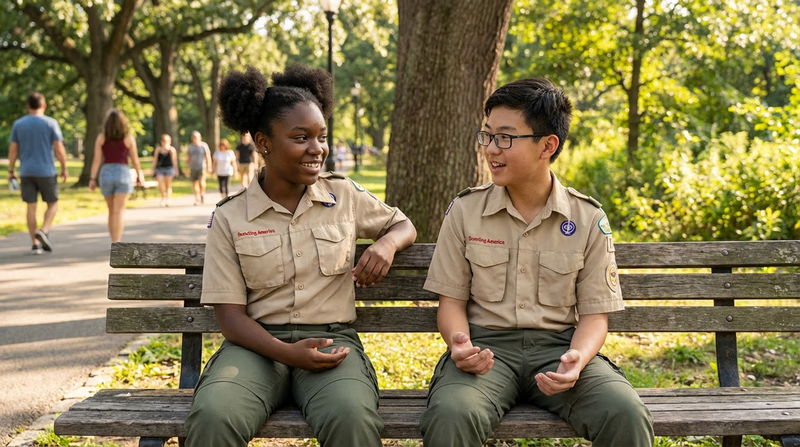
This is one of the most meaningful requirements in the entire badge. Instead of reading about diversity and inclusion, you are going to experience it — by having a real conversation with someone whose identity is different from yours.
Getting Started: Finding Your Partner
First, get your parent or guardian’s approval. Then, find another Scout or youth your own age who has an identity that is different from yours. “Identity” is broad on purpose — it could mean:
- A different racial or ethnic background
- A different religion or belief system
- A different family structure
- A different cultural heritage or nationality
- A different physical ability
- A different socioeconomic background
The goal is not to find the most different person you can — it is to have a genuine conversation with someone whose experience of the world is shaped by something different from what shapes yours.
Part A: What Makes Your Identity Special
Start by sharing something about the part of your identity that makes you different from each other. This is not about explaining your entire life story — it is about sharing one piece of who you are and why it matters to you.
Some guiding questions:
- What is this part of your identity? How would you describe it?
- Why is it important or meaningful to you?
- How does it shape your daily life, your values, or your traditions?
- Is there something about it that you wish more people understood?
Listen carefully. Ask follow-up questions. The point is not to compare or debate — it is to understand.
Part B: Choose One Option
You and your partner will choose one of the two options below to discuss together.
Option 1: A Time You Felt Excluded
This option asks you both to share a personal experience of exclusion. Being vulnerable about a time you were left out takes courage, and hearing the other person’s story builds empathy.
Walk through these questions together:
- What was the situation? Describe what happened.
- How did it make you feel? Be honest — exclusion can be painful, confusing, or frustrating.
- What did you do? How did you handle the situation at the time?
- Did anyone stand up for you? If so, what did they do? If not, what do you wish someone had done?
- What did you learn? How did the experience shape how you treat others?
- Would you do anything differently today? With what you know now, how might you respond?
Option 2: The New School Scenario
This option uses an imaginary situation to explore feelings of exclusion. Even though it is made up, the feelings are very real — most people have experienced something similar at some point.
Picture this: You arrive at a new school. You do not know anyone. People dress differently than you do. At lunch, you try to sit with two different groups, but both tell you the seat is taken. You eat alone.
Discuss together:
- How would that make you feel? Put yourself in that situation — really imagine it.
- What could the students have done? What actions would have changed the outcome?
- If that happened at your school, what would you do? If you saw a new student eating alone, how would you respond?
Part C: Reflecting with Your Counselor
After your conversation, you will discuss what you learned with your merit badge counselor. Think about:
- What surprised you about the other person’s perspective?
- What did you have in common that you did not expect?
- How did the conversation change the way you think about your own identity or theirs?
- What will you do differently because of this experience?
Having a real, honest conversation with someone whose experience is different from yours is one of the most valuable things you can do. It builds empathy, breaks down assumptions, and reminds you that every person has a story worth hearing.