Req 7 — Community Impact Interview
In Requirement 2, you studied a leader who made an ethical decision. Now you are going deeper — finding someone whose life’s work has been promoting diversity, equity, and inclusion, and learning from them directly.
Finding Your Interview Subject
The best choice is someone in your own community — a person you can actually sit down with and talk to. Hearing someone’s story in their own words is far more powerful than reading about them online.
Think about people in these categories:
In your community:
- A teacher who started a diversity program at school
- A religious leader who works to bridge differences between faith communities
- A community organizer who advocates for underrepresented groups
- A local business owner who has championed inclusive hiring practices
- A neighborhood volunteer who works with immigrant families, seniors, or people with disabilities
In Scouting:
- A Scout leader who has worked to make Scouting more welcoming to all families
- A council or district volunteer who leads diversity and inclusion initiatives
- A Scout who organized a service project focused on equity
Historical figure (alternative): If you genuinely feel that no one in your community fits this description, you may research a historical figure instead. Some examples to consider: Dolores Huerta, Fred Korematsu, Ida B. Wells, Roberto Clemente, or Sylvia Rivera.
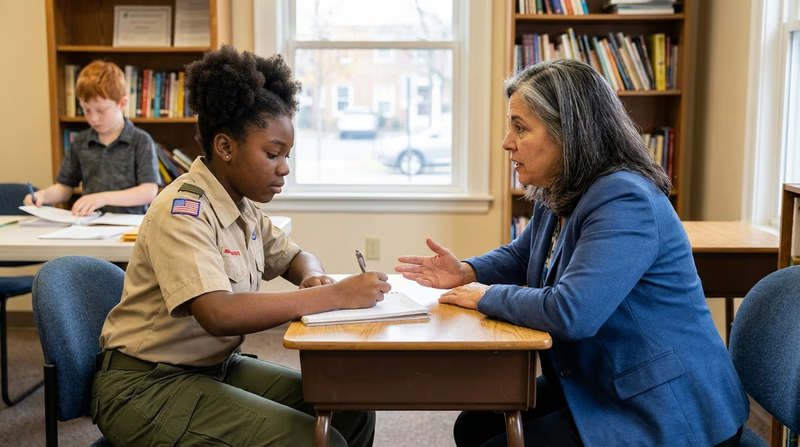
Preparing for the Interview
A good interview does not happen by accident. Prepare your questions in advance so you can make the most of the person’s time and learn as much as possible.
Interview Preparation
Steps to take before you sit down
- Reach out to the person and explain why you want to talk to them (for the Citizenship in Society merit badge).
- Ask when and where they would like to meet (or if a phone/video call works better).
- Research them briefly — look up their organization, their work, or their background so you can ask informed questions.
- Prepare 8–10 questions in advance (more than you think you will need).
- Bring a notebook and pen, or ask if you may record the conversation.
What to Ask
The requirement specifically asks you to discover three things: what inspired them, what challenges they faced, and what contributed to their success. Build your questions around those themes.
Inspiration:
- What inspired you to get involved in this work?
- Was there a specific moment or experience that motivated you?
- Who were your role models growing up?
Challenges:
- What is the hardest part of this work?
- Have you ever faced resistance or pushback? How did you handle it?
- Was there a time you wanted to give up? What kept you going?
Success:
- What do you consider your biggest achievement in promoting inclusion?
- What skills or qualities do you think are most important for this kind of work?
- What advice would you give a young person who wants to make a difference?
Applying What You Learned
After the interview, Requirement 7b asks you to discuss what you learned and how you can apply it in your own life. Think about:
- What surprised you about this person’s story?
- What qualities do they have that you admire and want to develop?
- What specific actions can you take — this week, this month, this year — to promote inclusion in your own circles?
- How does their story connect to the Scout Oath and Scout Law?
Learning from someone who has dedicated their time to promoting inclusion is one of the most impactful parts of this badge. Their story can inspire your own.