Req 9 — Leadership Beyond Scouting
Everything you have learned so far in this badge — the terms, the ethical decisions, the scenarios, the conversations — leads to this question: Where will you lead?
This requirement asks you to look beyond your Scout uniform and into the rest of your life. School, home, sports, clubs, work, your neighborhood — these are all places where you can practice the same leadership skills you have been developing throughout this badge.
The Five Leadership Skills
The requirement lists five specific skills. Let’s look at each one and what it looks like in practice outside of Scouting.
Making Others Feel Included
Inclusion is an action, not a feeling. It means deliberately reaching out to people who might otherwise be left on the outside.
At school: Invite someone who is eating alone to sit with you. Include a classmate who is new or quiet in a group project. Notice who is missing from activities and find out why.
On your sports team or club: Make sure new members are introduced to everyone. Rotate partners or groups so people are not stuck in the same cliques.
At home: Include younger siblings in activities when they want to participate. Make room at the table for guests.
Practicing Active Listening
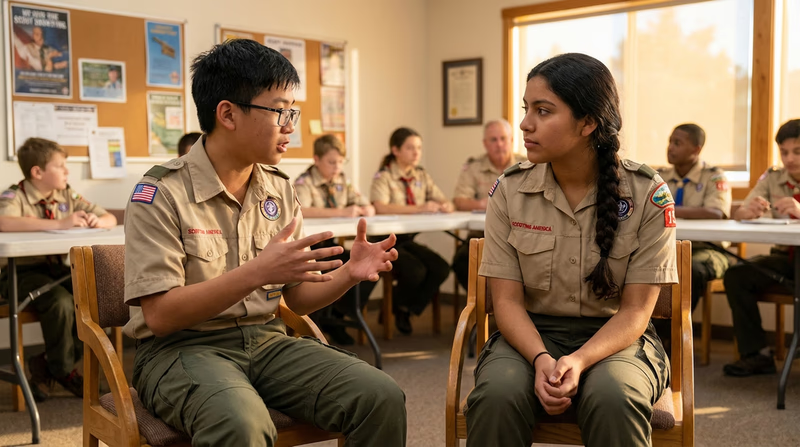
Active listening means giving someone your full attention when they speak — not just hearing words, but understanding what the person is really saying.
What active listening looks like:
- Put your phone down and make eye contact
- Let the person finish their thought before you respond
- Ask follow-up questions: “What happened next?” or “How did that make you feel?”
- Repeat back what you heard to make sure you understood: “So what you’re saying is…”
- Resist the urge to jump in with your own story or advice
Creating a Comfortable Environment for Sharing
This is about psychological safety — making it clear that people’s ideas will be respected, not ridiculed. When people feel safe sharing, you get better ideas, stronger teams, and deeper friendships.
Practical actions:
- When someone shares an idea, respond with curiosity, not judgment: “That’s interesting — tell me more” instead of “That won’t work.”
- If someone’s idea gets shut down unfairly, bring it back: “Wait, I want to hear more about what Alex was saying.”
- Set ground rules in group settings: no interrupting, no laughing at ideas, every suggestion gets heard.
Helping Others Feel Valued
People need to know that their contributions matter. When someone takes a risk and shares a thought, how you respond determines whether they will ever speak up again.
Ways to show value:
- Say thank you. “Thanks for bringing that up — I hadn’t thought of that.”
- Give credit. When an idea works, make sure the person who suggested it gets recognized.
- Follow through. If someone gives you a suggestion, act on it — or explain why you went a different direction.
Standing Up for Others
You have explored being an upstander throughout this badge. Now, identify specific places in your life where you can commit to standing up — and what that might look like.
At school: Speak up when you hear someone being teased, excluded, or talked about behind their back.
Online: Report cyberbullying, refuse to share hurtful posts, and support people who are being targeted.
At work: If you see a coworker being treated unfairly, say something to a supervisor or support the person directly.
Documenting Your Three Areas
The requirement asks you to choose three or more areas of your life outside Scouting where you can strengthen your leadership. For each area, write down:
- The setting: Where is it? (school, home, team, job, community)
- The skills you will focus on: Which of the five skills above apply most?
- Specific actions you will take: What will you actually do differently?
- How you will measure progress: How will you know if you are making a difference?
Leadership is not a title — it is a daily practice. The five skills in this requirement are tools you can use in every part of your life, starting today.