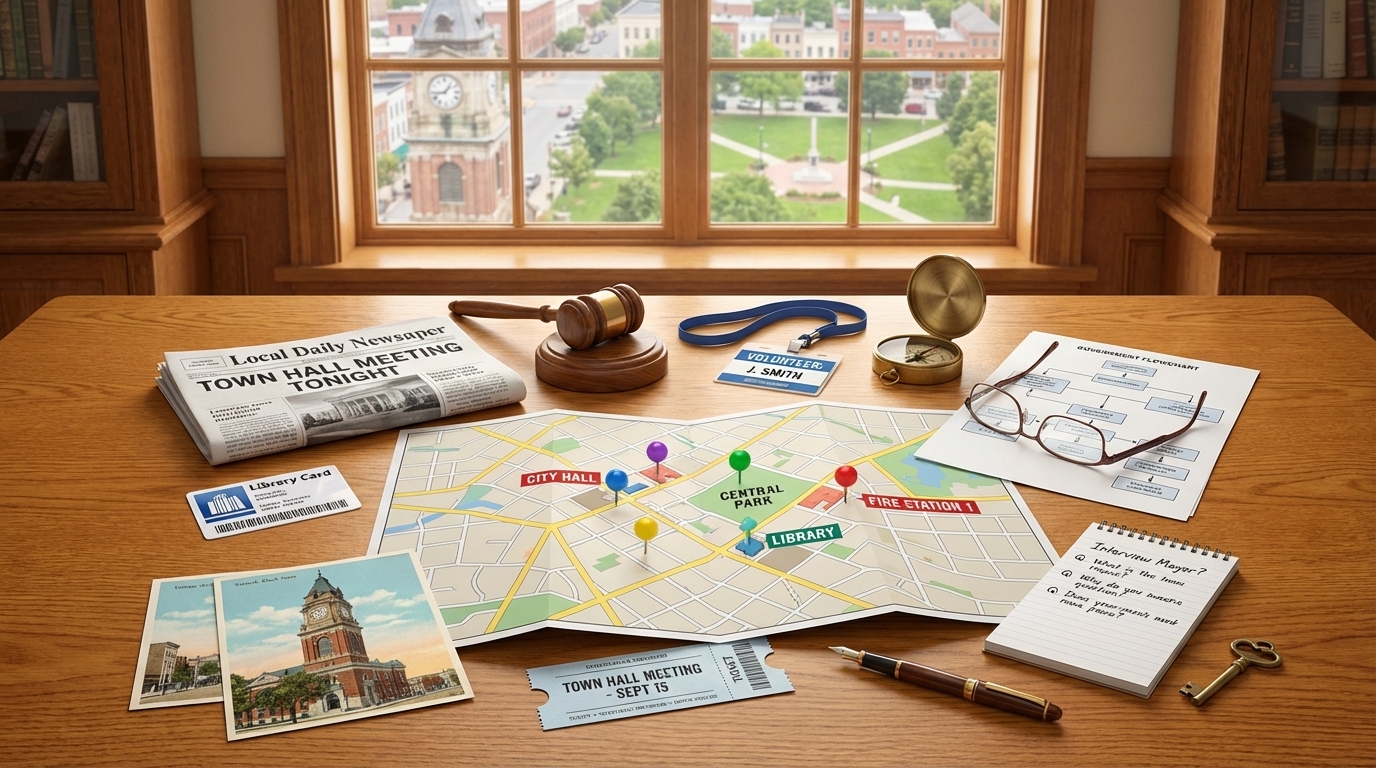
Citizenship in the Community Merit Badge — Complete Digital Resource Guide
https://merit-badge.university/merit-badges/citizenship-in-the-community/guide/
Introduction & Overview
Your community is more than the place where you live. It is the people, the services, the traditions, and the shared spaces that connect you to your neighbors. The Citizenship in the Community merit badge challenges you to explore the place you call home — to understand how it works, who runs it, and how you can make it better.
This is one of the Eagle-required merit badges, and for good reason. A Scout is expected to be a leader not just in the wilderness, but in the community. This guide will help you discover what it really means to be an active, informed citizen right where you are.
Then and Now
Then — The Town Meeting
In early America, citizenship was intensely local. Colonial towns held open meetings where every citizen could speak, vote, and shape the rules they all lived by. There were no professional politicians — ordinary people served as selectmen, constables, and tax collectors. If a road needed fixing or a school needed building, the community came together and made it happen.
- Purpose: Self-governance, survival, mutual aid
- Mindset: “This is our town and our responsibility”
Now — The Connected Community
Today, communities are larger and more complex, but the core idea is the same: citizens working together to solve shared problems. You can attend a city council meeting in person or stream it online. You can volunteer at a food bank, advocate for a new park, or organize a neighborhood cleanup — all before you are old enough to vote. Young people have more tools than ever to make their voices heard.
- Purpose: Civic participation, service, advocacy, belonging
- Mindset: “I may be young, but I can still make a difference”
Get Ready! Your community needs people who care enough to show up, speak up, and pitch in. This merit badge will show you how — and you might be surprised by how much power you already have to shape the place you live.
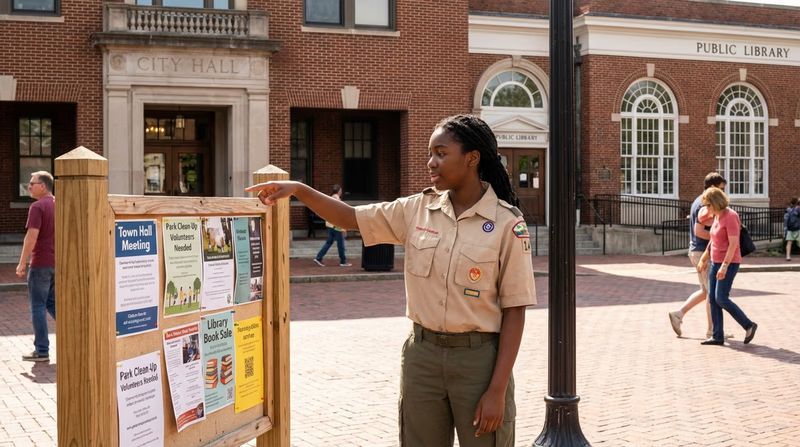
Kinds of Community Involvement
There are many ways to be an active citizen. Here are some of the most common — and you have probably already done more of these than you realize.
Volunteering
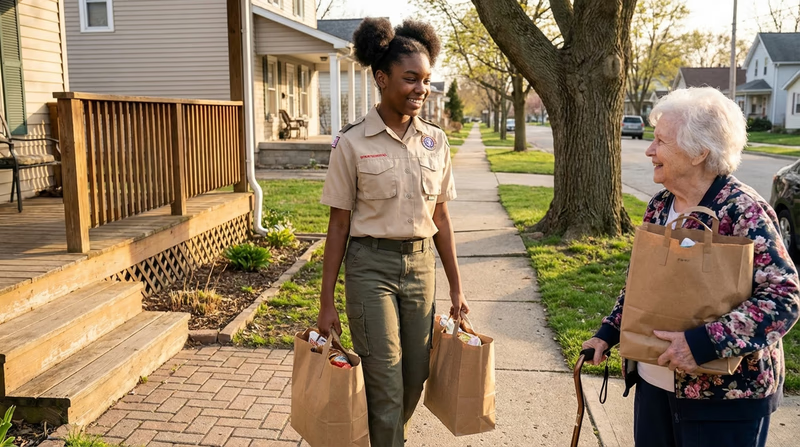
Volunteering means giving your time and energy to help others without being paid. It could be serving meals at a shelter, cleaning up a park, tutoring younger students, or helping at a community event. Volunteering is one of the most direct ways to strengthen your community.
Civic Participation
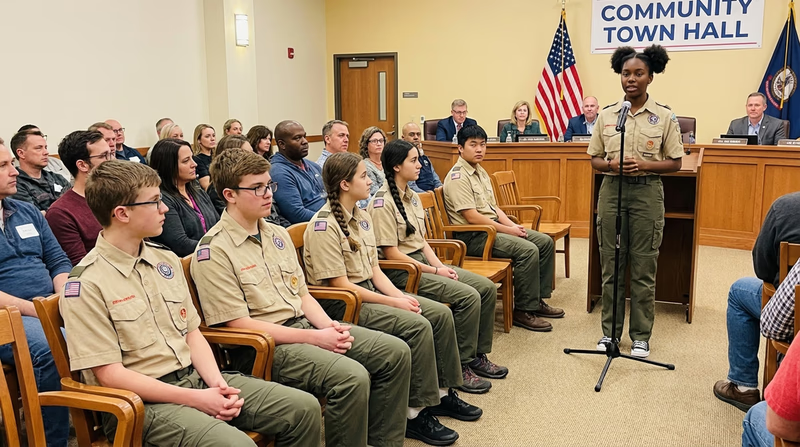
Civic participation is the act of engaging with your government. It includes attending public meetings, contacting elected officials, serving on boards or committees, and — when you are old enough — voting. Even as a young person, you can attend town council meetings, speak during public comment periods, and write letters to your representatives.
Advocacy
Advocacy means speaking up for a cause you believe in. Maybe you want your town to build more bike lanes, or you think the local library should have longer hours. Advocates research the issue, gather support from others, and present their case to decision-makers. You do not need to be an adult to be an effective advocate.
Community Organizing
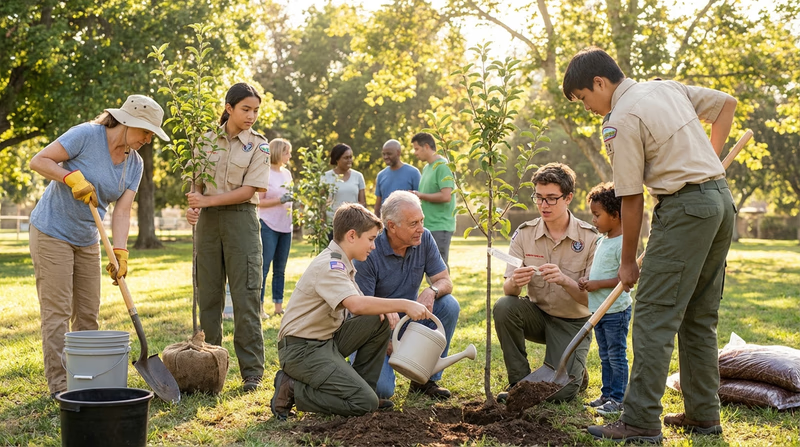
Community organizing brings people together around a shared goal. It might be organizing a neighborhood watch, starting a petition, or planning a community garden. Organizers listen to what their neighbors need and then mobilize people to take action.
Mentoring and Tutoring
Sharing your skills and knowledge with others is a powerful form of citizenship. Older Scouts mentoring younger ones, high schoolers tutoring elementary students, or community members teaching classes at a recreation center — these connections build trust and strengthen the bonds between people.
Digital Citizenship
Today, much of community life happens online. Digital citizenship means being respectful, responsible, and informed when you participate in online discussions, share information on social media, or use digital tools to organize community projects. The same values that make you a good citizen in person apply online.
Now let’s dive into the requirements and start exploring what it means to be a citizen in your community.
Req 1 — What Good Citizenship Means
What Does Citizenship in the Community Mean?
Citizenship is not just a legal status — it is an active relationship between you and the people around you. When we talk about “citizenship in the community,” we mean the everyday choices you make that affect your neighbors, your town, and the places where you spend your time.
A good citizen does more than follow the rules. A good citizen pays attention, gets involved, and looks for ways to help. Think of it this way: if everyone in your community did exactly what you do, would the community be a better place or a worse one? That question is at the heart of citizenship.
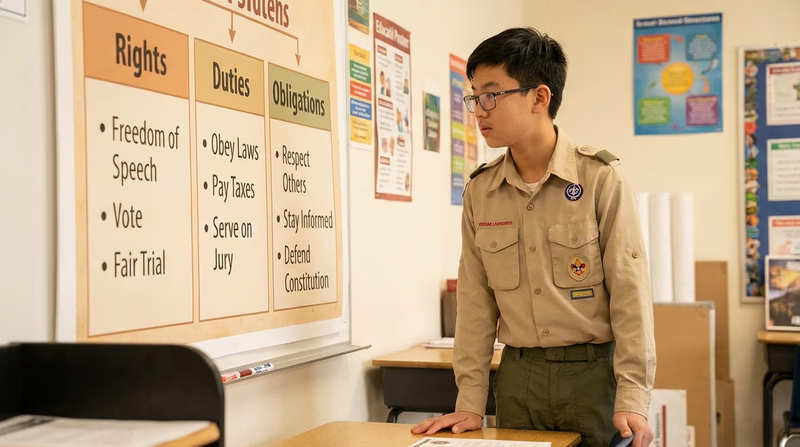
Rights, Duties, and Obligations
Your counselor will want you to understand the difference between these three ideas. They are related, but they are not the same thing.
Rights
Rights are things you are entitled to as a citizen. In the United States, many of these are protected by the Constitution and the Bill of Rights.
- Freedom of speech — You can express your opinions, even unpopular ones.
- Freedom of religion — You can practice any religion or none at all.
- Right to vote — When you turn 18, you can help choose your leaders.
- Right to a fair trial — If accused of a crime, you are entitled to due process.
- Right to petition — You can ask your government to change a law or policy.
These rights belong to you, but they also belong to everyone else. Part of being a good citizen is respecting other people’s rights even when you disagree with how they use them.
Duties
Duties are things the law requires you to do. They are not optional.
- Obey the law — From traffic rules to property laws, citizens are expected to follow the rules that keep communities safe and orderly.
- Pay taxes — Taxes fund the services your community depends on (more on this in Requirement 6).
- Serve on a jury — When called, adult citizens must serve on a jury to ensure fair trials.
- Attend school — Until a certain age, education is both a right and a legal requirement.
Obligations
Obligations are things that are not required by law but are expected of good citizens. They are the “should” rather than the “must.”
- Stay informed — Know what is happening in your community and your government.
- Vote — It is not legally required in the U.S., but it is one of the most important things a citizen can do.
- Volunteer — Give your time to causes and organizations that strengthen your community.
- Respect others — Treat people fairly, even when you disagree.
- Speak up — When you see something wrong, say something.
Demonstrating Good Citizenship
Your counselor will ask you to explain how you can demonstrate good citizenship in specific settings. Here are some ideas to get you thinking — but the best answers will come from your own experience.
In Your Community
- Volunteer at local events or organizations
- Pick up litter, even when it is not yours
- Attend a public meeting (you will do this in Requirement 3)
- Support local businesses
- Get to know your neighbors
In Your Scouting Unit
- Help newer Scouts learn skills
- Take on leadership roles and fulfill them reliably
- Follow the Scout Oath and Scout Law — not just at meetings, but everywhere
- Participate in service projects willingly and enthusiastically
At Your Place of Worship
- Volunteer for service activities organized by your faith community
- Treat shared spaces with respect
- Welcome newcomers and make them feel included
At School
- Follow school rules and treat teachers and staff with respect
- Stand up against bullying
- Participate in student government or school clubs
- Help classmates who are struggling
Preparing for Your Discussion
This requirement is a discussion, not a test. Your counselor wants to see that you have thought carefully about what citizenship means and that you can connect these ideas to your real life.
Discussion Prep
Make sure you can talk about each of these- Define citizenship in your own words
- Name at least three rights of a citizen
- Explain the difference between a duty and an obligation
- Give one example of good citizenship in your community
- Give one example from your Scouting unit, place of worship, or school
Req 2a — Mapping Your Community
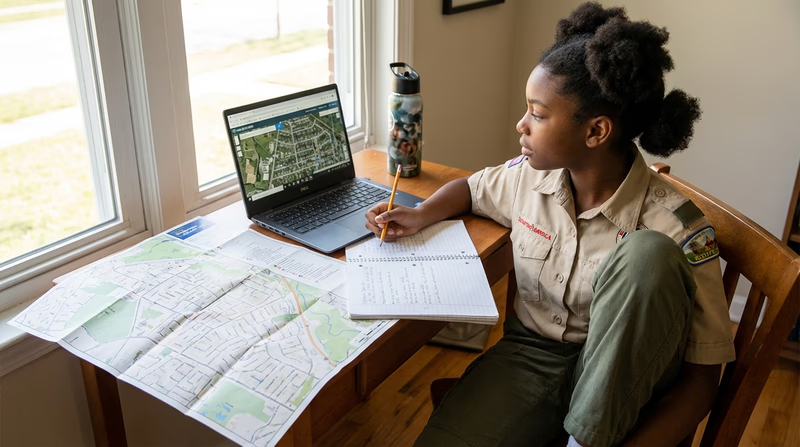
Using an electronic mapping tool or paper map, locate and pinpoint the following services and landmarks in your community. Determine and record the distances from your home including driving time AND either walking or biking time.
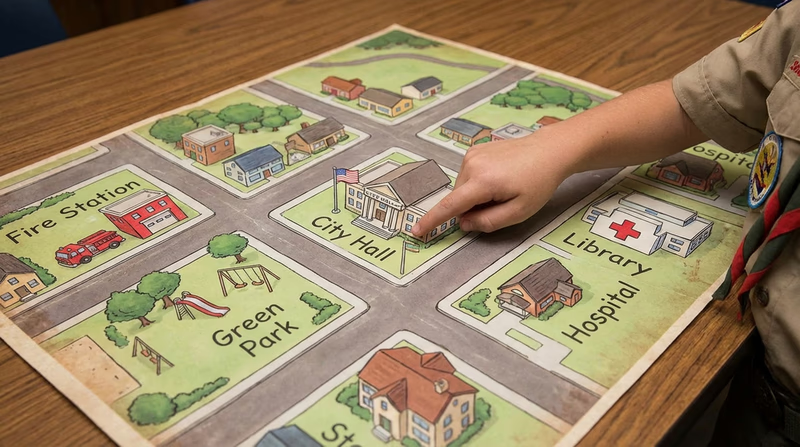
- Chief government buildings such as your city hall, county courthouse, and public works/services facilities
- Fire station, police station, and hospital nearest your home
- Parks, playgrounds, recreation areas, and trails
- Historical or other interesting points of interest.
Why Map Your Community?
Knowing where things are in your community is one of the most practical skills you can develop as a citizen. If there is an emergency, do you know where the nearest hospital is? If you want to attend a city council meeting, do you know how to get to city hall? This requirement turns you into someone who knows their community inside and out.
Mapping also reveals something surprising: how much your community offers that you may never have noticed. Most people drive past government buildings, parks, and historical sites every day without giving them a second thought. This exercise changes that.
Choosing Your Mapping Tool
You can use a digital tool or a paper map. Here are your best options:
Digital Tools
- Google Maps (maps.google.com) — Search for locations, measure distances, and get driving, walking, and biking times with one click.
- Apple Maps — Similar features to Google Maps, built into iPhones and iPads.
- OpenStreetMap (openstreetmap.org) — A free, community-built map. Great for finding trails and parks that commercial maps sometimes miss.
Paper Maps
Your local chamber of commerce, visitor center, or library may have printed maps of your community. You can measure distances using the map’s scale and estimate travel times based on average speeds (driving: ~25–35 mph in town; biking: ~10 mph; walking: ~3 mph).
What to Look For
1. Government Buildings
These are the buildings where your community’s leaders work and decisions get made.
- City Hall or Town Hall — Where the mayor and city council offices are located. This is often where public meetings happen (you will attend one in Requirement 3).
- County Courthouse — Where courts operate and county records are kept. If your community is the county seat, the courthouse is a major landmark.
- Public Works / Services Facilities — These handle water, sewage, road maintenance, and waste management. They keep the infrastructure of your community running.
2. Emergency Services
These are the places your community depends on in a crisis.
- Fire Station — Find the one closest to your home. Many fire departments also handle medical emergencies.
- Police Station — Your local law enforcement headquarters. Some communities have substations in different neighborhoods.
- Hospital or Emergency Room — The nearest place to receive emergency medical care. Know the fastest route from your home.
3. Parks and Recreation
- Parks and Playgrounds — Public green spaces maintained by your community.
- Recreation Centers — Facilities offering sports, classes, and community programs.
- Trails — Walking, hiking, and biking paths. Many communities have connected trail systems.
4. Historical and Interesting Points
This is the most open-ended category. Look for:
- Historical buildings, monuments, or markers
- Museums and cultural centers
- Public art installations or murals
- Sites of significant events in your community’s history
- Landmarks that define your community’s identity
Recording Your Findings
For each location, record:
- Name of the place
- Address
- Distance from your home (in miles)
- Driving time
- Walking or biking time (your choice — pick one)
Req 2b — Charting Local Government
How Is Your Government Organized?
Every community is governed by a structure — a system of offices and roles that determines who makes decisions, who enforces them, and who resolves disputes. This requirement asks you to map out that structure so you can see how the pieces fit together.
You can choose to chart either your local government (city, town, or county) or your state government. Most Scouts find local government easier to research and more directly relevant to their daily lives.
Local Government Structures
Not all local governments look the same. Most communities use one of these three models:
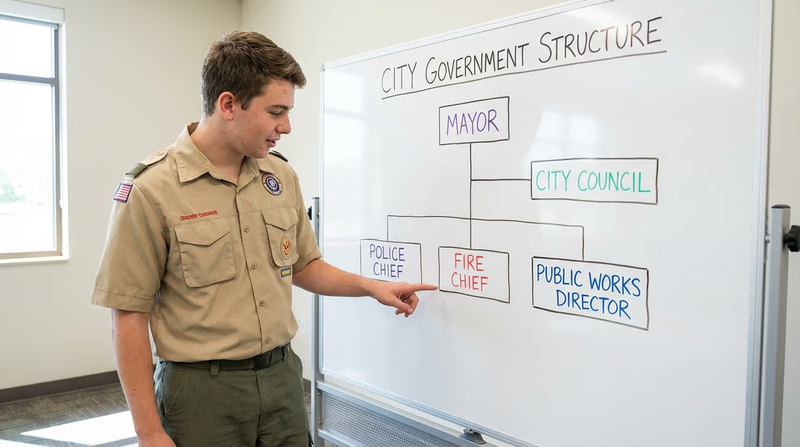
Mayor-Council
This is the most common structure. Voters elect both a mayor (the chief executive) and a city council (the legislative body). The mayor proposes budgets, appoints department heads, and runs day-to-day operations. The council passes laws (called ordinances), approves budgets, and provides oversight.
- Mayor — Elected
- City Council Members — Elected
- City Manager (if one exists) — Appointed by the council
- Department Heads (police chief, fire chief, public works director) — Usually appointed by the mayor
Council-Manager
In this model, voters elect a city council, and the council hires a professional city manager to run the government’s daily operations. The mayor may be elected separately or chosen from among the council members, but the mayor’s role is mostly ceremonial.
- City Council — Elected
- Mayor — Elected or selected from council
- City Manager — Appointed by the council
- Department Heads — Appointed by the city manager
Commission
Less common today, this model has voters elect a small group of commissioners. Each commissioner oversees a specific department (public safety, public works, finance, etc.). There is no separate executive — the commissioners share power equally.
- Commissioners — Elected
- Department Staff — Appointed by their commissioner
State Government Structure
If you choose to chart your state government instead, the structure generally mirrors the federal government with three branches:
Executive Branch
- Governor — Elected. The chief executive of the state.
- Lieutenant Governor — Elected in most states.
- Attorney General — Elected in most states.
- Secretary of State — Elected or appointed, depending on the state.
- State agency heads — Typically appointed by the governor.
Legislative Branch
- State Senate — Elected.
- State House of Representatives (or Assembly) — Elected.
Judicial Branch
- State Supreme Court Justices — Elected or appointed, varies by state.
- Lower court judges — Elected or appointed, varies by state.
How to Create Your Chart
Your chart should clearly show:
- The top offices in the government
- The relationships between them (who reports to whom)
- Whether each position is elected or appointed
Research Tips
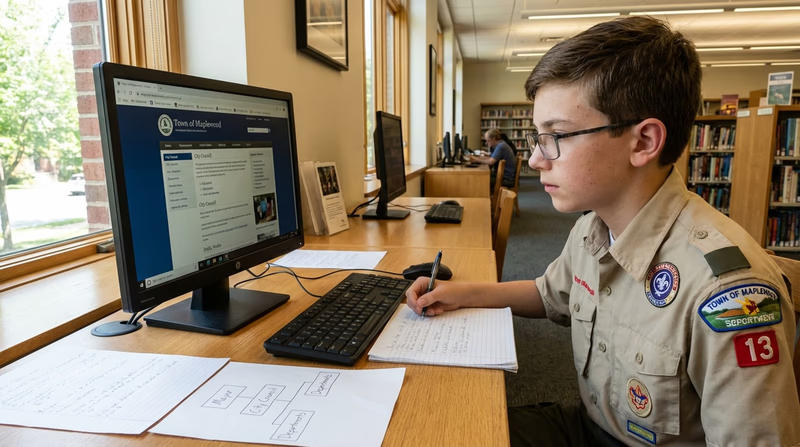
- Your community’s website — Most city and county governments have an “About” or “Government” page that lists officials and their roles.
- Your state’s official website — Search for “[your state] government organization” for a state-level chart.
- Ask at city hall — If you visit in person, staff can often provide an organizational chart or point you to one.
Chart Checklist
Make sure your chart includes these elements- The title of each major office (Mayor, Council Member, City Manager, etc.)
- The name of the current person in each role (optional but impressive)
- Whether the position is elected or appointed
- Lines showing the reporting structure
- A title and date on your chart
Req 3 — Attending a Government Meeting
Why Attend a Government Meeting?
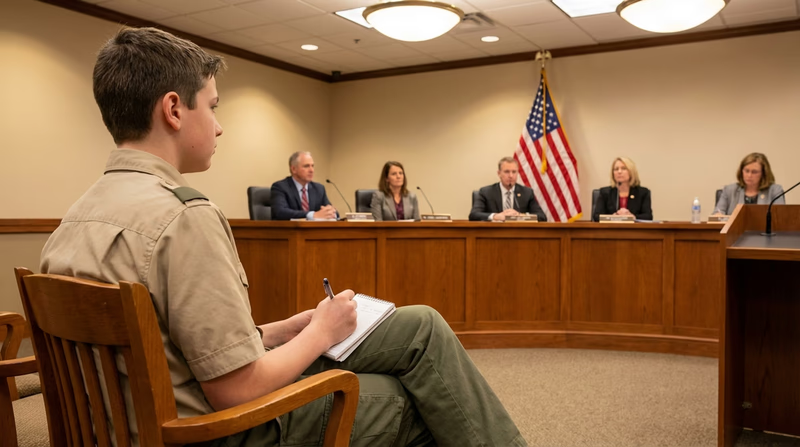
Reading about government is one thing. Watching it happen in real time is something else entirely. When you sit in on a city council meeting or a school board session, you see democracy at work — real people debating real issues that affect your community. It can be fascinating, frustrating, inspiring, and sometimes even boring. But it is always real.
Most government meetings are open to the public. That is not an accident — it is the law. Open meeting laws (sometimes called “sunshine laws”) exist because citizens have the right to see how their government makes decisions.
Choosing a Meeting
You have several options. Pick the one that is most accessible and interesting to you:
City or Town Council Meeting
This is the most popular choice for Scouts. City councils typically meet once or twice a month in the evening. They discuss local issues like zoning, budgets, road projects, parks, and public safety. Check your city’s website for the schedule and location.
County Board or Commission Meeting
If you live in an unincorporated area or want to see county-level government at work, attend a county board meeting. These often cover topics like county road maintenance, law enforcement, and public health.
School Board Meeting
School boards make decisions about your schools — budgets, curriculum, policies, and facilities. Since these decisions directly affect you, school board meetings can be especially engaging for Scouts.
Local Court Session
Courtrooms are open to the public for most proceedings. You can observe a court session to see the judicial branch in action. Contact the courthouse in advance to find out when sessions are scheduled and what types of cases will be heard.
What to Expect
Government meetings follow a formal structure called parliamentary procedure (often based on Robert’s Rules of Order). Here is what a typical city council meeting looks like:
- Call to Order — The chair (usually the mayor) officially starts the meeting.
- Roll Call — Members present are recorded.
- Approval of Minutes — The record of the last meeting is reviewed and approved.
- Public Comment — Citizens can address the council on any topic. Each speaker usually gets 2–3 minutes.
- Old Business — Items carried over from previous meetings.
- New Business — New items for discussion and vote.
- Reports — Updates from staff, committees, or departments.
- Adjournment — The meeting ends.
Taking Notes
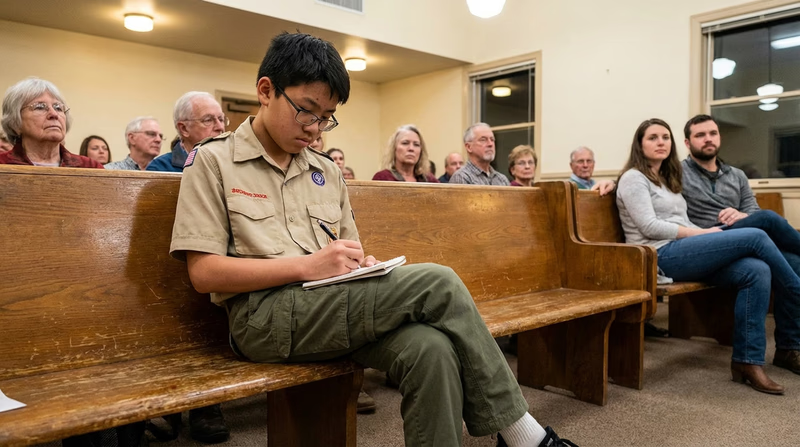
Bring a notebook and pen. As you watch the meeting, write down:
- The date, time, and location of the meeting
- Who was present (the names of council members or board members)
- The main topics discussed
- Any issues where people disagreed
- How votes turned out
- Your own reactions and thoughts
Meeting Observation Guide
Key things to watch for during the meeting- What issues generated the most debate?
- Did any members of the public speak? What did they say?
- How did council members treat each other — respectfully? Contentiously?
- Were there any votes? Were they unanimous or split?
- Did anything surprise you?
Forming Your Opinion (Requirement 3b)
After the meeting, your counselor will ask you to pick one issue where opinions were divided and explain which side you agree with — and why.
This is not about having the “right” answer. It is about showing that you can:
- Listen to both sides of an issue
- Understand the reasoning behind each position
- Form your own opinion based on evidence and values
- Explain your reasoning clearly
Req 4 — Investigating a Community Issue
Choosing Your Issue
This requirement puts you in the role of an investigative citizen. You will pick a real issue in your community, figure out who in the government is responsible for it, and interview someone working on it. This is hands-on civic engagement at its best.
Start by asking yourself: What matters to you? What have you noticed in your community that could be better? Here are some common categories to spark ideas:
Infrastructure and Environment
- Roads or sidewalks in poor condition
- Lack of bike lanes or safe crosswalks
- Parks that need maintenance or new equipment
- Litter or illegal dumping
- Water quality concerns
Public Safety
- Traffic safety near schools
- Streetlight outages
- Emergency response times
- Youth safety programs
Community Services
- Library hours or programs
- Recreation center availability
- Public transportation access
- After-school programs for young people
Growth and Development
- New construction or zoning changes
- Housing affordability
- Business development
- Preserving green spaces or historic buildings
Finding the Right Branch of Government (Req 4a)
Once you have chosen your issue, figure out which part of your local government handles it. Here is a general guide:
| Issue Area | Likely Responsible Office |
|---|---|
| Roads, water, sewers | Public Works Department |
| Crime, safety | Police Department |
| Fires, emergencies | Fire Department |
| Parks, recreation | Parks & Recreation Department |
| Schools, education | School Board / School District |
| Zoning, building | Planning & Zoning Commission |
| Health, sanitation | Health Department |
| Budgets, taxes | City Council / County Board |
If you are not sure, call your city hall or visit your community’s website. Most government websites have a directory of departments and their responsibilities.
Conducting Your Interview (Req 4b)
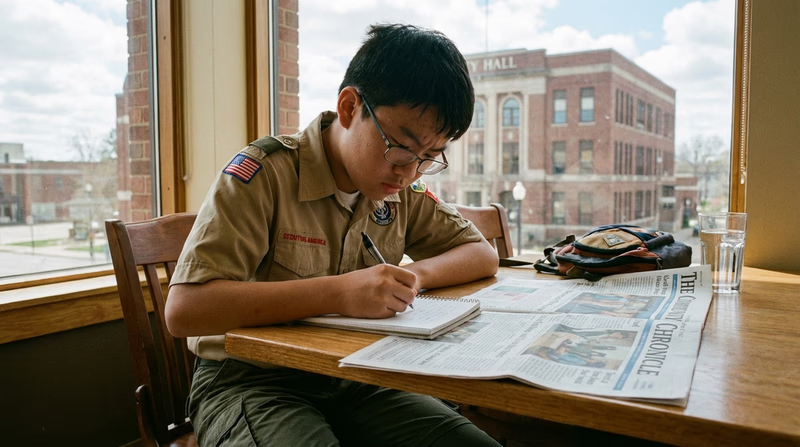
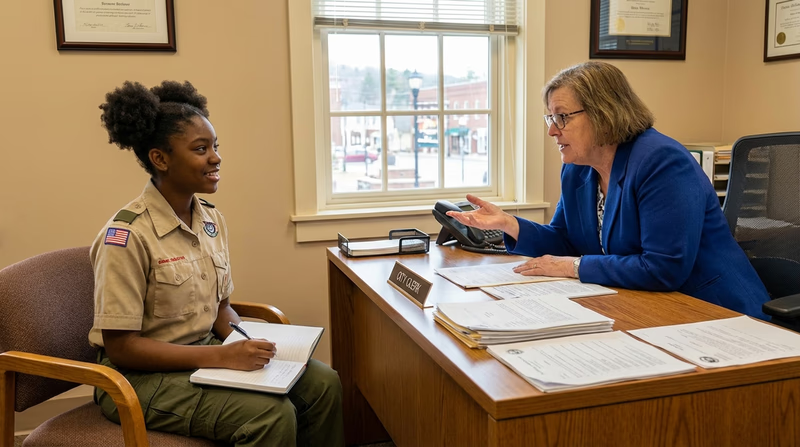
The interview is the heart of this requirement. You will talk to a real government official or employee about a real issue. This is a skill that will serve you in school, in Scouting, and eventually in your career.
Before the Interview
- Get approval from both your counselor and a parent or guardian before reaching out.
- Identify the right person. Call the relevant department and ask to speak with someone who works on your issue. You might talk to a department director, a staff member, or even an elected official.
- Schedule the interview. Be polite, explain that you are a Scout working on the Citizenship in the Community merit badge, and ask if they would be willing to spend 15–20 minutes answering questions.
- Prepare your questions. Write them down in advance.
Key Questions to Ask
Here are some strong questions to include — but feel free to add your own:
- What is currently being done about this issue?
- What is the biggest challenge your department faces with this issue?
- How is this issue funded?
- Have citizens been involved in addressing this issue? How?
- How can young people help?
- What is one thing you wish more people understood about this issue?
Interview Prep Checklist
Be ready before you make contact- Issue chosen and researched
- Counselor approval obtained
- Parent or guardian approval obtained
- Correct department and contact person identified
- Written list of at least 5 questions
- Notebook and pen ready for notes
- Thank-you note or email prepared (send after the interview)
During the Interview
- Be on time. Arrive a few minutes early or call exactly when scheduled.
- Listen more than you talk. Let the person answer fully before asking your next question.
- Take notes. Write down key points so you can share them accurately with your counselor.
- Ask follow-up questions. If something interests you, ask to hear more.
- Be respectful of their time. Keep the interview to the agreed length.
After the Interview
- Send a thank-you note. A brief, handwritten note or email goes a long way.
- Review your notes while the conversation is still fresh in your mind.
- Reflect. What surprised you? What did you learn that you did not know before?
Sharing What You Learned (Req 4c)
When you meet with your counselor, be prepared to share:
- The issue you chose and why it matters to your community
- Which branch of government handles it
- Who you interviewed and their role
- What you learned — What is being done? What are the challenges? How can young people contribute?
- Your thoughts — Did anything change your perspective? What would you do differently if you were in charge?
Req 5 — Community on Screen
The Power of Storytelling
Movies have a unique ability to show us what citizenship looks like in action. Through film, you can see how real people — or fictional characters inspired by real events — stand up for their communities, fight for change, and inspire others to do the same.
This requirement asks you to watch a movie with intention. You are not just watching for entertainment — you are watching to learn what makes someone a valuable community member.
Choosing Your Movie
You need approval from both your counselor and a parent or guardian before watching. When choosing, look for films that show:
- An individual or group making a positive difference in their community
- The challenges of standing up for what is right
- How communities come together in times of need
- The impact one person’s actions can have on many
Here are some categories to explore — your counselor may also have suggestions:
Films About Community Leaders and Advocates
These movies show individuals who saw a problem and refused to look away. They organized, spoke up, or took action to make things better for everyone around them.
Films About Community Resilience
Some of the best stories are about communities facing adversity — natural disasters, economic hardship, or social challenges — and finding strength in each other.
Films About Young People Making a Difference
Several excellent films feature young protagonists who discover they can change their community, even when adults doubt them.
Watching with Purpose
As you watch the movie, think about these questions. You do not need to write formal answers, but keeping them in mind will make your discussion with your counselor much richer.
Viewing Guide
Questions to consider while watching- Who is the main character or group, and what problem do they face?
- What motivates them to take action?
- What obstacles do they encounter, and how do they overcome them?
- How do other people in the community respond to their actions?
- What is the turning point — the moment when things start to change?
- What is the outcome? How is the community different at the end?
- What qualities does the main character show that make them a good citizen?

Discussing the Movie with Your Counselor
Your counselor will want to hear more than a plot summary. Focus your discussion on:
What You Learned About Citizenship
Connect the movie to the concepts from Requirement 1. How did the characters demonstrate rights, duties, or obligations of citizenship? What values drove their actions?
The Qualities of a Good Community Member
Think about the specific traits the main character showed. Were they brave? Persistent? Compassionate? Good at bringing people together? Which of those qualities do you see in yourself or want to develop?
Real-World Connections
Does the movie remind you of anything happening in your own community? Could the same kind of action work where you live? What would you do differently if you were in the character’s situation?
Common Sense Media — Movies About Community Age-appropriate movie reviews and recommendations. Search for films about community, citizenship, and social justice. Link: Common Sense Media — Movies About Community — https://www.commonsensemedia.org/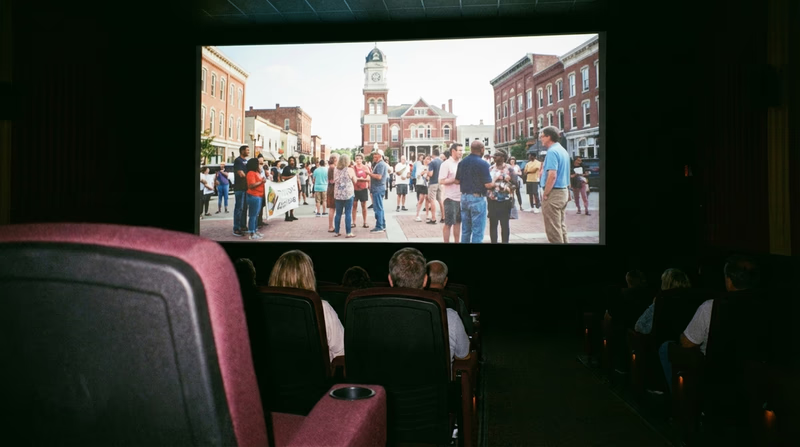
Req 6 — Taxpayer-Funded Services
What Are Taxpayer-Funded Services?
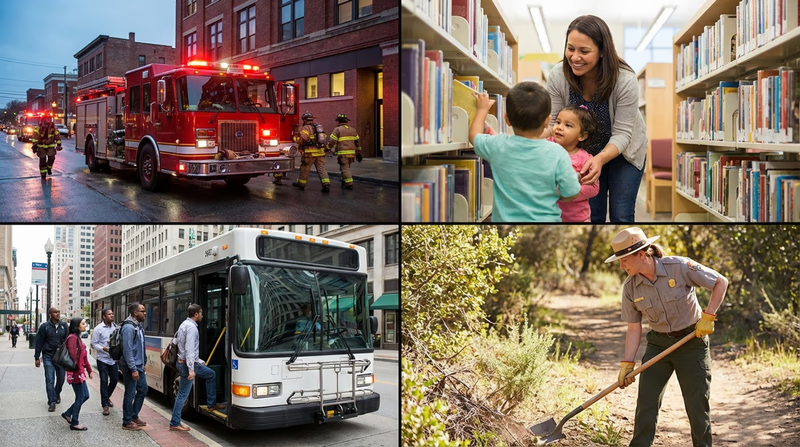
Every time you drive on a paved road, check out a library book, drink clean water from a tap, or see a fire truck respond to an emergency, you are benefiting from a taxpayer-funded service. These are services that your community provides to everyone, paid for by the taxes that residents and businesses contribute.
Some of these services are so woven into daily life that you barely notice them. This requirement asks you to stop and look — to identify the services your community provides and understand why they matter.
Common Taxpayer-Funded Services
Here are the major categories. Your community may have all of these or only some — it depends on the size and type of your community.
Public Safety
These services protect people and property.
- Police Department — Law enforcement, crime prevention, community outreach
- Fire Department — Fire suppression, emergency medical services, fire prevention education
- Emergency Medical Services (EMS) — Ambulance services and paramedics (sometimes part of the fire department)
- 911 Dispatch Center — The communication hub that routes emergency calls
Education
- Public Schools — Elementary, middle, and high schools funded primarily by local property taxes and state funds
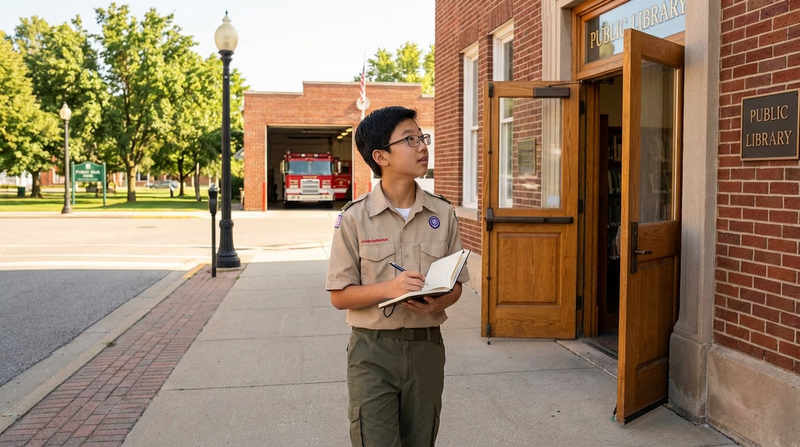
- Public Libraries — Free access to books, computers, internet, educational programs, and community meeting spaces
Infrastructure
These are the systems that keep your community physically functioning.
- Roads and Bridges — Construction, repair, snow plowing, and traffic signals
- Water and Sewer Systems — Clean drinking water delivery and wastewater treatment
- Stormwater Management — Drainage systems that prevent flooding
- Streetlights — Public lighting for safety and navigation
- Solid Waste Collection — Trash pickup, recycling programs, and landfill operations
Parks and Recreation
- Public Parks — Green spaces, playgrounds, sports fields, and nature areas
- Recreation Centers — Gyms, swimming pools, community rooms, and organized programs
- Public Trails — Walking, biking, and hiking paths
Public Transportation
- Bus Systems — Fixed-route and on-demand bus services
- Paratransit — Transportation for people with disabilities
- Commuter Rail or Light Rail — Where available, rail systems connecting communities
Health and Human Services
- Public Health Department — Disease prevention, restaurant inspections, immunization programs
- Animal Control — Stray animal management and public safety
- Social Services — Programs that assist residents in need
Where Does the Money Come From?
Understanding how these services are funded helps you understand why civic participation matters. Here are the main sources:
Property Taxes
Homeowners and businesses pay taxes based on the value of their property. This is typically the largest source of local government revenue and funds schools, police, fire, and local roads.
Sales Taxes
A percentage added to the price of goods you buy. Some of this goes to the state and some stays local.
Income Taxes
Some states and cities levy income taxes on wages earned by residents.
Fees and Permits
Charges for specific services like building permits, parking, recreation programs, and utility connections.
State and Federal Grants
Money that flows from higher levels of government to fund specific programs like road improvements, public transit, or housing assistance.
Why These Services Matter
When you discuss this with your counselor, think beyond the obvious. Yes, police and fire departments are important because they keep people safe. But dig deeper:
- Libraries are not just about books — they provide free internet access, job search help, language classes, and safe spaces for people of all ages.
- Parks are not just for fun — they improve mental health, increase property values, reduce air pollution, and give communities a place to gather.
- Public transportation is not just about convenience — for many people, it is the only way they can get to work, school, or medical appointments.
- Clean water systems are invisible until they fail — and when they fail, the consequences can be devastating.
Req 7 — Charitable Organizations & Volunteering
The Role of Charitable Organizations
Government provides essential services, but it cannot do everything. Charitable organizations — also called nonprofits — fill gaps that government does not cover. They fight hunger, build affordable housing, protect the environment, support the arts, help disaster victims, mentor young people, and do thousands of other things that make communities stronger.
These organizations run on donations and volunteers. And that is where you come in.
Step 1: Identify Three Organizations (Req 7a)
Look for organizations that operate in your community and bring people together for a common good. They should be outside of Scouting — your troop, pack, or council do not count for this one.
Here are some types of organizations to consider:
Food and Hunger Relief
- Food banks and food pantries
- Community gardens that donate produce
- Meal delivery programs (like Meals on Wheels)
Housing and Shelter
- Habitat for Humanity chapters
- Homeless shelters
- Transitional housing programs
Environmental Conservation
- Local land trusts or watershed groups
- Park conservancy organizations
- Recycling and cleanup groups
Youth and Education
- Boys & Girls Clubs
- Big Brothers Big Sisters
- Tutoring and literacy programs
Health and Wellness
- American Red Cross chapters
- Special Olympics
- Mental health awareness organizations
Community Building
- Rotary Club, Lions Club, or Kiwanis
- Cultural heritage organizations
- Neighborhood associations
Step 2: Research One Organization (Req 7b)
Choose the organization that interests you most and dig in. The requirement specifically says to use a variety of resources, so do not just check their website. Here is how to research from multiple angles:
Online
- Visit the organization’s official website. Look for their mission statement, programs, impact reports, and volunteer information.
- Check their social media accounts for recent activities and community engagement.
- Search local news outlets for stories about the organization.
Print Materials
- Pick up brochures, fliers, or newsletters at the organization’s office or at community bulletin boards.
- Check your local newspaper for articles or event listings related to the organization.
People
- Talk to current volunteers about their experience.
- Speak with employees about the organization’s history and goals.
- Ask community members what they know about the organization and its reputation.
Research Notes
Information to gather about your chosen organization- Full name and location of the organization
- When it was founded and by whom
- Its mission statement (in your own words)
- The main programs or services it provides
- How it is funded (donations, grants, fundraising events)
- How many people it serves or impacts
- What volunteers do and how many it has
- How it brings the community together
Step 3: Volunteer Eight Hours (Req 7c)
This is the big one. You need to contribute at least eight hours of volunteer service to the organization you researched. Here is how to make it happen:
Getting Started
- Get approval from your counselor and a parent or guardian.
- Contact the organization. Call, email, or visit. Explain that you are a Scout working on the Citizenship in the Community merit badge and that you would like to volunteer.
- Ask what young people can do. Not every role is open to minors. The organization will guide you to age-appropriate tasks.
- Schedule your hours. You can volunteer all eight hours in one or two sessions, or spread them out over several weeks.
Making the Most of Your Experience
- Show up on time and ready to work. First impressions matter.
- Ask questions. Learn about the people you are serving, the challenges the organization faces, and the impact of the work.
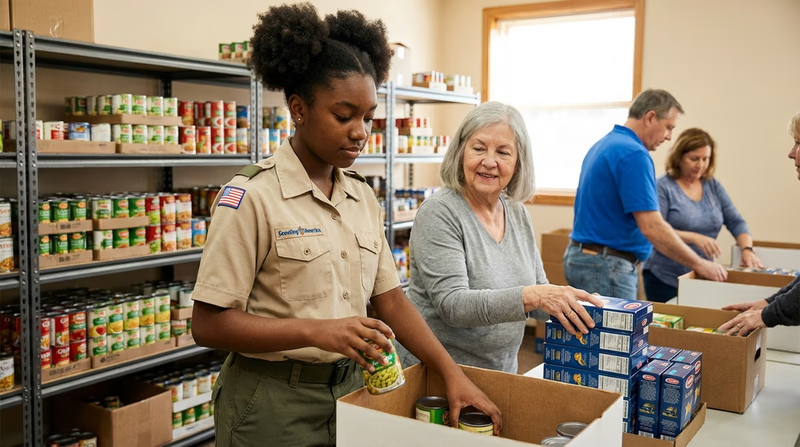
- Be flexible. You might not get to choose your exact task. Sorting donations, setting up for events, or cleaning are all valuable contributions.
- Reflect as you go. What are you learning? How does this work affect the community?
Tracking Your Hours
Use the volunteer service log to record your hours, tasks, and reflections. Your counselor will want to see documentation of your eight hours.
Volunteer Service Log Resource: Volunteer Service Log — /merit-badges/citizenship-in-the-community/guide/volunteer-service-log/Discussing Your Experience (Req 7c)
After completing your volunteer hours, your counselor will want to hear about:
- What you did — Describe the tasks you performed.
- Who you met — Talk about the people you worked with and the people the organization serves.
- What you learned — How does this organization make the community better? What surprised you?
- How it changed you — Did volunteering shift your perspective? Would you continue volunteering after the merit badge is done?
- The bigger picture — How does this organization connect to the themes of citizenship you have been learning about throughout this badge?
Req 8 — Your Community Presentation
Your Chance to Tell the Story
This is the capstone of the Citizenship in the Community merit badge — the moment where everything you have learned comes together. You have mapped your community, attended a government meeting, investigated an issue, volunteered for a cause, and studied the services that keep things running. Now you get to share what makes your community unique, vibrant, and worth caring about.
Think of yourself as a storyteller. You are not just listing facts — you are painting a picture of a real place with real people, real history, and real challenges.
Choosing Your Format
The requirement gives you several options. Pick the one that plays to your strengths:
| Format | Best For | Tools You Might Use |
|---|---|---|
| Slide show | Visual learners who like organizing information | Google Slides, PowerPoint, Keynote |
| Video | Storytellers who like filming and editing | Phone camera, iMovie, CapCut |
| Speech | Strong speakers who like performing live | Note cards, practice mirror |
| Digital presentation | Tech-savvy Scouts who want interactivity | Prezi, Canva, Google Sites |
| Photo exhibit | Photographers who want to show, not tell | Printed photos, poster boards, captions |
What to Include
The requirement specifies four areas your presentation must cover. Here is how to approach each one:
1. History of Your Community
Tell the story of how your community came to be. You do not need to write a textbook — focus on the most interesting highlights.
- When and why was your community founded?
- Who were the original settlers or inhabitants?
- What events shaped the community over time?
- Are there historical landmarks or sites?
Use your research from Requirement 2a (points of interest) and anything you learned from your community mapping.
2. Cultures and Ethnic Groups
Every community has a cultural story. Who are the people who live there, and what traditions do they bring?
- What cultural communities exist in your area?
- Are there cultural festivals, restaurants, or religious institutions that reflect this diversity?
- How have different groups contributed to the community’s identity?
- What languages are spoken?
3. Best Features and Popular Gathering Places
What makes your community special? What do residents love about living there?
- Parks, trails, lakes, or natural features
- Downtown areas, shopping districts, or farmers’ markets
- Community centers, libraries, or sports venues
- Annual events, parades, or traditions
- Local businesses that define the character of the area
4. Challenges Your Community Faces
No community is perfect. Being honest about challenges shows that you are a thoughtful, engaged citizen.
- Infrastructure needs (roads, buildings, utilities)
- Economic challenges (unemployment, business closures)
- Environmental issues (pollution, flooding, drought)
- Social issues (housing affordability, access to healthcare)
- Growth and development tensions
Connect this to your work in Requirement 4 — the community issue you investigated is a natural fit here.
Building Your Presentation
Step 1: Research
Gather information from multiple sources:
- Your own observations and experiences from this merit badge
- Your community’s official website
- Local history books or museum exhibits
- Interviews with long-time residents
- Local newspaper archives
- Census data for demographic information
Step 2: Organize
Structure your presentation with a clear flow:
- Opening — Introduce your community. Where is it? How many people live there?
- History — The story of how it started and how it has changed.
- People and Cultures — Who lives there and what they bring to the community.
- Best Features — What makes it great.
- Challenges — What needs work.
- Closing — Why you are proud to be part of this community (or what you hope for its future).
Step 3: Add Visuals
Photos, maps, and charts make any presentation stronger. Take your own photos when possible — they add a personal touch that generic images cannot match.
Step 4: Practice
Rehearse your presentation at least twice before delivering it. Time yourself to make sure it fits within 5–10 minutes. Practice in front of a family member to get feedback.
Presentation Quality Check
Review before you present- All four required topics covered (history, cultures, best features, challenges)
- At least one visual element (photo, map, chart) per topic
- No spelling or grammar errors
- Flows logically from beginning to end
- Fits within 5–10 minutes
- You can deliver it without reading every word from a script
Delivering Your Presentation
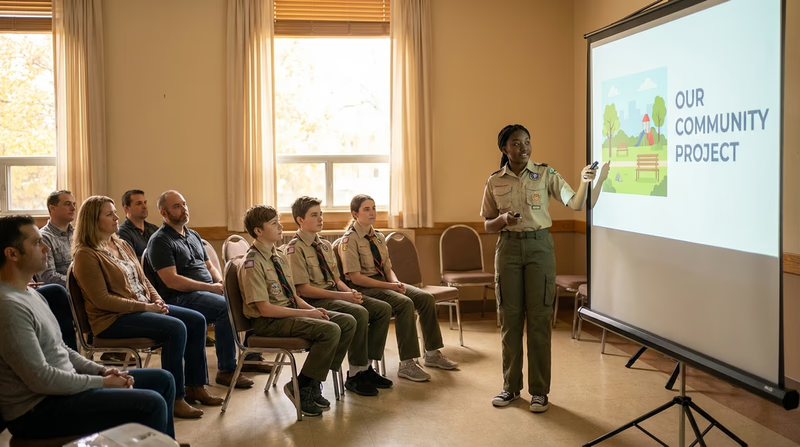
You need to present to your counselor or a group (your patrol, a class at school, etc.). Here are some tips for a strong delivery:
Canva — Free Presentation Templates Free, easy-to-use presentation templates that can help you create a professional-looking slide show. No design experience needed. Link: Canva — Free Presentation Templates — https://www.canva.com/presentations/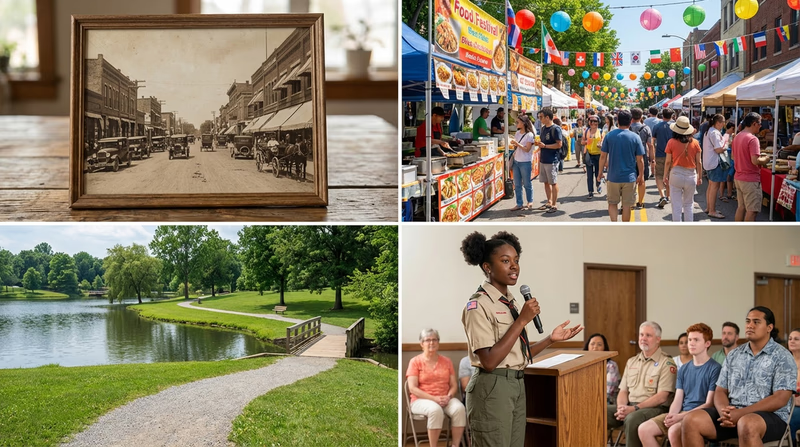
Extended Learning
A. Congratulations!
You have earned the Citizenship in the Community merit badge — one of the badges required for Eagle Scout. You have mapped your community, attended a government meeting, investigated a local issue, volunteered your time, and presented what makes your community unique. That is a lot of ground covered, and you should be proud of the effort you put in. But citizenship does not stop when you sign off on the last requirement. The skills and habits you have built here are meant to last a lifetime.
B. How Communities Are Shaped
The Power of Local Planning
Every building, road, park, and business in your community exists because someone planned for it. Local planning and zoning shape the physical character of a town — where houses can be built, where businesses can operate, how tall buildings can be, and how much green space is preserved.
Planning commissions and zoning boards hold public hearings where citizens can weigh in on proposed changes. A new apartment complex on the edge of town, a cell tower near a school, a gas station on a historic street — all of these require public review. The people who show up to these meetings have an outsized influence on the outcome, because most people never attend.
Understanding how planning works gives you real power. If you care about what your community looks like in 10 or 20 years, start paying attention to the planning commission now. Many communities even allow young people to serve on youth advisory boards that feed into the planning process.
Here are some concepts worth understanding:
- Zoning divides a community into areas designated for specific uses (residential, commercial, industrial, mixed-use). It prevents a factory from being built next to a school.
- Comprehensive plans are long-term visions that guide how a community will grow and change over decades.
- Variances are exceptions to zoning rules granted to property owners with unique circumstances.
- Eminent domain is the government’s power to take private property for public use (like building a highway), with compensation to the owner. It is one of the most debated powers in local government.
Civic Technology
Technology is changing how citizens interact with their governments. Many communities now offer digital tools that make participation easier than ever.
311 systems let residents report potholes, broken streetlights, graffiti, and other non-emergency issues through an app or website. The reports are tracked and routed to the right department automatically. Some cities publish dashboards showing how quickly issues are resolved.
Open data portals publish government information — budgets, crime statistics, inspection results, permit applications — in formats anyone can download and analyze. Civic hackers and journalists use this data to hold governments accountable and identify patterns.
Online public comment systems allow citizens to submit testimony on proposed laws and regulations without attending a meeting in person. During the COVID-19 pandemic, many governments expanded virtual participation options, and many have kept them.
Participatory budgeting is a process where residents directly decide how to spend a portion of the public budget. Cities like New York, Chicago, and dozens of smaller communities have used this approach to fund parks, school improvements, and infrastructure projects based on residents’ votes.
These tools lower the barrier to participation. You do not need to take time off work, find childcare, or drive across town to have a voice in your government. But they work best when citizens actually use them.
C. Youth Civic Engagement
Why Young Voices Matter
There is a common myth that you need to be old enough to vote before you can influence your community. That is simply not true. Young people have driven some of the most significant civic movements in American history.
In the 1960s, young people were at the forefront of the civil rights movement — organizing sit-ins, freedom rides, and voter registration drives. The 26th Amendment, which lowered the voting age from 21 to 18, was ratified in 1971 largely because of young activists who argued that if they were old enough to be drafted and fight in a war, they were old enough to vote.
Today, youth-led movements continue to shape policy on issues ranging from climate change and gun violence to education equity and mental health. Young people bring energy, creativity, and moral clarity to public debates — and they are often more effective at reaching their peers than traditional institutions are.
How to Stay Engaged After This Badge
Earning this merit badge gave you a foundation. Here are concrete ways to build on it:
- Join your school’s student government. Student council is real governance practice — you set budgets, plan events, and represent your classmates’ interests.
- Attend more public meetings. Now that you know what to expect, go back. Follow an issue over multiple meetings to see how decisions unfold over time.
- Write letters to elected officials. A thoughtful, specific letter from a constituent — even a young one — gets attention. Focus on one issue, state your position, and explain why it matters.
- Start or join a service club. Organizations like Key Club, Interact (Rotary’s youth program), or school-based service clubs provide structure for ongoing community engagement.
- Register to vote as soon as you are eligible. Many states allow 16- and 17-year-olds to pre-register. When you turn 18, you will be ready.
D. Understanding Community Budgets
Following the Money
One of the most powerful things a citizen can do is understand how public money is spent. Government budgets are not just spreadsheets — they are statements of priorities. A community that spends heavily on parks and recreation is telling you something different from one that puts most of its money into law enforcement.
Most community budgets are public documents, available on the city or county website. Here is how to read one:
- Revenue is the money coming in — property taxes, sales taxes, fees, grants, and other sources.
- Expenditures are the money going out — salaries, infrastructure, programs, and services.
- The general fund is the main operating account that pays for core services like police, fire, and public works.
- Capital budgets cover long-term investments like new buildings, road construction, and major equipment purchases.
- Debt service is the cost of paying back money the government has borrowed (like bonds for a new school or library).
Budget hearings are open to the public and are one of the most impactful meetings you can attend. This is where citizens can directly advocate for funding the things they care about — more money for after-school programs, better park maintenance, or new sidewalks in underserved neighborhoods.
Understanding budgets also helps you evaluate claims made by politicians and advocates. When someone says “the government wastes money,” you can look at the actual numbers and form your own opinion. That is the kind of informed citizenship that strengthens democracy.
E. Real-World Experiences
Seek out these opportunities to deepen your understanding of community citizenship:
Shadow a Local Official
Contact your mayor’s office, city manager, or a council member and ask if you can shadow them for a day. You will see firsthand how decisions get made, how constituents are served, and what the daily work of governance actually looks like.
Attend a Naturalization Ceremony
U.S. Citizenship and Immigration Services (USCIS) holds naturalization ceremonies where immigrants officially become U.S. citizens. These events are often open to the public and are deeply moving. Watching someone choose to become a citizen can give you a new appreciation for what citizenship means.
Visit Your State Capitol
If you have not been to your state capitol, plan a trip. Many state legislatures offer tours, and you can sit in the gallery to watch a legislative session. Some states have formal youth programs that let young people serve as pages or participate in mock legislative sessions.
Organize a Community Service Project
Take what you learned from Requirement 7 and go bigger. Plan and lead a service project for your troop, your school, or your neighborhood. Choose a need you identified during this merit badge, recruit volunteers, and make a measurable impact.
Participate in a Mock Trial or Model Government
Many schools and community organizations run mock trial competitions, Model United Nations, or model state legislature programs. These simulations let you practice civic skills — debate, negotiation, legal reasoning, and public speaking — in a supportive environment.
F. Organizations
These organizations support civic engagement and can help you continue your citizenship journey:
iCivics Founded by retired Supreme Court Justice Sandra Day O'Connor, iCivics offers free games, lesson plans, and resources that make civic education interactive and engaging for young people. Link: iCivics — https://www.icivics.org/ National League of Cities — Youth Engagement The National League of Cities works with local governments across the country and provides resources on youth advisory councils, civic participation, and community development. Link: National League of Cities — Youth Engagement — https://www.nlc.org/ Close Up Foundation Close Up runs civic education programs in Washington, D.C. and communities nationwide, giving young people hands-on experience with democracy and government. Link: Close Up Foundation — https://www.closeup.org/ Points of Light The world's largest organization dedicated to volunteer service. Points of Light connects people with volunteer opportunities and recognizes outstanding community leaders. Link: Points of Light — https://www.pointsoflight.org/ Generation Citizen A national civic education organization that empowers young people to find and address issues in their communities through an action-centered curriculum. Link: Generation Citizen — https://generationcitizen.org/ Rock the Vote A nonpartisan organization dedicated to building the political power of young people through voter registration drives, education, and advocacy. Link: Rock the Vote — https://www.rockthevote.org/