Req 1 — What Good Citizenship Means
What Does Citizenship in the Community Mean?
Citizenship is not just a legal status — it is an active relationship between you and the people around you. When we talk about “citizenship in the community,” we mean the everyday choices you make that affect your neighbors, your town, and the places where you spend your time.
A good citizen does more than follow the rules. A good citizen pays attention, gets involved, and looks for ways to help. Think of it this way: if everyone in your community did exactly what you do, would the community be a better place or a worse one? That question is at the heart of citizenship.
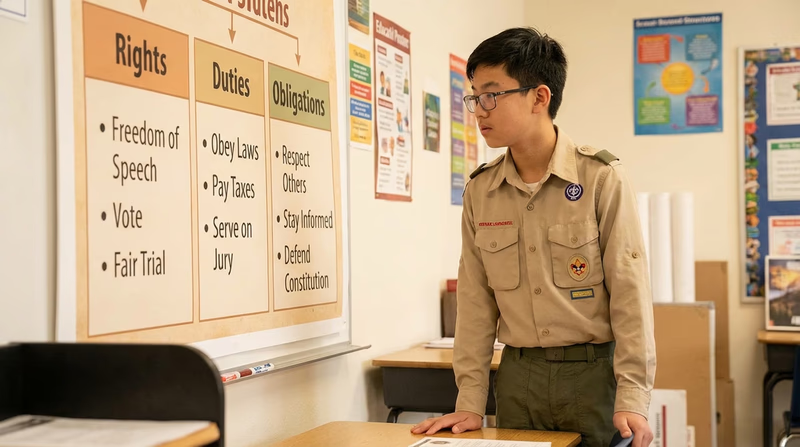
Rights, Duties, and Obligations
Your counselor will want you to understand the difference between these three ideas. They are related, but they are not the same thing.
Rights
Rights are things you are entitled to as a citizen. In the United States, many of these are protected by the Constitution and the Bill of Rights.
- Freedom of speech — You can express your opinions, even unpopular ones.
- Freedom of religion — You can practice any religion or none at all.
- Right to vote — When you turn 18, you can help choose your leaders.
- Right to a fair trial — If accused of a crime, you are entitled to due process.
- Right to petition — You can ask your government to change a law or policy.
These rights belong to you, but they also belong to everyone else. Part of being a good citizen is respecting other people’s rights even when you disagree with how they use them.
Duties
Duties are things the law requires you to do. They are not optional.
- Obey the law — From traffic rules to property laws, citizens are expected to follow the rules that keep communities safe and orderly.
- Pay taxes — Taxes fund the services your community depends on (more on this in Requirement 6).
- Serve on a jury — When called, adult citizens must serve on a jury to ensure fair trials.
- Attend school — Until a certain age, education is both a right and a legal requirement.
Obligations
Obligations are things that are not required by law but are expected of good citizens. They are the “should” rather than the “must.”
- Stay informed — Know what is happening in your community and your government.
- Vote — It is not legally required in the U.S., but it is one of the most important things a citizen can do.
- Volunteer — Give your time to causes and organizations that strengthen your community.
- Respect others — Treat people fairly, even when you disagree.
- Speak up — When you see something wrong, say something.
Demonstrating Good Citizenship
Your counselor will ask you to explain how you can demonstrate good citizenship in specific settings. Here are some ideas to get you thinking — but the best answers will come from your own experience.
In Your Community
- Volunteer at local events or organizations
- Pick up litter, even when it is not yours
- Attend a public meeting (you will do this in Requirement 3)
- Support local businesses
- Get to know your neighbors
In Your Scouting Unit
- Help newer Scouts learn skills
- Take on leadership roles and fulfill them reliably
- Follow the Scout Oath and Scout Law — not just at meetings, but everywhere
- Participate in service projects willingly and enthusiastically
At Your Place of Worship
- Volunteer for service activities organized by your faith community
- Treat shared spaces with respect
- Welcome newcomers and make them feel included
At School
- Follow school rules and treat teachers and staff with respect
- Stand up against bullying
- Participate in student government or school clubs
- Help classmates who are struggling
Preparing for Your Discussion
This requirement is a discussion, not a test. Your counselor wants to see that you have thought carefully about what citizenship means and that you can connect these ideas to your real life.
Discussion Prep
Make sure you can talk about each of these
- Define citizenship in your own words
- Name at least three rights of a citizen
- Explain the difference between a duty and an obligation
- Give one example of good citizenship in your community
- Give one example from your Scouting unit, place of worship, or school